How to Prepare for a Power Outage in Moreno Valley: 2026 Checklist
/
Article by
Jesse Malone
Jesse Malone
CEO & Partner, Underline Energy Concepts
Jesse Malone is the CEO and Partner of Underline Energy Concepts, a Southern California energy services company that has been serving homeowners since 2002. Since joining the company and becoming a partner in approximately 2015, Jesse has helped lead its growth into one of Southern California’s most trusted providers of residential energy efficiency and home improvement solutions.
Throughout his tenure, Jesse and the Underline Energy team have completed more than 2,500 energy upgrade projects for homeowners across Southern California. These projects include solar energy systems, roofing, battery storage, EV charging stations, electrical panel upgrades, water heater replacements, attic insulation, retrofit windows, and other energy-efficient home improvements designed to lower utility costs and increase property value.
Jesse holds a Bachelor’s Degree from California Southern University and brings more than 20 years of experience in emergency services through his service with the fire department. His background in public service has shaped his leadership style, emphasizing integrity, accountability, safety, and a commitment to serving the community.
A lifelong advocate for efficiency and practical solutions, Jesse is passionate about helping homeowners make informed decisions that improve both their homes and their financial future. His interests extend beyond energy efficiency into financial literacy, budgeting, investing, and long-term wealth-building strategies. He believes that reducing unnecessary expenses and maximizing efficiency are key components of financial success.
As CEO, Jesse continues to focus on delivering exceptional customer experiences, building high-performing teams, and helping Southern California homeowners achieve greater comfort, energy independence, and long-term savings through smart home investments.
What if the power goes out just as Moreno Valley’s heat climbs or you need to charge a phone, medical device, or other essential equipment? Knowing how to prepare for a power outage Moreno Valley households may face starts with a clear plan, not a last-minute scramble.
An outage can affect household comfort, food storage, communication, and essential equipment. It’s also easy to assume solar panels will automatically keep the lights on, but solar alone may not provide backup power. The right preparation depends on who lives in your home, what they rely on, and how an interruption could affect them.
This checklist helps you prepare before, respond during, and recover after an outage. You’ll identify essential supplies and devices, plan for heat and communication, and learn what to check before considering a battery or generator. Underline Energy Concepts installs solar panels and whole-home battery and generator backup systems in Southern California. Preparedness should begin with your household’s needs, whether you choose backup equipment or another plan.
Key Takeaways
- Learn how to prepare for a power outage Moreno Valley households may experience by organizing supplies, communication plans, and household priorities in advance.
- Keep flashlights, batteries, charged power banks, and basic first-aid supplies somewhere household members can find them easily.
- Compare practical backup options, from reducing reliance on powered devices to considering a generator or whole-home battery system.
- Know how to manage essential devices, find reliable outage updates, and respond safely when power goes out and returns.
- Ask a qualified professional to assess your home’s electrical setup and backup-power needs when you’re ready to explore options.
How Power Outages Affect Moreno Valley Households, and What to Plan For
A power outage can interrupt more than lighting. It may affect phone access, indoor comfort, food storage, medical or mobility equipment, and familiar routines. The cause and duration can vary, so prepare for uncertainty instead of assuming a particular event will happen. For a general overview of outage types and causes, see Power outage.
For an overview of planning for an extended outage, watch this video:
Start with people, not equipment. The clearest approach to how to prepare for a power outage Moreno Valley households can use is to identify essential needs, gather supplies that address them, and then decide whether backup power is worth exploring. Your plan can be useful whether or not you purchase equipment.
Which household needs should Moreno Valley residents consider first?
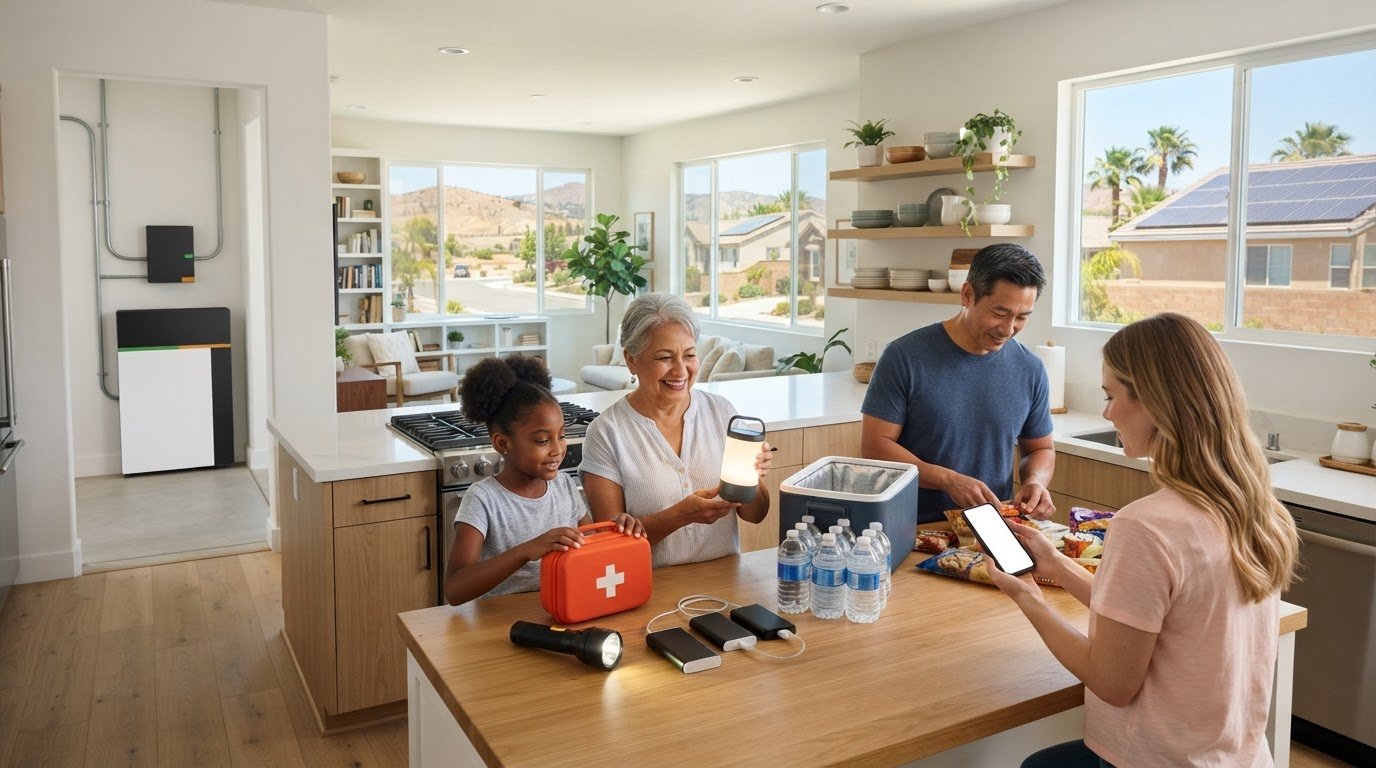
Write down what each person may need if electricity is unavailable. If someone relies on powered medical or mobility equipment, speak with their care provider about an outage plan and suitable backup arrangements. Don’t guess at medical-device requirements.
Then consider communication, lighting, refrigeration, and temperature control. Note who may need extra support, including children, older adults, people with disabilities, and pets. This list helps you prioritize supplies and decide what to check first if an outage occurs.
Where should you check for current outage information?
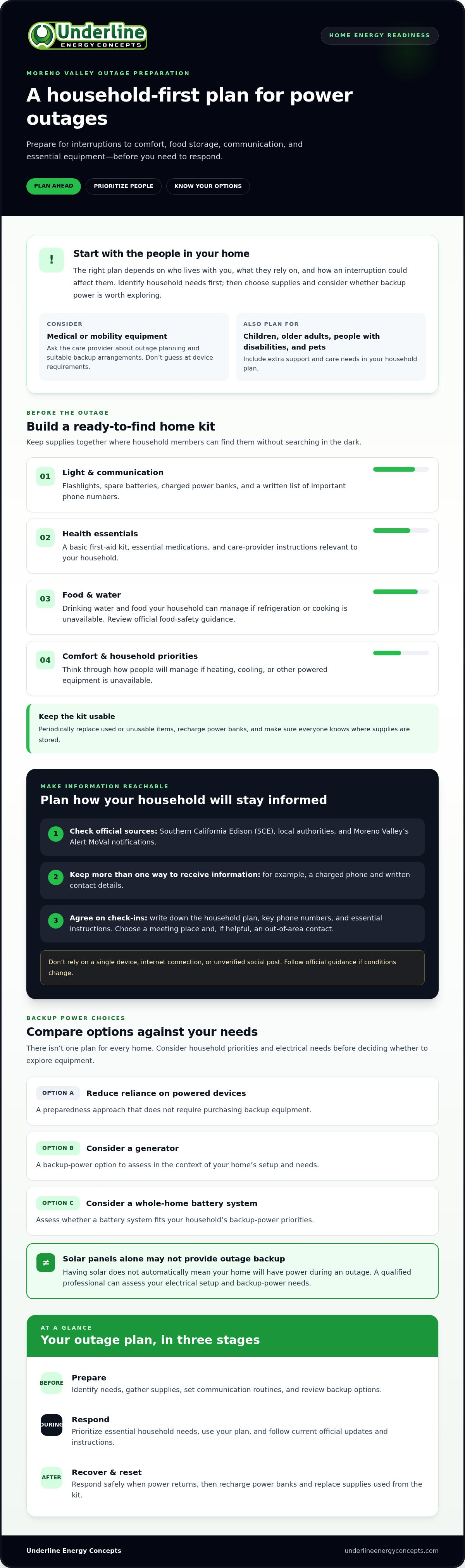
Use current notices from Southern California Edison (SCE) and local authorities for outage updates and instructions. Moreno Valley residents can also check the city’s Alert MoVal notifications. Confirm how to access these sources before an outage, and keep more than one way to receive important information, such as a charged phone and a written record of useful contact details.
Don’t rely on a single device, internet connection, or unverified social post. Review alert settings and contact methods in advance, then follow official guidance if conditions change. With household priorities and trusted information sources identified, you can build a practical supply checklist.
A Moreno Valley Power Outage Preparation Checklist to Complete in Advance
A checklist turns general preparation into manageable tasks. Use it to guide how to prepare for a power outage Moreno Valley households may face, then adapt it to your home, health needs, and current official emergency recommendations. Store supplies together where household members can find them without searching in the dark.
What supplies belong in a home outage kit?
Start with basics you can access quickly. Review the Ready.gov power outage checklist for additional federal preparedness guidance, then use this list as a starting point:
- Light: Flashlights and spare batteries, kept somewhere easy to reach.
- Communication: Charged power banks and a written list of important phone numbers.
- Health: A basic first-aid kit, essential medications, and care-provider instructions relevant to your household. Ask a care provider how to plan for medication or equipment that depends on electricity.
- Food and water: Drinking water and food your household can manage if refrigeration or cooking is unavailable. Review official food-safety guidance and plan around your family’s needs.
- Comfort: Consider how household members will stay comfortable if heating, cooling, or other powered equipment isn’t available.
Check your kit periodically. Replace used or unusable items, recharge power banks, and make sure everyone knows where supplies are stored.
How can you prepare household communication and routines?
Agree on how household members will check in if phones or internet access are limited. Choose a meeting place and, if helpful, an out-of-area contact who can help relay messages. Write down the plan, key phone numbers, and essential instructions so they’re available even if a device runs out of power.
Include children, older adults, people who may need extra assistance, and pet-care needs in the plan. Decide who will check on each person or animal and how household members will share updates. A clear routine can reduce confusion when normal communication is disrupted.
Before an outage: Confirm current recommendations and alert methods with relevant emergency authorities and your utility. Keep contact details accessible, review the checklist with everyone at home, and update it as needs change. For information about your home’s backup-power needs, see Underline Energy Concepts’ contact information.
Which Backup Power Option Fits Your Moreno Valley Home?
A household outage plan is valuable whether or not you own backup equipment. As you decide how to prepare for a power outage Moreno Valley households may experience, start with what needs power and what your household can manage without it. Then compare options against those priorities instead of assuming one solution fits every home.
Possible approaches range from reducing reliance on powered devices to using portable power banks, a generator, or a whole-home battery system. A power bank may help keep small personal devices charged, while installed backup equipment needs to be assessed for your home and the devices you want to support. Generators and battery systems have different setup and operating considerations. Review power outage preparedness guidelines alongside current local instructions, and verify equipment details for your situation.
What should you consider before choosing backup power?
Make a list of essential devices and household priorities, then ask how each would be powered during an outage. Separate needs from conveniences. One household may focus on communication and lighting, while another may need to plan around medical equipment or other critical needs.
Basic supplies, such as charged power banks and flashlights, are different from installed backup equipment. Installed systems require a home-specific review of electrical setup, equipment compatibility, safe installation, and ongoing care. Ask a qualified professional to assess those factors rather than relying on a general recommendation.
Will solar panels keep working during a power outage?
Not necessarily. Whether a solar installation can provide power during an outage depends on its configuration. Don’t assume panels alone will keep household circuits operating. Ask your solar installer how your specific system behaves during a grid interruption and whether it can support the loads you identified.
Underline Energy Concepts installs solar panels and whole-home battery backup systems. Equipment choices should follow an assessment of household needs. A professional conversation can help clarify what to verify about your home’s electrical setup and backup priorities. Preparedness remains useful even if you decide not to install equipment.
What to Do During and After a Power Outage in Moreno Valley
When the power goes out, use a simple sequence: check for immediate hazards, confirm the outage through reliable sources, protect essential needs, and follow safe steps when service returns. For how to prepare for a power outage Moreno Valley households may face, practice this sequence in advance so everyone knows what to do instead of relying on guesswork.
What should you do first during an outage?
Check that household members are safe, then use flashlights where practical and keep walkways clear. Avoid open flames when a safer light source is available. Check SCE notices and local emergency channels for current updates or instructions. Don’t rely on unverified social posts, which may be outdated or inaccurate.
- Preserve communication: Use phone battery for essential calls, messages, and official updates. Limit nonessential screen use.
- Protect food: Keep refrigerator and freezer doors closed as much as practical. Follow current official food-safety guidance before deciding whether stored food is safe to eat.
- Support individual needs: Follow care-provider instructions for medical equipment. If a person’s needs can’t be met safely at home, use the household’s prearranged plan to seek appropriate help.
- Use a generator cautiously: Generator operation is safety-sensitive. Follow the manufacturer’s instructions and current official safety guidance; don’t improvise a setup.
How can you manage essential needs while the power is out?
Keep updates brief and purposeful. Check official outage information periodically, share relevant details with household members, and conserve stored power for essential communication. If heat, mobility, medical care, or another need becomes difficult to manage, follow your plan and contact the appropriate care provider or emergency service based on the situation.
What should you check when power returns?
Wait for any official instructions, then check whether appliances and household systems appear to be operating normally. Don’t touch damaged wiring, electrical equipment, or fallen lines; report hazards through the appropriate official channel. For food, consult current food-safety recommendations rather than judging safety by smell or appearance alone. If the outage continues or another problem remains, report it to SCE or the relevant local authority.
A clear response plan helps you act without assuming every outage has the same cause or duration. Information about Underline Energy Concepts’ backup-power services is available through its contact page.
Build a Longer-Term Outage Plan for Your Moreno Valley Home
A useful outage plan changes as your household does. Review your checklist and update it after changes such as a new medical or mobility need, a move, or a change in who lives at home. Recheck supplies, contact details, alert access, and the steps your household would follow. This keeps your plan practical and helps you spot outdated instructions or missing essentials.
When should you ask a professional about home backup power?
Consider a professional assessment if you want backup power for essential devices or home systems. Bring your priority list and ask how proposed equipment would work during a grid outage, which parts of the home it could support, and what your existing electrical setup may require. If you have solar, ask your installer how your specific system behaves during an outage. Don’t assume panels alone will provide backup power.
Keep the discussion grounded in your actual needs. A household focused on essential communication may have different priorities from one planning around medical equipment or other critical systems. A qualified professional can assess the home and explain relevant options, but no equipment choice replaces a household emergency plan or guarantees uninterrupted power.
How can Moreno Valley homeowners take the next step?
Before seeking advice, gather your household priorities, any available details about your electrical setup or existing solar system, and questions you want answered. Ask about equipment compatibility, safe installation, how the system operates during an outage, and ongoing requirements. Clear questions make it easier to compare options.
Underline Energy Concepts provides solar installations, whole-home battery backup, and generator backup power in Southern California. Ask about current service availability for your address when you get in touch. Whether you’re considering backup equipment or simply want to understand your options, start with your household’s needs.
Use this checklist as a starting point for how to prepare for a power outage Moreno Valley households may face, and revisit it as your needs change. Details for contacting Underline Energy Concepts are available online.
Make Your Outage Plan Work for Your Household
A dependable plan starts with your household, not a piece of equipment. Identify who and what needs support, keep essential supplies and contact information accessible, and know where to find current utility and emergency updates. Then review your plan as household needs change. That’s a practical way to approach how to prepare for a power outage Moreno Valley residents may face, whether or not backup equipment is part of the plan.
If you’re considering a battery or generator, first list the devices and home systems you want to support. A qualified professional can help assess your electrical setup and explain what to verify about backup options. Preparedness does not have to depend on a purchase.
Underline Energy Concepts installs solar panels and whole-home battery and generator backup systems in Southern California. Contact Underline Energy Concepts to discuss your household’s backup-power needs and ask about your home’s electrical setup.
Frequently Asked Questions
These preparedness steps apply to households in Moreno Valley and nearby communities, including Canyon Lake, Menifee, Temecula, Murrieta, Wildomar, Corona, Perris, Lake Elsinore, and Winchester. Check your utility and local authorities for current instructions relevant to your address.
What should I keep in a power outage kit in Moreno Valley?
Keep flashlights, spare batteries, charged power banks, and a basic first-aid kit together in an easy-to-reach spot. Add essential medications, important phone numbers on paper, drinking water, and food your household can manage without normal refrigeration or cooking. Include items specific to children, older adults, pets, or other household needs. Check supplies periodically so medications and batteries remain usable. For how to prepare for a power outage Moreno Valley households may face, tailor the kit to your family.
How can I find out if there is a power outage in Moreno Valley?
Check Southern California Edison (SCE) for current outage notices and use local authority channels, including the city’s Alert MoVal notifications, for relevant updates. Set up alerts before an outage and confirm how to access them. Keep important contact information written down, and don’t rely on a single phone or internet connection. Follow current utility and emergency-service instructions rather than unverified social media posts, which may be outdated or inaccurate.
Will my solar panels work during a power outage?
Solar panels may not provide power to your home during an outage; it depends on your system’s configuration. Don’t assume that having solar means household circuits will keep running when grid service stops. Ask your solar installer how your specific system behaves during an outage and whether it can support the devices you consider essential. If you’re planning a change, have the system and your home’s electrical setup assessed for your situation.
Do I need a home battery to prepare for a power outage?
No. A household emergency plan, accessible supplies, charged power banks, and reliable ways to receive official updates are useful even without a home battery. If you’re considering one, first list the devices or home systems you want to support and ask a qualified professional to assess your electrical setup and equipment compatibility. A battery is one option to evaluate, not a substitute for household planning or a guarantee of uninterrupted power.
Can I use a generator during a power outage?
You can consider generator backup power, but generator use is safety-sensitive. Follow the manufacturer’s instructions and current official safety guidance for the specific equipment. Don’t improvise an installation or operating setup, and ask a qualified professional about your home’s electrical connection needs. Before choosing a generator, identify which devices you need to support and verify that the proposed setup is suitable for your home. Never assume every generator can power every household system.
What should I do with refrigerated food during a power outage?
Keep refrigerator and freezer doors closed as much as practical to help preserve the cold. Don’t rely on a guessed time limit or judge food safety by smell or appearance alone. Check current official food-safety recommendations before deciding whether refrigerated or frozen items are safe to eat, especially after a prolonged interruption or if you’re unsure how warm food became. If an item’s safety is uncertain, follow current public-health guidance.
How can I prepare someone who relies on powered medical equipment?
Make an outage plan with the person’s care provider before power is interrupted. Ask how the equipment should be supported, what backup arrangements are appropriate, and what to do if those arrangements aren’t available or stop working. Keep relevant instructions and care-provider contact details accessible in print. Include the person’s needs when deciding whether to seek help elsewhere, and follow current emergency-service guidance if their safety or care is at risk.