
Energy Efficient Windows Southern California: 2026 Homeowner’s Guide
/

Article by
Jesse Malone
Jesse Malone
CEO & Partner, Underline Energy Concepts
Jesse Malone is the CEO and Partner of Underline Energy Concepts, a Southern California energy services company that has been serving homeowners since 2002. Since joining the company and becoming a partner in approximately 2015, Jesse has helped lead its growth into one of Southern California’s most trusted providers of residential energy efficiency and home improvement solutions.
Throughout his tenure, Jesse and the Underline Energy team have completed more than 2,500 energy upgrade projects for homeowners across Southern California. These projects include solar energy systems, roofing, battery storage, EV charging stations, electrical panel upgrades, water heater replacements, attic insulation, retrofit windows, and other energy-efficient home improvements designed to lower utility costs and increase property value.
Jesse holds a Bachelor’s Degree from California Southern University and brings more than 20 years of experience in emergency services through his service with the fire department. His background in public service has shaped his leadership style, emphasizing integrity, accountability, safety, and a commitment to serving the community.
A lifelong advocate for efficiency and practical solutions, Jesse is passionate about helping homeowners make informed decisions that improve both their homes and their financial future. His interests extend beyond energy efficiency into financial literacy, budgeting, investing, and long-term wealth-building strategies. He believes that reducing unnecessary expenses and maximizing efficiency are key components of financial success.
As CEO, Jesse continues to focus on delivering exceptional customer experiences, building high-performing teams, and helping Southern California homeowners achieve greater comfort, energy independence, and long-term savings through smart home investments.
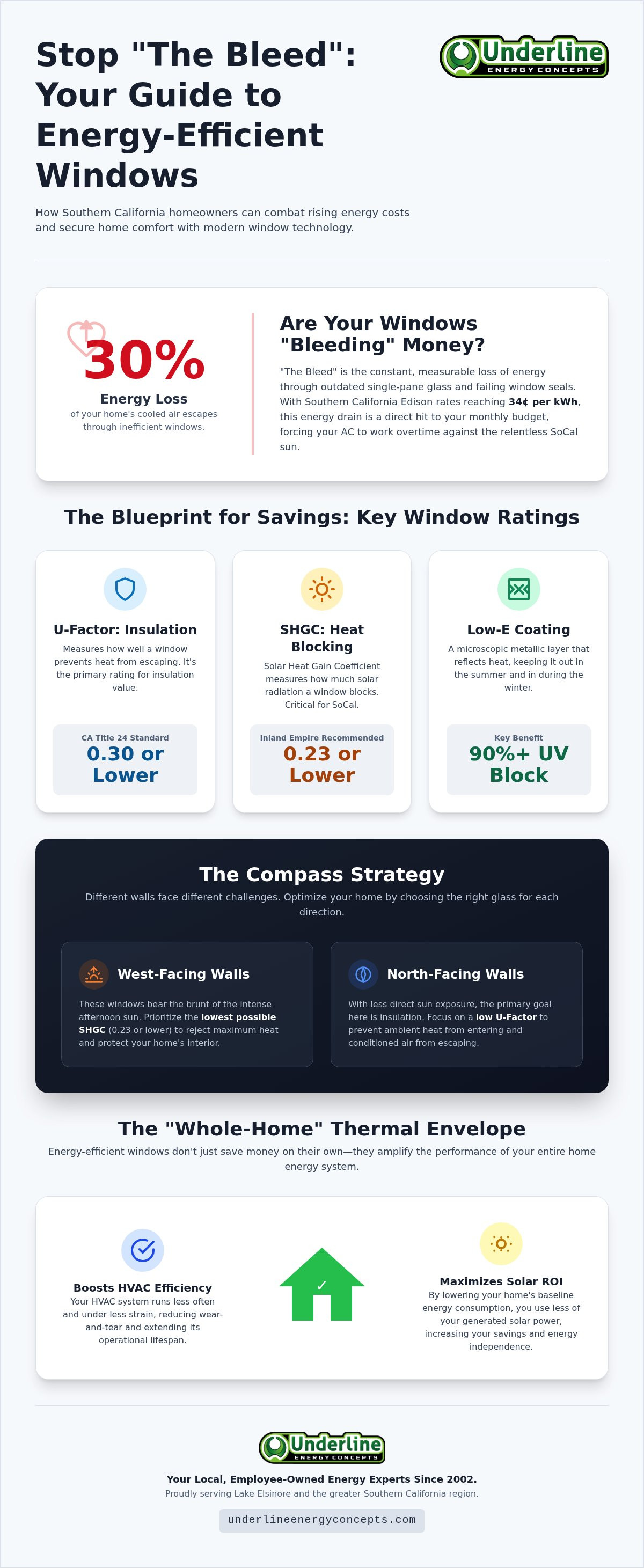
Did you know that nearly 30% of your home's expensive air conditioning is likely leaking right through your glass? It is a painful reality for many families as Southern California Edison rates reach 34 cents per kWh this year. You have probably felt that heat bleed while standing near a sunny window, watching your AC struggle to keep up with the relentless sun. Investing in energy efficient windows Southern California homeowners can rely on is no longer just a luxury. It is a necessary shield for your finances and your family's comfort.
We understand the frustration of seeing previous federal tax credits expire just when you were ready to upgrade. You deserve clear answers about which technical ratings actually matter for our unique climate and how to navigate the 2026 landscape. This guide will show you exactly how to stop the energy drain and slash your utility bills using the latest glass technology and local incentives. We will explore the strict new Title 24 standards, explain why the "thermal envelope" strategy is vital for your savings, and help you choose the right upgrades to protect your home's long-term value.
Key Takeaways
- Identify "The Bleed" in your home to understand how outdated seals and single-pane glass are driving up your monthly Southern California Edison bills.
- Navigate the strict 2026 Title 24 requirements by choosing energy efficient windows Southern California homeowners need to meet mandatory U-Factor and SHGC standards.
- Map out your 2026 financial strategy by exploring the shift toward upfront grants and checking your eligibility for the Low-Income Weatherization Program (LIWP).
- Apply the "Compass Strategy" to your home by selecting specific glass coatings that address the unique heat challenges of West-facing versus North-facing walls.
- Maximize your return on investment by integrating window upgrades into a "Whole-Home" thermal envelope strategy that boosts the efficiency of your solar panels and HVAC system.
Why Southern California Homeowners are Fighting 'The Bleed' in 2026
"The Bleed" isn't just a metaphor; it's a measurable loss of energy and money that occurs every second your home's interior air escapes through failing window seals. In 2026, Southern California homeowners are facing a new climate reality where intense heat waves now arrive as early as March. If you have single-pane glass or aged frames, your home is essentially an open sieve. This is why energy efficient windows Southern California residents are installing today have become the essential first line of defense. When electricity rates hover between 33 and 34.5 cents per kWh, every degree of heat that enters your home through poor insulation is a direct hit to your monthly budget.
The Inland Empire Heat Factor
Living in communities like Temecula, Murrieta, or Menifee presents a unique challenge. The geography of the Inland Empire traps heat, creating a "July in March" phenomenon that catches many off guard. Radiant heat transfer through standard glass turns your living room into a greenhouse, forcing your air conditioner to run almost constantly. This isn't just about comfort; it's about physics. Without modern insulated glazing, the sun's energy passes through the glass and heats up your furniture and floors, which then radiate that heat back into the room long after the sun has set. Our local experience shows that standard windows simply don't have the thermal resistance required to handle these shifting weather patterns.
Beyond Aesthetics: The Financial Impact
The hidden costs of "bleeding" energy extend far beyond a single high utility bill. When your windows fail, your HVAC system works double shifts to compensate, significantly shortening its operational lifespan and leading to premature mechanical failure. Thermal bridging is the primary enemy of SoCal comfort, acting as a heat highway that bypasses your walls and carries the outdoor furnace directly into your home. Underline Energy Concepts has been helping neighbors in Lake Elsinore and the surrounding areas since 2002, and we've seen how the shift from "patching" old windows to full replacement pays off. We are employee-owned and operated, meaning we take a personal interest in ensuring your home remains a sanctuary.
With the rollout of new SCE fixed charges in 2026, reducing your overall usage is the only way to keep your variable costs under control; checking the SCE marketplace for current efficiency incentives is a great starting point. Upgrading now ensures your home energy ecosystem remains stable, efficient, and ready for the record-breaking summers ahead. Moving from temporary fixes to permanent solutions gives you back control over your environment and your wallet.
Decoding Energy Efficiency: U-Factor, SHGC, and Low-E Glass
Technical ratings can feel overwhelming, but they're the blueprint for your long-term savings. Don't let the acronyms distract you from making a smart investment. As of January 1, 2026, California Title 24 sets a strict baseline for most residential replacements. You typically need a U-Factor of 0.30 or lower. This metric measures how well your window resists non-solar heat flow. Think of it as the insulation rating for your glass. To reach these performance levels, double-pane glass is now the absolute standard for energy efficient windows Southern California homeowners should consider.
Low-E (Low-Emissivity) coatings are the secret weapon in this equation. These microscopic, metallic layers reflect infrared light, keeping the heat on the side it belongs. During a scorching July day, they bounce the heat away from your living room. On a chilly January night, they help keep your furnace's warmth inside. Even though the Federal tax credits for windows that many relied on have expired for 2026 installations, the technology has never been more effective at lowering your monthly utility bills.
SHGC: The Inland Empire's Best Friend
SHGC, or Solar Heat Gain Coefficient, is the most critical number for our region. It measures the fraction of solar radiation admitted through a window. In the Inland Empire, a low SHGC (0.23 or lower) is vital for those brutal afternoon sun exposures on westward-facing walls. Modern coatings now block over 90% of UV rays. This protects your expensive hardwood flooring and designer furniture from fading without making your home feel dark. You get the natural light you love without the greenhouse effect that drives your AC into overdrive.
Frame Materials: Vinyl vs. Aluminum in SoCal
Your frame material matters as much as the glass itself. Vinyl has become the leader in our region because of its incredible thermal resistance and minimal maintenance needs. It won't warp or rot in the intense Lake Elsinore sun. Aluminum is still an option for specific architectural looks, but it typically requires a "thermal break" to prevent the metal from conducting heat directly into your home. Since 2002, we've seen how the right material choice prevents future maintenance headaches and preserves your home's value.
If you're unsure which rating fits your specific home orientation or local microclimate, you can schedule a professional assessment to get a tailored recommendation for your property.
The 2026 Financial Roadmap: Grants, Rebates, and ROI
The financial landscape for energy efficient windows Southern California homeowners face has shifted dramatically as we enter 2026. The primary federal tax credit, previously known as 25C, expired on December 31, 2025. This means you can no longer rely on that $600 year-end deduction for your window projects. Instead, the focus has moved toward "Upfront Grants" and state-level programs like the Low-Income Weatherization Program (LIWP). These programs are designed to lower the barrier to entry by providing immediate financial relief rather than making you wait until the next tax season to see a benefit.
Municipalities are also stepping up with localized solutions. Cities like Corona, Moreno Valley, and Temecula often have specific funding pools or utility-led programs that remain under the radar for most residents. For instance, local utility customers in these areas should frequently check for efficiency incentives that can be "stacked" with state grants. This stacking strategy is the most effective way to maximize your total savings and accelerate your break-even point. Navigating these options requires a bit of research, but the SCE marketplace remains a solid starting point for identifying current utility-specific offers.
Navigating the New Grant Landscape
Qualifying for 2026 energy-efficiency grants in Riverside County requires navigating a more complex web of requirements than in years past. While tax credits were a simple deduction on your filings, grants often come with specific income, geographic, or property-age criteria. As an employee-owned company based in Lake Elsinore since 2002, Underline Energy Concepts helps homeowners audit their funding eligibility to ensure no money is left on the table. This proactive approach turns a confusing bureaucratic process into a straightforward financial win for your household.
Calculating Your Real-World ROI
Your return on investment isn't just about the monthly bill reduction, though saving on electricity rates that reach 34.5 cents per kWh is substantial. Real-world ROI includes the extended lifespan of your HVAC system and the preservation of your whole-home battery backup. If your windows stop the heat bleed, your cooling system doesn't have to cycle as often, which prevents premature mechanical failure. Additionally, 2026 home appraisals in Southern California increasingly reward properties that meet the new Title 24 standards. It's also important to remember that professional installation is almost always required to secure this funding, as it verifies the windows meet mandatory 0.30 U-Factor and 0.23 SHGC ratings.
Choosing the Right Windows for Your Home’s Orientation
The sun doesn't hit every wall of your house with equal force. A one-size-fits-all approach to replacement often leads to missed savings and uneven comfort. This is why we advocate for the "Compass Strategy." It involves choosing specific glass treatments based on where the window sits. For energy efficient windows Southern California homeowners need to consider that a West-facing bedroom requires a much lower Solar Heat Gain Coefficient (SHGC) than a North-facing kitchen that rarely sees direct glare. By matching the technology to the exposure, you optimize your budget and your home's thermal performance.
Window style also plays a major role in both efficiency and lifestyle. Sliding windows are a staple in our region for their ease of use and space-saving design. Casement windows are excellent for catching those rare coastal breezes because the sash acts like a sail to direct air inside. If you have a room where airflow isn't a priority, picture windows offer the highest efficiency levels because they are fixed and have no moving parts where air could leak. Security remains a top priority; modern multi-point locking systems ensure that your energy-efficient upgrades also serve as a robust barrier for your family's safety.
The West-Facing Window Challenge
West-facing windows are the "danger zone" for Inland Empire homes. They take the full brunt of the afternoon sun right when outdoor temperatures peak. We recommend specialized Low-E coatings and subtle tints that block the heat without turning your home into a dark cave; as an example of advanced glass protection technology, you can learn more about Sunshield Group. These treatments work perfectly when you pair your new windows with QuietCool whole house fans. While the windows block the incoming heat during the day, the fan flushes out any residual warmth once the sun goes down, creating a complete cooling ecosystem for your property.
Energy efficiency isn't just about temperature; it's about tranquility. As communities like Moreno Valley and Corona continue to grow, traffic noise has become a primary concern for many residents. Modern dual-pane windows act as powerful sound barriers. The science lies in the Sound Transmission Class (STC) rating. By using different glass thicknesses and specialized gas fills between the panes, we can significantly dampen the roar of busy Inland Empire corridors. You gain a quieter, more peaceful indoor environment while simultaneously slashing your energy consumption.
Since 2002, Underline Energy Concepts has been a local, employee-owned partner helping neighbors find the perfect balance of style and performance. Professional site assessments are non-negotiable because even a half-inch error in sizing can ruin your window's efficiency. You can get a professional measurement and orientation audit to ensure your investment is protected by perfect sizing and expert selection.
The Underline Advantage: The Thermal Envelope Strategy
Windows are critical, but they're just one component of your home's "thermal envelope." Think of your house as a single, pressurized system where the roof, walls, and glass all work together to maintain comfort. If you install energy efficient windows Southern California requires for code but ignore your attic, the heat will simply find another way in. At Underline Energy Concepts, we look at the big picture. There's a powerful synergy between new windows and solar panel efficiency. By first reducing the amount of work your AC has to do, you can size a solar system more effectively, ensuring every kilowatt-hour goes further.
Combining attic insulation with high-performance windows creates a stable indoor micro-climate that resists the intense afternoon spikes. This holistic approach prevents "thermal bridges" from compromising your comfort and your wallet. Since 2002, our employee-owned team in Lake Elsinore has seen how this integrated strategy provides the best long-term stability. You aren't just buying glass; you're investing in a system that protects your financial autonomy against rising utility costs.
Protecting Your Energy Investment
Reducing your home's "base load" through better windows directly impacts your technology's performance. For example, efficient windows prevent your whole home battery backup from draining too quickly during an outage. If your home stays cool longer, your battery doesn't have to fight a losing battle against heat bleed. We recommend a "Whole-Home" audit to identify whether your priority should be windows, roofing, or both. If your electrical system is dated, check our Cost of Electric Panel Upgrade guide to see how to prepare your home for total energy independence.
Why Local Expertise Matters in 2026
"Big box" installers often use a generic approach that fails to account for the specific Inland Empire micro-climates we face every day. A window that works in a coastal breeze might not be enough for a home in the heat-trapping valleys of Riverside County. Choosing energy efficient windows Southern California weather demands requires a partner who knows the local terrain. Underline’s commitment to fire code compliance and proper attic ventilation ensures your upgrades are safe, legal, and truly effective. As a local, employee-owned brick-and-mortar company, we're here for the long haul to support your energy goals. Start your journey to a cooler, more efficient home today by prioritizing a balanced, whole-home strategy; for those in other regions looking for specialist property efficiency advice, you can learn more about Madison May Consulting Ltd.
Secure Your Home's Energy Future Today
Upgrading to energy efficient windows Southern California families can rely on is about more than just curb appeal; it's a strategic move to shield your finances from rising 34-cent kWh rates. By meeting the strict 2026 Title 24 standards and leveraging local grants like LIWP, you transform your house into a high-performance sanctuary. Your windows are the critical first line of defense in a broader thermal envelope that includes your roof, insulation, and solar panels.
Since 2002, Underline Energy Concepts has served as a trusted local partner based in Lake Elsinore. As an employee-owned company of licensed general, roofing, and electrical contractors, we provide the integrated expertise needed for long-term home stability. We are ready to help you navigate the complex 2026 incentive landscape and optimize your property for maximum comfort.
Schedule Your Free 2026 Energy Efficiency Audit with Underline Energy Concepts and take the first step toward a cooler, more autonomous future. You deserve a home that works for you.
Frequently Asked Questions
Are there still federal tax credits for windows in 2026?
No, the primary federal tax credit for residential window replacements expired on December 31, 2025. Homeowners in 2026 should instead look toward state and utility programs like the Low-Income Weatherization Program (LIWP) or municipal upfront grants. These programs offer immediate financial relief rather than a delayed tax deduction. We help our neighbors in Lake Elsinore and Murrieta identify which of these non-exhausted funding sources they qualify for before starting their project.
What is the best SHGC rating for windows in Southern California?
For most homes in Southern California, the optimal Solar Heat Gain Coefficient (SHGC) is 0.23 or lower. This rating is now a mandatory standard under the 2026 California Title 24 energy code for projects exceeding 75 square feet. A lower SHGC means your windows are more effective at blocking the intense radiant heat that drives up cooling costs in cities like Menifee and Temecula during our long summer months.
How much can energy-efficient windows actually save on SCE bills?
Installing energy efficient windows Southern California homeowners trust can reduce heating and cooling energy loss by 25% to 30% according to Department of Energy data. With Southern California Edison rates currently averaging around 34.5 cents per kWh, these savings add up quickly. By stopping the heat bleed, you don't just lower your monthly bill; you also extend the life of your air conditioning system by reducing its daily workload.
Do I need to replace all my windows at once to get a grant?
You don't always have to replace every window at once, but many grant programs have specific requirements regarding the total square footage or energy impact of the project. For instance, Title 24 standards trigger once you replace 75 square feet or more of window area. We recommend a whole-home audit to determine if a phased approach or a complete replacement better aligns with current Riverside County incentive requirements and your personal budget.
What is the difference between double-pane and triple-pane windows for SoCal?
Double-pane windows are the 2026 baseline for Southern California, providing the necessary thermal resistance for our climate. Triple-pane windows offer even higher insulation and sound dampening but are often considered an optional upgrade rather than a necessity for most Inland Empire homes. Double-pane units with modern Low-E coatings usually provide the best balance of cost and performance to meet the 0.30 U-Factor requirement mandated by state law.
How long does a typical window replacement take in Riverside County?
The actual installation of new windows typically takes one to three days depending on the size of your home. However, the entire process includes professional measurements, manufacturing lead times, and local permitting. Since we are based in Lake Elsinore and have served the region since 2002, we understand the specific building department requirements in cities like Corona and Moreno Valley, which helps keep your project timeline as efficient as possible.
Can energy-efficient windows help reduce outside noise from traffic?
Yes, energy-efficient windows are highly effective at dampening outside noise from traffic and neighborhood activity. The same dual-pane construction and gas fills that block heat also act as a sound barrier. If you live near busy corridors in Perris or Winchester, upgrading to windows with a high Sound Transmission Class (STC) rating will significantly improve your indoor tranquility while simultaneously lowering your energy consumption.
Does Underline Energy Concepts handle the permitting for window installations?
Yes, Underline Energy Concepts manages the entire permitting process for your window installation. As a licensed general, roofing, and electrical contractor, we ensure every aspect of your project meets local safety codes and Title 24 energy requirements. Our employee-owned team handles the paperwork and inspections so you can focus on enjoying your more comfortable, energy-independent home without the stress of navigating municipal bureaucracy.