
Best Whole House Fan for Cooling: 2026 Southern California Guide
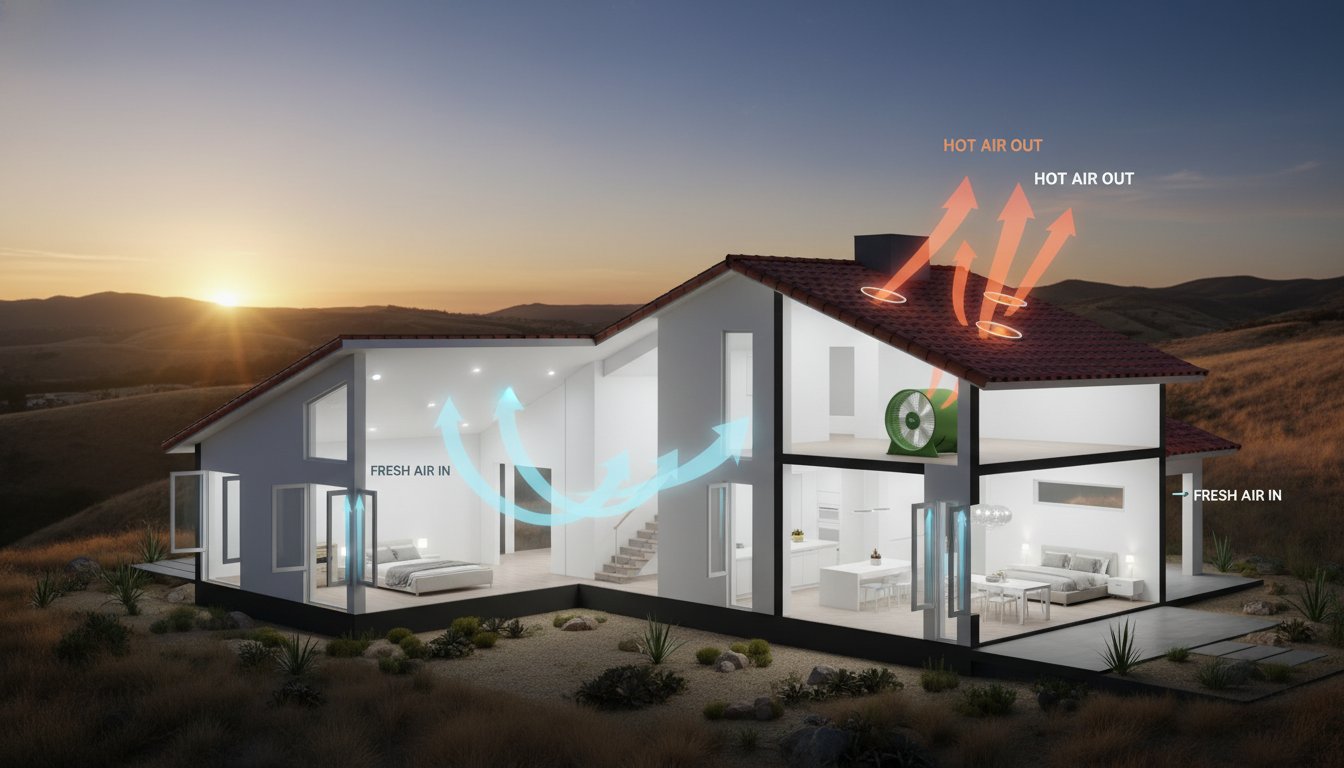
/
Article by
Jesse Malone
Jesse Malone
CEO & Partner, Underline Energy Concepts
Jesse Malone is the CEO and Partner of Underline Energy Concepts, a Southern California energy services company that has been serving homeowners since 2002. Since joining the company and becoming a partner in approximately 2015, Jesse has helped lead its growth into one of Southern California’s most trusted providers of residential energy efficiency and home improvement solutions.
Throughout his tenure, Jesse and the Underline Energy team have completed more than 2,500 energy upgrade projects for homeowners across Southern California. These projects include solar energy systems, roofing, battery storage, EV charging stations, electrical panel upgrades, water heater replacements, attic insulation, retrofit windows, and other energy-efficient home improvements designed to lower utility costs and increase property value.
Jesse holds a Bachelor’s Degree from California Southern University and brings more than 20 years of experience in emergency services through his service with the fire department. His background in public service has shaped his leadership style, emphasizing integrity, accountability, safety, and a commitment to serving the community.
A lifelong advocate for efficiency and practical solutions, Jesse is passionate about helping homeowners make informed decisions that improve both their homes and their financial future. His interests extend beyond energy efficiency into financial literacy, budgeting, investing, and long-term wealth-building strategies. He believes that reducing unnecessary expenses and maximizing efficiency are key components of financial success.
As CEO, Jesse continues to focus on delivering exceptional customer experiences, building high-performing teams, and helping Southern California homeowners achieve greater comfort, energy independence, and long-term savings through smart home investments.
Why are you paying Southern California Edison up to 74 cents per kilowatt-hour just to keep your living room tolerable during a July heatwave? If you're like most homeowners in Lake Elsinore or the Inland Empire, you know that running the AC around the clock is a losing battle for your wallet. It's frustrating to deal with stale indoor air and noisy, inefficient older fans that barely move the needle. Finding the best whole house fan for cooling isn't just about moving air; it's about reclaiming control over your home's climate and your monthly budget.
At Underline Energy Concepts, we've helped our neighbors across Southern California optimize their energy use since 2002. We understand the relief that comes with flipping a switch and feeling a crisp, natural breeze pull through your home in minutes. In this 2026 guide, you'll discover how the latest ultra-quiet technology can reduce your cooling costs by 50 to 90 percent. We will walk you through Title 24 compliance, the current $200 LADWP rebate, and the top-rated systems designed to handle the unique demands of our Mediterranean climate. It's time to stop overpaying for comfort and start enjoying a healthier, more efficient home.
Key Takeaways
- Leverage the Southern California "diurnal shift" to cool your home's structure, not just the air, through the power of thermal mass cooling.
- Compare top-rated models to find the best whole house fan for cooling your specific floor plan, from whisper-quiet units to high-velocity performers.
- Master the technical requirements of installation, including calculating the ideal airflow and ensuring your attic venting meets California safety standards.
- Learn how to integrate your new cooling system with an electric panel upgrade to maximize efficiency and support your home's long-term energy independence.
Why a Whole House Fan is the Ultimate Cooling Solution for Southern California
Most homeowners think cooling is just about lowering the air temperature inside a room. In reality, your home acts like a giant battery for heat. Throughout a typical 90-degree day in Lake Elsinore or Temecula, your walls, flooring, and furniture absorb thermal energy. By the time the sun sets, your house is radiating that heat back into your living space, making it feel like an oven even after the outside air has cooled down. This is why finding the best whole house fan for cooling is a strategic move for any Southern California property owner. It addresses the source of the discomfort rather than just treating the symptoms.
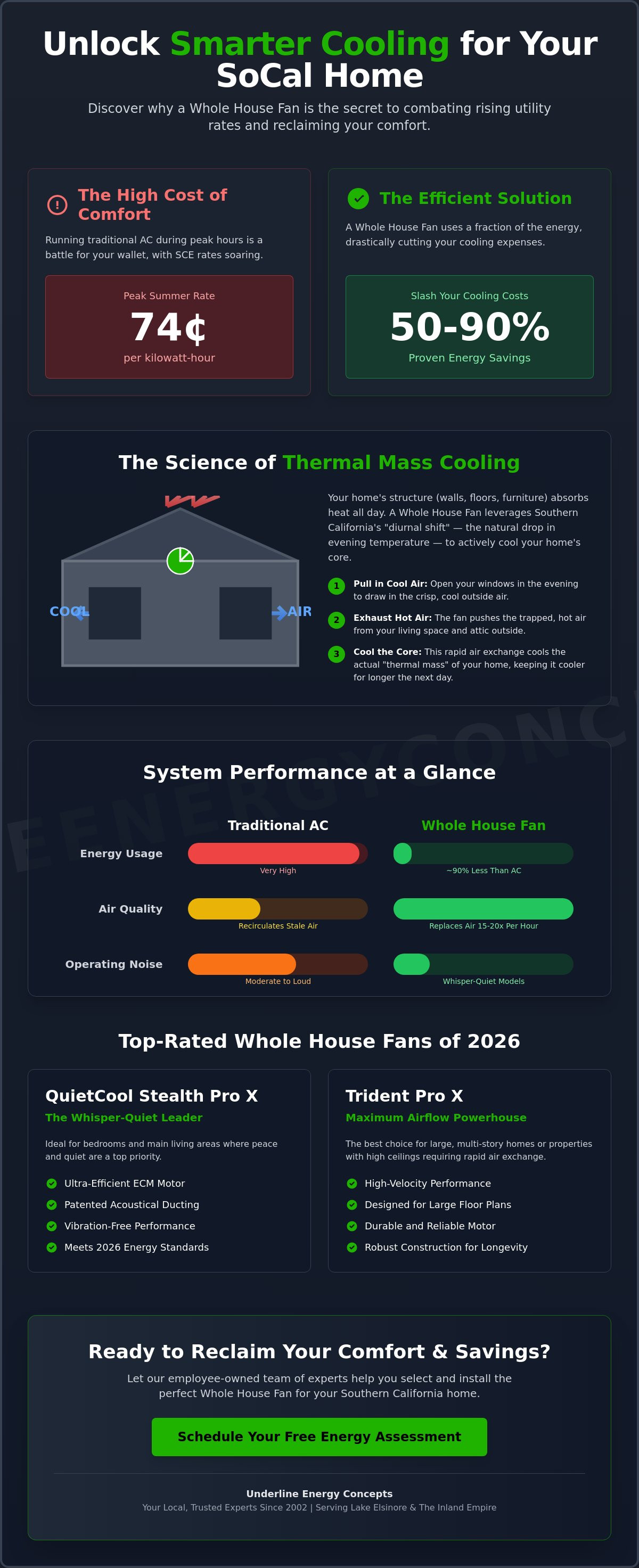
Underline Energy Concepts has been helping neighbors optimize their homes since 2002. We've seen how the right ventilation system can transform a home's environment. Unlike a central air conditioner that recirculates the same stale air, a whole house fan replaces your home's entire air volume 15 to 20 times per hour. This rapid exchange doesn't just cool you down; it flushes out allergens, cooking odors, and pet dander, significantly improving your indoor air quality.
The Science of Thermal Mass Cooling
The secret to why these systems work so well in our region lies in "thermal mass cooling." When the sun goes down, our local "diurnal shift" brings a welcome drop in temperature. A whole house fan takes advantage of this by pulling that crisp, dense evening air through your open windows. As this air moves through the house and into the attic, it strips the heat away from your home's structure. If you are looking for a technical breakdown of what a whole-house fan is and the physics of air pressure, you'll find that it's the most efficient way to reset your home's temperature for the following day. By cooling the actual mass of the building, your home stays cooler longer into the next morning.
Financial Relief from Rising SoCal Utility Rates
Southern California Edison (SCE) rates continue to put pressure on household budgets. As of January 2026, residential rates average between 34.5 and 35.3 cents per kWh. During the summer peak hours of Time-of-Use (TOU) plans, costs can reach a staggering 74 cents per kWh. Running a central AC unit during these times is the fastest way to see a three-digit utility bill.
Switching to a whole house fan during the evening and overnight hours allows you to bypass these peak charges. These fans use roughly one-tenth of the electricity required by traditional HVAC systems. To make the transition even more practical, you can often take advantage of SCE rebates for energy-efficient upgrades. As an employee-owned company based right here in Lake Elsinore, we focus on solutions that provide long-term stability. We believe every homeowner deserves to feel in control of their comfort and their costs. With 2026 energy standards pushing for higher efficiency, a whole house fan is a common-sense investment that pays for itself through immediate energy savings.
Top-Rated Whole House Fans of 2026: A Comparative Roundup
Selecting the best whole house fan for cooling your home requires more than just looking at a price tag. It involves matching the specific airflow needs of your floor plan with the right motor technology. Since 2002, our team at Underline Energy Concepts has tested various systems in the harsh heat of the Inland Empire. We've found that the right hardware choice determines whether you'll actually use the system or let it sit idle due to noise or inefficiency. Modern systems have evolved into a sophisticated, energy-efficient cooling solution that integrates seamlessly with smart home technology.
QuietCool Stealth Pro X: The Whisper-Quiet Leader
The Stealth Pro X remains the gold standard for homeowners who prioritize a peaceful environment. Its primary advantage is the Electronically Commutated Motor (ECM). This motor is essential for meeting 2026 energy standards because it operates at high efficiency even at lower speeds. This unit uses patented acoustical ducting to suspend the motor away from the ceiling intake. This design eliminates the vibration and "helicopter" noise common in older attic fans. It's the ideal choice for bedrooms and main living areas where you want to enjoy a cool breeze without turning up the volume on your television.
Trident Pro X: Maximum Airflow for Large Footprints
If you own a large, open-concept home in Menifee or Moreno Valley, you need raw power to move massive volumes of air. The Trident Pro X utilizes Permanent Split Capacitor (PSC) motors designed for high-velocity performance. These units provide the high Cubic Feet per Minute (CFM) ratings necessary to push hot air out of expansive two-story layouts. While slightly more audible than the Stealth series, the Trident is a workhorse. It's often the best whole house fan for cooling homes with vaulted ceilings or complex hallways where air resistance is higher. For very large estates, we often design multi-fan setups to ensure every corner of the house benefits from the cooling breeze.
Beyond motor types, you must consider your roofline. Gable-mounted fans are excellent if you have existing vents on the side of your house. However, roof-mounted configurations are often necessary for modern Southern California homes with hip roofs or limited gable space. If you've invested in a solar battery backup, look toward the Energy Saver series. These models are optimized to draw minimal power, ensuring your home stays cool without draining your stored energy during a grid outage. Choosing the right fit involves a careful look at your attic's layout and your family's lifestyle. You can speak with one of our local experts to determine which model aligns with your specific home goals.
Key Selection Criteria: How to Identify the Best Fan for Your Home
Choosing the best whole house fan for cooling your home is a technical decision that impacts your daily comfort and long term utility savings. It is not as simple as picking the most powerful unit on the shelf. You must balance airflow with your home's unique footprint and ventilation capacity. At Underline Energy Concepts, we prioritize homeowner education because a properly specified system is the difference between a cool breeze and a noisy, ineffective installation. This technology is widely recognized by the Department of Energy as a powerful energy-efficient alternative to air conditioning, but only when sized correctly for your specific environment.
Sizing Your Fan: The 2-3 CFM Rule
The most critical step is calculating your required Cubic Feet per Minute (CFM). A reliable industry standard is to provide between 2 and 3 CFM for every square foot of living space. To find your target, multiply your total square footage by 2.5. For example, a 2,000 square foot home in Murrieta would ideally require a fan rated at 5,000 CFM. While it's tempting to "over-size" for more power, doing so without enough open windows can create excessive negative pressure. This can lead to backdrafting or even pull dust from your attic into your living space. We focus on creating a balanced "envelope" where air moves freely and safely through the entire house.
The Importance of R-Value and Insulated Dampers
The best whole house fan for cooling must also be efficient when it is turned off. In Southern California, summer days are hot, and you don't want your expensive air conditioning leaking into the attic. Look for units equipped with R5 or higher insulated dampers. These act as a thermal barrier, sealing your ceiling when the fan is not in use. This prevents "attic heat" from radiating back into your home during the peak of the day. This setup perfectly complements your existing attic insulation for heat reduction, ensuring your home remains a sealed, efficient environment year round.
Finally, evaluate your attic's "net free venting area." The general rule of thumb is to have one square foot of vent area for every 750 CFM of fan capacity. If your attic is "choked" by insufficient venting, the hot air has nowhere to go, which forces the fan to work harder and increases noise levels. We always inspect your soffit and gable vents during our consultation to ensure your home can handle the massive air exchange these fans provide. By following these steps, you move closer to energy independence and a naturally cooler home.
Professional Installation: Beyond Just Cutting a Hole in the Ceiling
Installing the best whole house fan for cooling involves much more than simply creating an opening in your drywall. While DIY videos often make the process look like a weekend project, they frequently ignore the complex safety and electrical requirements specific to our region. At Underline Energy Concepts, we approach every installation as a critical upgrade to your home's infrastructure. Being an employee-owned company based in Lake Elsinore since 2002, we take personal responsibility for the safety and long term performance of every system we install. Proper installation ensures your fan operates at peak efficiency without compromising your home's structural integrity or fire safety.
Meeting California Fire and Building Codes
Southern California presents unique environmental challenges, particularly in high fire risk areas like Wildomar, Corona, and the foothills of the Santa Ana Mountains. Modern building codes now require specific fire rated dampers that automatically seal if temperatures in the attic rise too high. We also evaluate your existing attic vents to ensure they meet current ember resistance standards. These specialized vents prevent wind-driven embers from entering your attic during a wildfire, a detail often overlooked by non-local contractors. Additionally, many older homes in Lake Elsinore or Perris have aging electrical systems. We ensure your wiring is up to code, often integrating the fan with a main electrical panel upgrade to handle the modern power demands of a fully electrified home safely.
Synergy with Solar and Battery Systems
One of the most significant advantages of a whole house fan is how it supports your journey toward energy independence. By running your fan during the evening and overnight, you drastically reduce the cooling load your air conditioner faces the following day. This strategy is vital if you have invested in a whole home battery backup. Because a fan draws significantly less power than an AC compressor, you can maintain a comfortable temperature during a grid outage without draining your stored energy.
For homeowners looking for the ultimate in reliability, we offer QuietCool Battery Charge Mounts. These allow your cooling system to remain functional and efficient even when you are operating off-grid or during public safety power shutoffs. Timing is everything; by using "Solar Surplus" energy in the late afternoon to begin the cooling process, you preserve your battery for essential evening use. This integrated approach turns your cooling system into a strategic asset for your home's energy ecosystem. To ensure your system is installed to these high standards, schedule a professional consultation with our local team today.
Maximizing Your ROI with Underline Energy Concepts
Selecting the best whole house fan for cooling is a significant first step toward energy autonomy. However, the true return on investment comes from how that system integrates into your home's larger energy strategy. Underline Energy Concepts is not just a fan installer; we are a licensed general, roofing, and electrical contractor. This multi-discipline expertise means we understand how a fan installation affects your roof's warranty and your home's electrical load. We recommend QuietCool systems specifically for Southern California because they are built to withstand our intense summer heat while providing the quietest operation available on the market.
Our approach focuses on long term stability rather than quick fixes. We've seen many homeowners in Temecula and Murrieta struggle with high bills because their home systems don't work together. By choosing a partner who understands the entire energy ecosystem, you ensure that your fan, your roof, and your electrical panel are all optimized for maximum performance. This comprehensive view is what allows us to deliver results that go beyond simple air movement.
Comprehensive Energy Efficiency Bundling
When you bundle a whole house fan with a solar panel installation, you create a powerhouse of efficiency. A new, well ventilated roof combined with a high performance fan can drop attic temperatures by 30 to 50 degrees. This massive reduction means your air conditioner doesn't have to fight a "heat cap" sitting directly over your living space. We also encourage our neighbors to take advantage of our referral program, which helps local families share the benefits of energy independence while being rewarded for their advocacy.
Your Local Partner for Energy Independence
Since 2002, our brick and mortar office in Lake Elsinore has served as a hub for energy solutions across Riverside County. Being employee owned and operated means every member of our team is personally invested in the quality of your installation. We don't just finish a job and disappear. We build long term partnerships through regular maintenance, solar cleaning, and roof inspections that keep your home running at peak efficiency. This local presence ensures you always have a reliable expert to call when you need support.
We believe that moving to new technology should feel like a practical, common sense decision. Our goal is to provide the education and workmanship you need to feel confident in your home's future value. Stop letting rising utility rates dictate your lifestyle and start enjoying the relief of a naturally cool home. We are ready to help you evaluate your home's potential and design a solution that fits your specific needs. Schedule your whole house fan inspection today and take control of your home's comfort.
Take Control of Your Home's Climate and Energy Future
You now understand how a whole house fan does more than just move air; it resets your home's thermal mass to keep you cool long after the sun goes down. By leveraging the Southern California diurnal shift, you can flush out the day's heat and replace it with crisp, evening air for a fraction of the cost of air conditioning. Choosing the best whole house fan for cooling is a strategic decision that offers immediate financial relief from rising SCE utility rates and improves the air quality for everyone inside.
Underline Energy Concepts is your dedicated local partner in this transition. As a licensed roofing, electrical, and general contractor serving the region since 2002, we provide the specialized expertise required for a safe, code-compliant installation. Our employee-owned and operated team takes pride in helping our neighbors in Lake Elsinore and beyond achieve lasting energy independence. We invite you to move toward a more sustainable and comfortable lifestyle with confidence. Schedule Your Whole House Fan Consultation with Underline Energy Concepts today. Experience the peace of mind that comes with a home optimized for efficiency and long-term value.
Frequently Asked Questions
How much does a whole house fan actually save on AC bills in Southern California?
You can reduce your air conditioning usage by 50 to 90 percent by switching to a whole house fan. These systems cost as little as one tenth of what a central air conditioner costs to operate. In Southern California, where summer peak rates are notoriously high, this shift provides immediate relief on your monthly utility statement by moving the cooling load to off peak hours.
Do I need to leave my windows open when running a whole house fan?
Yes, you must open a few windows to provide a source of fresh, cool air for the fan to pull through your home. Operating the fan with closed windows can create negative pressure, which may lead to backdrafting from gas appliances or fireplaces. We recommend opening windows in the specific rooms you want to cool most effectively to direct the airflow.
Can a whole house fan be used if I have allergies or asthma?
A whole house fan is an excellent tool for improving indoor air quality because it replaces the entire volume of air in your home 15 to 20 times per hour. This rapid exchange flushes out stale air, pet dander, and indoor pollutants that often linger in sealed homes. If outdoor pollen counts are exceptionally high, you can time your usage for the early morning when counts are typically lower.
What is the difference between a whole house fan and an attic fan?
A whole house fan pulls air from your living space into the attic and out through vents, while an attic fan only circulates air within the attic itself. The best whole house fan for cooling actually lowers the temperature of your walls and furniture by replacing the air you breathe. In contrast, an attic fan simply helps prevent your attic from reaching extreme temperatures without directly cooling your rooms.
How many attic vents do I need for a QuietCool system to work properly?
Proper ventilation requires one square foot of net free attic vent area for every 750 CFM of fan capacity. If your attic lacks sufficient venting, the air pressure will increase, making the fan louder and significantly less efficient. Our team at Underline Energy Concepts evaluates your existing vents during every inspection to ensure your system has enough room to exhaust the hot air properly.
Is professional installation required for a whole house fan warranty?
Professional installation is highly recommended to protect your manufacturer warranty and ensure your home meets California Title 24 energy codes. Many manufacturers require proof of a licensed installation to honor long term parts coverage. Since we are licensed roofing, electrical, and general contractors, we provide the documentation and expertise needed to keep your investment fully protected and compliant with local fire codes.
Can I run my whole house fan during a Southern California heatwave?
You should run your fan during a heatwave only when the outside temperature is lower than the temperature inside your home. This typically occurs in the late evening and early morning hours across the Inland Empire and coastal regions. By pulling in the cooler night air, you can pre cool your home's structure and reduce the need for air conditioning the following afternoon.
How do whole house fans integrate with smart home systems like Nest or Alexa?
Modern systems integrate easily with smart home platforms through dedicated Wi-Fi controllers and smartphone apps. You can set schedules, adjust fan speeds, and monitor performance from your phone or through voice commands. This level of control helps you maximize savings by ensuring the best whole house fan for cooling only runs when it is most effective and energy efficient for your schedule.