
Roof Replacement for Solar Panels in Southern California: The 2026 Strategy
/
Article by
Jesse Malone
Jesse Malone
CEO & Partner, Underline Energy Concepts
Jesse Malone is the CEO and Partner of Underline Energy Concepts, a Southern California energy services company that has been serving homeowners since 2002. Since joining the company and becoming a partner in approximately 2015, Jesse has helped lead its growth into one of Southern California’s most trusted providers of residential energy efficiency and home improvement solutions.
Throughout his tenure, Jesse and the Underline Energy team have completed more than 2,500 energy upgrade projects for homeowners across Southern California. These projects include solar energy systems, roofing, battery storage, EV charging stations, electrical panel upgrades, water heater replacements, attic insulation, retrofit windows, and other energy-efficient home improvements designed to lower utility costs and increase property value.
Jesse holds a Bachelor’s Degree from California Southern University and brings more than 20 years of experience in emergency services through his service with the fire department. His background in public service has shaped his leadership style, emphasizing integrity, accountability, safety, and a commitment to serving the community.
A lifelong advocate for efficiency and practical solutions, Jesse is passionate about helping homeowners make informed decisions that improve both their homes and their financial future. His interests extend beyond energy efficiency into financial literacy, budgeting, investing, and long-term wealth-building strategies. He believes that reducing unnecessary expenses and maximizing efficiency are key components of financial success.
As CEO, Jesse continues to focus on delivering exceptional customer experiences, building high-performing teams, and helping Southern California homeowners achieve greater comfort, energy independence, and long-term savings through smart home investments.
Why would you pay for the same labor twice when you could secure your home's energy future for the next quarter-century in one move? Most homeowners across Lake Elsinore and the Inland Empire are rightfully concerned about the "detach and reset" trap, where an aging roof fails shortly after expensive solar panels are installed. Planning a roof replacement for solar panels in Southern California shouldn't feel like a gamble. It's a common anxiety, especially as utility costs continue to climb and the shift to NEM 3.0 makes every kilowatt count. You deserve a solution that prioritizes long-term stability over a quick fix.
In this guide, you'll discover how to coordinate these projects to avoid redundant labor costs, navigate available financial incentives in 2026, and maintain a seamless warranty. We'll explore the logical benefits of bundling your roof and solar installation with a single, employee-owned local partner to guarantee a leak-free home for 25 years or more. By the end, you'll have a clear roadmap to maximize your savings and achieve energy independence through a durable, integrated system that protects your property value.
Key Takeaways
- Avoid the "Lifespan Paradox" by ensuring your roof's remaining life matches the 25-year durability of your new solar panels.
- Synchronizing a roof replacement for solar panels Southern California eliminates the "detach and reset" trap, saving you thousands in future labor costs.
- Learn how to navigate 2026 tax guidance to maximize your financial incentives when bundling roofing and solar projects.
- Protect your investment against Inland Empire stressors like Santa Ana winds and extreme UV exposure with specialized roofing materials.
- Ensure long-term reliability and single-source accountability by partnering with a local, employee-owned contractor for both installations.
Why Your Roof is the Foundation of a 25-Year Solar Investment
Your roof is more than just a cover; it's the structural base for your personal power plant. In Southern California, we often encounter the "Lifespan Paradox." This occurs when homeowners install high-tech solar panels with a 25-year life expectancy on a roof that only has five or ten years of service left. It's a fundamental mismatch that creates a financial trap. Installing a rooftop solar power system on an aging surface is a mistake that almost always results in paying double for labor when the roof eventually fails. If your roof is already showing signs of wear, a roof replacement for solar panels Southern California is the only logical way to protect your investment.
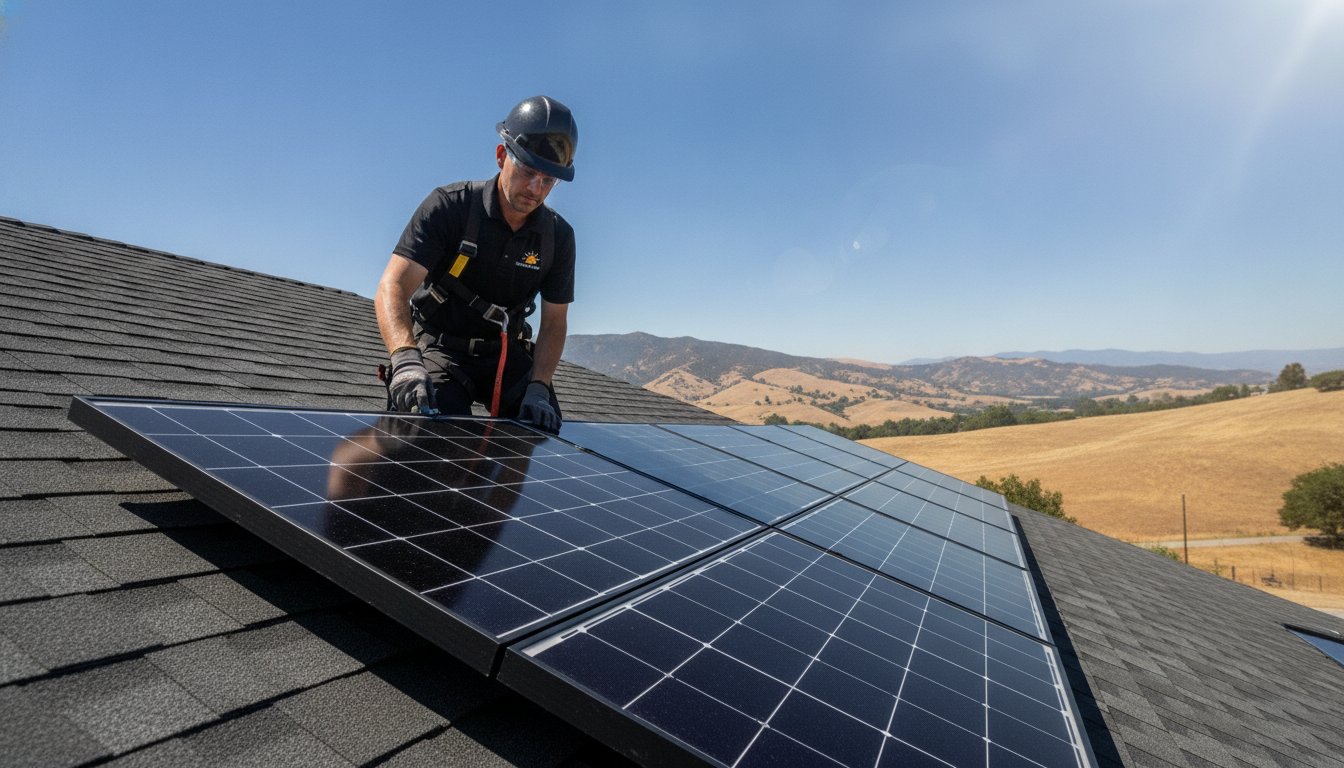
Modern high-efficiency solar arrays add significant weight and wind resistance to your home. A professional roof replacement for solar panels Southern California ensures your home's structure can handle these load-bearing requirements safely for decades. We focus on "Integrated Energy Roofing," which treats the roof and solar system as a single, cohesive unit. This approach boosts long-term property value by ensuring the entire system is built to last as long as your home's structural components. It's about moving from a reactive mindset to a proactive strategy that secures your energy independence.
The 25-Year Commitment: Matching Roof and Solar Durability
Tier 1 solar panels, such as those from REC, come with 25-year warranties that promise decades of clean energy. If your roof's warranty or physical condition doesn't match that timeline, you're building on a crumbling foundation. When a roof leaks under an existing solar array, the panels must be removed, stored, and then reinstalled after the repair. This "detach and reset" process adds thousands of dollars to a standard roof repair bill. At Underline Energy Concepts, we prioritize a foundation-first strategy. Because we handle both the roofing and the electrical in-house, we eliminate the common "finger-pointing" between different contractors that often leaves homeowners stuck with the bill.
Property Value and the "Solar-Ready" Roof
Synchronizing your roof and solar project isn't just about durability; it's about maximizing your home's appraisal value. In Riverside County, buyers look for homes that are maintenance-free and energy-efficient. A new roof that's specifically designed for solar integration looks significantly better than panels bolted onto an old, mismatched surface. Coordinating sleek, all-black solar modules with modern roofing materials creates a high-end aesthetic that appeals to future buyers. A solar-ready roof is one with optimized flashing and reinforced decking that provides a secure, leak-proof mounting surface for your investment.
Evaluating Your Southern California Roof: When to Repair vs. Replace
Southern California homes face environmental pressures that differ significantly from other regions. Extreme UV exposure in Lake Elsinore and the Inland Empire dries out roofing underlayment until it becomes brittle. Santa Ana winds test the uplift capacity of every shingle, while daily thermal expansion causes materials to shift and loosen over time. If your roof is already battling these stressors, adding a solar array without a proper inspection is a gamble. A roof replacement for solar panels Southern California is often the only way to ensure the structure remains watertight for the next two decades. While a simple repair might fix a localized leak, it won't address the systemic degradation caused by decades of California sun.
While Southern California roofs are built to withstand UV rays and wind, homes in colder climates require specialized systems to prevent freezing damage; you can learn more about Utah Heat Cable to see how regional experts manage ice dam prevention on high-performance roofing.
Proper attic insulation also plays a vital role in this evaluation. It regulates the temperature of the roof deck, preventing the wood from warping under the weight of modern high-efficiency panels. When we assess a home in Temecula or Murrieta, we look for signs that the internal structure is ready for the added load. If the underlayment is failing or the decking is soft, a full tear-off is the safest path forward. This proactive approach ensures your home remains protected while you maximize the benefits of California's Net Billing Tariff. If you aren't sure if your roof can handle another decade, it's worth scheduling a professional inspection to get a clear answer before you sign a solar contract.
Material Matters: Asphalt Shingles vs. Concrete Tiles
The type of material on your roof dictates how solar panels are mounted and flashed. Asphalt shingles, often called "comp shingles," are the industry standard for easy solar integration because they allow for straightforward waterproof flashing. However, many homes in Canyon Lake and surrounding areas feature concrete or clay tiles. These present the "Tile Roof Challenge" because tiles are prone to cracking under the weight of installers. For older tile roofs, we often recommend the "Tile-Replacement" method. This involves removing tiles in the solar area and installing high-quality shingles underneath the panels, which creates a more secure, leak-proof foundation while maintaining the home's aesthetic around the edges.
Fire Codes and Attic Ventilation Upgrades
In high-fire-threat areas of Southern California, local building codes are strict about safety. When you install solar, you must often address attic ventilation fire code upgrades to ensure your home meets current standards. Solar panels can sometimes restrict natural airflow from existing roof vents, which traps heat in your attic and forces your AC to work harder. We solve this by integrating new, fire-rated ventilation systems during the roofing phase. Combining a new roof with solar and a QuietCool whole house fan creates a powerful synergy. This setup flushes out hot air and reduces your overall energy demand, allowing your solar system to cover more of your home's needs.

The Detach and Reset Dilemma: Avoiding Hidden Labor Costs
One of the most frustrating expenses for Southern California homeowners is the "Detach and Reset" process. This occurs when you must pay a crew to remove your existing solar panels, store them safely, and then reinstall them after a roof repair or replacement. In 2026, labor rates for this service in the Inland Empire typically range from $200 to $500 per panel. For a standard 20-panel system, you could face an unexpected bill between $4,000 and $10,000 just for labor. Choosing a roof replacement for solar panels Southern California before your panels go up is the only way to ensure you don't pay for the same installation twice.
Beyond the high cost, hiring a standard roofing company to handle solar equipment carries significant risks. Many roofers lack the electrical expertise to safely disconnect and reconnect high-voltage DC systems. This often leads to damaged connectors, micro-cracks in the solar cells, or even voided manufacturer warranties. Bundling these services with Underline Energy Concepts eliminates this financial "double-dip." As an employee-owned company with in-house experts, we synchronize the roofing and solar phases to ensure your system is installed once, correctly, and with a single point of accountability.
The Real Cost of Waiting to Replace Your Roof
Waiting for a leak to happen before addressing an old roof is a high-stakes gamble. First, assess your current roof age; if it's over 15 years old, it likely won't survive the next 25 years of your solar investment. Second, calculate the future cost of panel removal against the 15% to 25% savings you can achieve by bundling the projects today. Finally, consider the risk of interior water damage. A leak under a solar array is harder to detect and much more expensive to reach. You can find more information on local financial incentives for these types of energy upgrades through the Database of State Incentives for Renewables & Efficiency, which helps you plan for maximum ROI.
Single-Source Accountability: The "One Team" Advantage
The biggest headache in home improvement is "finger-pointing" between contractors. If a leak occurs after a solar installation, the roofer blames the solar company, and the solar company blames the roofer. We eliminate this stress by maintaining both C-39 (Roofing) and C-10 (Electrical) licenses. This dual expertise ensures that your SolarEdge or other high-efficiency inverter warranties remain fully intact. Our Lake Elsinore-based team handles every step, from the first shingle to the final electrical connection, providing you with a seamless experience and a roof that is structurally and electrically sound for decades.
Maximizing ROI: Bundling, Tax Credits, and NEM 3.0
Bundling a roof replacement for solar panels Southern California is the most effective way to protect your long-term return on investment. Under the current Net Billing Tariff, often called NEM 3.0, the value of exported energy has dropped by approximately 75 percent compared to previous years. This shift makes self-consumption your primary financial goal. By combining your roof, solar, and battery storage into one project, you streamline the financing and ensure your system is optimized to store energy for peak evening use. This integrated approach turns your home into a resilient asset that isn't at the mercy of rising utility rates.
Planning these upgrades together also allows you to address the entire energy envelope of your home at once. When you replace an aging roof, you have a unique window of opportunity to reinforce the structure and upgrade insulation, which reduces the overall size of the solar array you need. This efficiency lowers your initial costs and speeds up your payback period. In the Inland Empire, where summer heat drives massive electrical demand, this holistic strategy is the only way to achieve true energy autonomy.
Navigating the Federal Solar Tax Credit
As of 2026, the traditional 30 percent federal tax credit for homeowner-purchased solar systems has expired. However, this doesn't mean the financial benefits have vanished. Many Southern California homeowners now utilize third-party ownership models, such as leases or power purchase agreements. In these scenarios, the solar provider claims the available commercial credits and passes those savings to you through lower monthly payments. When performing a roof replacement for solar panels Southern California, it is vital to keep itemized records of all structural work. Certain reinforcements specifically required to support the solar array may still play a role in the overall project's financial structure. We recommend consulting with a tax professional to see how these 2026 changes impact your specific filing.
Local Rebates and SCE Marketplace Opportunities
Beyond federal incentives, local utility programs offer a path to quicker payback periods. You can explore the SCE Marketplace to find current rebates for energy-efficient upgrades that complement your new roof. Adding a whole-home battery backup during this phase is particularly savvy. It allows you to avoid the low export rates of $0.05 to $0.08 per kWh and instead use your own power when SCE rates are highest. This strategy maximizes your autonomy and provides reliable backup during grid outages. To further offset your costs, consider joining the Underline Energy Concepts referral program, which rewards you for helping neighbors in Lake Elsinore and Temecula achieve their own energy independence.
If you're ready to see how these 2026 financial shifts apply to your home, contact our team for a detailed ROI analysis.
Choosing an Integrated Contractor for Your SoCal Home
Why trust a national firm that doesn't know the specific wind load requirements of Temecula or the fire codes of Lake Elsinore? A local provider understands the nuances of Inland Empire building departments and the specific environmental demands of our region. When planning a roof replacement for solar panels Southern California, you need a partner who knows exactly how to navigate the permitting process for your specific city. National companies often use subcontractors who lack a personal stake in your home's long-term durability. By choosing a local specialist, you ensure that the team on your roof is familiar with the Santa Ana winds and UV intensity that define our climate.
A critical but often overlooked step is the electric panel upgrade for solar. Many older homes in the region have 100-amp panels that simply cannot handle a modern solar array and battery backup. Handling this upgrade during the roofing phase is the most efficient strategy. It prevents you from having to tear into your new exterior finish later and ensures your home's electrical "heart" is ready for the load. Before you sign any contract, verify that it includes comprehensive workmanship warranties and specific material grades. Ensure there are clear timeline guarantees to minimize the disruption to your daily life. A professional contract should leave no room for ambiguity regarding who is responsible for each phase of the project.
The Underline Difference: Local Expertise Since 2002
Since 2002, we've served as a relatable local partner for thousands of homeowners throughout Southern California. As an employee-owned and operated company, our team is personally invested in the quality of every final shingle and electrical connection. Our integrated approach handles everything from a 200-amp panel upgrade to the final waterproof flashing. We are a dedicated brick-and-mortar company based in Lake Elsinore, not a middleman or a sales organization that disappears once the contract is signed. This local presence means we are here for the long haul, providing the stability and reliability you need for a 25-year investment.
Your Next Steps Toward Energy Autonomy
Preparing your Menifee or Temecula home for installation involves a few simple steps, like clearing your driveway and securing pets, but the most important work happens before the crew arrives. Start by scheduling a comprehensive roof and solar inspection to identify any hidden structural issues. We also recommend a "Whole Home" energy audit to identify where your home is losing efficiency. This audit ensures you don't over-purchase solar capacity when a simple insulation upgrade might be more cost-effective. Taking these steps now provides the clarity and confidence you need to make a savvy financial decision.
Take control of your energy future today and avoid the stress of coordinating multiple contractors. Contact Underline Energy Concepts for your integrated roofing and solar consultation and experience the relief of a seamless, professional installation.
Take Control of Your 25-Year Energy Investment
Your home's transition to solar is a long-term commitment that requires a rock-solid foundation. By synchronizing your roofing and solar projects, you bypass the expensive "detach and reset" cycle and ensure your property remains watertight for decades. This integrated approach isn't just about technical synergy; it's about maximizing your financial savings under the current Net Billing Tariff and protecting your home against the unique stressors of the Inland Empire climate.
As a licensed general, roofing, and electrical contractor, Underline Energy Concepts has served Southern California homeowners since 2002. Our employee-owned team provides the single-source accountability you need to avoid contractor finger-pointing and warranty confusion. Deciding on a roof replacement for solar panels Southern California today is the smartest way to secure your energy autonomy and long-term peace of mind. We are here to guide you through every step of this whole-home upgrade with local expertise you can trust.
Don't leave your home's protection to chance. Schedule Your Professional Roof & Solar Inspection Today and start building your path toward a more resilient, energy-independent future.
Frequently Asked Questions
Does the 30% solar tax credit cover my entire roof replacement cost?
No, the federal tax credit generally does not cover the entire cost of a new roof. While the 30 percent credit for homeowner-purchased systems expired at the end of 2025, current 2026 incentives for third-party models still focus primarily on the solar equipment. Only the structural reinforcements specifically required for the solar array might qualify for certain tax benefits. You should always consult a tax professional to see which itemized costs from your roof replacement for solar panels Southern California project apply.
How much does it cost to remove and reinstall solar panels for a roof repair in Southern California?
Homeowners in Southern California typically pay between $1,000 and $3,500 for the labor involved in a solar detach and reset. This breaks down to roughly $200 to $500 per panel depending on the complexity of the mounting system. These costs cover the careful removal, safe storage, and precise reinstallation of your modules. Investing in a new roof now prevents you from paying this significant labor fee just a few years down the road.
Can I install solar panels on an old roof if I only need a few repairs?
You can install panels on a repaired roof, but it is a risky financial move if the surface has less than 10 years of life remaining. A roof replacement for solar panels Southern California is the only way to match the 25-year lifespan of modern Tier 1 panels. Patching an old roof often leads to leaks in areas not covered by the repair, forcing an expensive panel removal later. We recommend a full replacement if your roof is nearing its expiration date.
How long does a combined roof and solar installation take in Riverside County?
The physical installation of a combined roof and solar project generally takes between 5 and 10 business days. This includes tearing off the old materials, installing the new roof, and mounting the solar array. However, the total timeline in Riverside County includes several weeks for city permitting and final utility inspections. Coordinating both projects with one team streamlines this schedule by ensuring inspections are booked back-to-back without delays between different crews.
Will a new roof installation void my existing solar panel warranty?
A new roof installation will not void your solar warranty as long as the panels are handled by a licensed solar professional. If a standard roofing crew without electrical expertise removes the panels, they could cause micro-cracks or wiring damage that voids the manufacturer's guarantee. Our in-house team maintains all necessary licenses to ensure your panel and inverter warranties remain fully protected throughout the entire roofing process.
Is it better to use one company for both roofing and solar, or two specialists?
Using a single integrated company is the most reliable choice for protecting your home. When one contractor handles both the roof and the solar, you benefit from single-source accountability and a "no finger-pointing" guarantee. This approach ensures that the person installing the solar mounts is the same one responsible for the waterproof integrity of the roof. It simplifies communication and provides a seamless warranty for the entire energy system.
What are the best roofing materials for solar panels in the Southern California heat?
High-quality asphalt shingles and concrete tiles are the most effective materials for the Southern California climate. Asphalt shingles are favored for their ease of solar integration and cost-effectiveness, while concrete tiles offer superior durability against extreme UV exposure and Santa Ana winds. We often use specialized mounting hardware for tile roofs to prevent cracking and ensure a watertight seal that can withstand the intense heat of the Inland Empire for decades.
Do I need to upgrade my electrical panel if I am doing both a roof and solar?
Most Southern California homes require an electrical panel upgrade when adding solar, especially if you plan to include battery storage or EV charging. If your current panel is rated at 100 amps or less, it likely won't meet the safety requirements for a modern high-output system. Upgrading to a 200-amp or 400-amp panel during the roofing phase is the most efficient way to future-proof your home and ensure your new energy system operates at peak performance.