
Attic Ventilation Fire Code Upgrades: Protecting Your SoCal Home in 2026
/
Article by
Jesse Malone
Jesse Malone
CEO & Partner, Underline Energy Concepts
Jesse Malone is the CEO and Partner of Underline Energy Concepts, a Southern California energy services company that has been serving homeowners since 2002. Since joining the company and becoming a partner in approximately 2015, Jesse has helped lead its growth into one of Southern California’s most trusted providers of residential energy efficiency and home improvement solutions.
Throughout his tenure, Jesse and the Underline Energy team have completed more than 2,500 energy upgrade projects for homeowners across Southern California. These projects include solar energy systems, roofing, battery storage, EV charging stations, electrical panel upgrades, water heater replacements, attic insulation, retrofit windows, and other energy-efficient home improvements designed to lower utility costs and increase property value.
Jesse holds a Bachelor’s Degree from California Southern University and brings more than 20 years of experience in emergency services through his service with the fire department. His background in public service has shaped his leadership style, emphasizing integrity, accountability, safety, and a commitment to serving the community.
A lifelong advocate for efficiency and practical solutions, Jesse is passionate about helping homeowners make informed decisions that improve both their homes and their financial future. His interests extend beyond energy efficiency into financial literacy, budgeting, investing, and long-term wealth-building strategies. He believes that reducing unnecessary expenses and maximizing efficiency are key components of financial success.
As CEO, Jesse continues to focus on delivering exceptional customer experiences, building high-performing teams, and helping Southern California homeowners achieve greater comfort, energy independence, and long-term savings through smart home investments.
Did you know that up to 90% of homes lost in California wildfires are actually ignited by wind-blown embers rather than direct contact with flames? It's a staggering reality for Southern California homeowners, especially since these tiny firebrands can travel over a mile before finding a path into your attic through standard vents. This makes attic ventilation fire code upgrades your most critical line of defense against the unexpected. We understand the stress of facing rising insurance premiums and the confusion that comes with complex state mandates. You deserve to feel empowered and protected in your own home.
This guide explains how fire-rated ventilation protects your property from ember intrusion while meeting the strict 2026 California Wildland-Urban Interface Code. We'll walk you through the latest ASTM E2886 safety standards and show you how these upgrades can lower your insurance risk. You'll also see how proper airflow improves your home's energy efficiency, giving you long-term stability and peace of mind in our local Lake Elsinore community and across the region. It is time to take control of your home's safety and future-proof your property against the evolving climate challenges we face together.
Key Takeaways
- Understand why traditional attic vents are often the weakest link in your home’s wildfire defense and how living in a WUI zone changes your safety requirements.
- Learn how attic ventilation fire code upgrades meet the latest 2026 California standards to stop dangerous ember intrusion before it starts.
- Debunk the screen myth by discovering why standard mesh fails and how ASTM E2886 certified vents provide the protection your family needs.
- Follow a practical checklist to audit your existing vents and determine if your property is located in a high fire severity zone.
- Gain peace of mind by choosing a local, employee-owned partner that combines roofing expertise with long-term home energy stability.
The Critical Role of Attic Ventilation in Southern California Fire Safety
Riverside County homeowners face a unique set of challenges as we enter 2026. Living in the Wildland-Urban Interface (WUI) means your property sits at the intersection of developed land and fire-prone vegetation. While many people prioritize fire-rated shingles, your attic vents are actually the most vulnerable entry point during a wildfire. Traditional vents often act as a direct gateway for wind-blown sparks. The Critical Role of Attic Ventilation is to regulate temperature and moisture, but in a fire, standard openings become a dangerous liability. Standard mesh simply isn't enough to stop the fine, superheated debris that travels ahead of a fire front.
Modern attic ventilation fire code upgrades provide a dual advantage that serves you year-round. They stop embers while maintaining the consistent airflow necessary to prevent heat buildup. In our intense Southern California climate, stagnant attic air can easily reach 150 degrees. This extreme heat degrades your roof materials and forces your air conditioning to work overtime. Upgrading to fire-rated vents ensures your home stays cool during the summer and stays protected during fire season. It's a practical step that combines long-term property preservation with immediate energy savings.
Why Your Vents Matter More Than Your Roof
Data from CAL FIRE indicates that 90% of homes lost in wildfires are ignited by flying embers rather than direct contact with flames. During a wildfire, the temperature difference between the scorching exterior and your cooler attic creates a powerful suction effect. This pressure imbalance pulls burning debris through standard 1/4-inch mesh screens with ease. Ember intrusion is the primary cause of attic fires that destroy homes from the inside out. By installing ember-resistant attic ventilation fire code upgrades, you break this cycle of vulnerability and harden your home against the most common cause of loss.
Local Fire Risks: From Temecula to Lake Elsinore
Our local communities, from the hills of Temecula to the canyons surrounding Lake Elsinore, are particularly susceptible to Santa Ana winds. These high-velocity gusts don't just spread fire; they push embers with enough force to penetrate standard gable and dormer vents. Local municipalities are now tightening enforcement on fire-rated upgrades to increase community resilience. Underline Energy Concepts, based right here in Lake Elsinore, helps you meet these requirements with solutions that protect your property value. Choosing employee-owned quality means you get a local partner invested in your safety and energy independence.
Understanding California Building Code Chapter 7A and ASTM E2886
California Building Code Chapter 7A serves as the benchmark for construction in fire-prone regions. It specifies the types of materials that can withstand the intense heat and ember storms typical of Southern California wildfires. While these rules often apply to new construction, they provide a vital roadmap for existing homeowners looking to harden their properties. Relying on outdated mesh screens isn't a safe strategy anymore. Modern attic ventilation fire code upgrades focus on preventing ignition from the inside out by utilizing materials that don't fail under pressure.
The 1/150 and 1/300 rules are the math behind your safety. Generally, you need one square foot of net free ventilating area for every 150 square feet of attic space. If your home has a vapor barrier or perfectly balanced intake and exhaust, you might qualify for the 1/300 ratio. However, fire-rated vents can sometimes offer less 'open' space due to their protective baffles and internal structures. You'll need to calculate your needs carefully to avoid trapping heat. If you're unsure where your home stands, you can reach out for a professional assessment to ensure your home meets these rigorous standards.
Decoding the ASTM E2886 Testing Standard
This standard represents the gold level of protection for your roofline. To earn this rating, a vent undergoes two rigorous tests. First, it must resist direct flame impingement for a set period without allowing fire to pass through. Second, it has to stop wind-blown embers from entering the attic space. Many of these vents use intumescent materials that expand when exposed to high heat, effectively sealing your attic from the fire outside. ASTM E2886 vents must block 100% of embers in testing.
Meeting Net Free Area Requirements
Safety shouldn't come at the expense of your home's comfort. Fire-rated vents must still allow enough air to move through your attic to prevent moisture damage and heat rot. This balance is especially important if you utilize high-performance cooling solutions. For instance, a QuietCool whole house fan relies on massive amounts of exhaust air to pull heat out of your living space. If your attic ventilation fire code upgrades don't account for this airflow, you could limit your fan's efficiency or even void its warranty. Always ensure your intake and exhaust vents are balanced to maximize both protection and energy savings.

Beyond Airflow: Why Standard Vents Fail During a Wildfire
Many Southern California homeowners believe the 1/4-inch mesh on their current vents provides enough protection. It doesn't. This "Screen Myth" is a dangerous misconception that leaves properties vulnerable during peak fire season. In a wildfire, these standard openings act like funnels for small, wind-driven embers. High-velocity Santa Ana winds can force fire directly through standard gable and dormer vents with surprising pressure. Even if the flames stay at a distance, radiant heat can cause plastic vent covers to melt or warp, leaving your attic completely exposed. Transitioning to attic ventilation fire code upgrades replaces these weak points with durable, non-combustible materials designed to stay intact when the heat rises.
Standard aluminum vents also fall short because they lack the internal complexity to deflect high-speed debris. While they might resist melting better than plastic, their wide-open design allows embers to fly straight into your home's structure. WUI-compliant upgrades utilize specialized baffles and finer mesh to create a tortuous path that embers simply cannot navigate. It is a shift from simple "holes in the wall" to engineered safety components that prioritize your home's survival.
The Mechanics of Ember Intrusion
Thermal buoyancy creates a natural suction effect within your home. As hot air escapes through the roof, it pulls in air from lower vents to balance the pressure. During a fire, this vacuum draws in thousands of tiny, glowing embers. These sparks can land in your attic and smolder in the insulation for hours, long after the main fire front has passed through your neighborhood. This is why high-quality attic insulation for heat reduction is a critical companion to fire-rated vents. Proper insulation doesn't just keep your Lake Elsinore home cool; it acts as a secondary barrier that resists ignition from stray embers that might find a way in.
Vulnerability of Different Vent Types
Soffit vents are often the most common entry point for fire because they are located directly under the eaves where trapped heat and embers collect. Gable vents, with their large surface areas, require specialized fire-shutter technology or intumescent honeycomb filters to block heat transfer effectively. Even ridge vents can fail if they aren't part of a sealed, WUI-compliant system. Investing in attic ventilation fire code upgrades ensures every opening in your home is a shield rather than a doorway. At Underline Energy Concepts, we help our neighbors choose the right hardware to ensure their ventilation system works for them, not against them, when it matters most.
Planning Your Attic Ventilation Upgrade: A Homeowner’s Checklist
Upgrading your home for fire safety doesn't have to be overwhelming. By following a structured plan, you can ensure your property meets the 2026 standards while potentially lowering your insurance costs. Start by taking a proactive approach to your home's exterior. These attic ventilation fire code upgrades are a vital part of "home hardening," a process that makes your residence much more resilient to the environmental pressures of Southern California. Taking action now prevents future headaches with compliance and insurance renewals.
- Step 1: Identify your zone. Determine if your property sits within a Wildland-Urban Interface (WUI) or a High Fire Severity Zone.
- Step 2: Conduct a vent audit. Inspect every opening. Replace any plastic covers or vents with mesh larger than 1/8 inch with non-combustible materials.
- Step 3: Calculate airflow needs. Use the net free area requirements to ensure your fire-rated vents still provide enough air to prevent moisture damage and heat rot.
- Step 4: Coordinate with other upgrades. Select vents that integrate seamlessly with your existing roofing and solar installation to maintain your warranties and structural integrity.
- Step 5: Hire local expertise. Choose a contractor who understands Riverside County fire codes and the specific wind patterns of our region.
Identifying Your Risk Zone
The first step is checking the latest State Responsibility Area (SRA) maps adopted by CAL FIRE. These maps pinpoint areas with the highest risk and serve as a guide for building requirements. Insurance companies use this data to set premiums, and having verified fire-resistant features can often lead to significant discounts. Even if you live in a "Near-WUI" area, upgrading is a smart move for long-term stability. Fires don't stop at a map line, and wind-blown embers can easily jump into suburban neighborhoods far from the brush. Protecting your home is about managing the risks you can control before a crisis occurs.
Choosing the Right Materials
Material choice is the difference between survival and loss. Galvanized steel is the preferred option over aluminum because it maintains its structural integrity at much higher temperatures. Look for vents featuring intumescent coatings. These specialized materials swell when they sense extreme heat, creating a physical seal that blocks fire and embers from entering your attic. If you have or are planning to install one of the best whole house fan models, ensure your new vents provide enough net free area to support the fan's high-speed exhaust requirements. You can schedule a professional vent audit today to get a clear picture of your home's specific needs and ensure your cooling system works perfectly with your new safety features.
Professional Fire Code Upgrades with Underline Energy Concepts
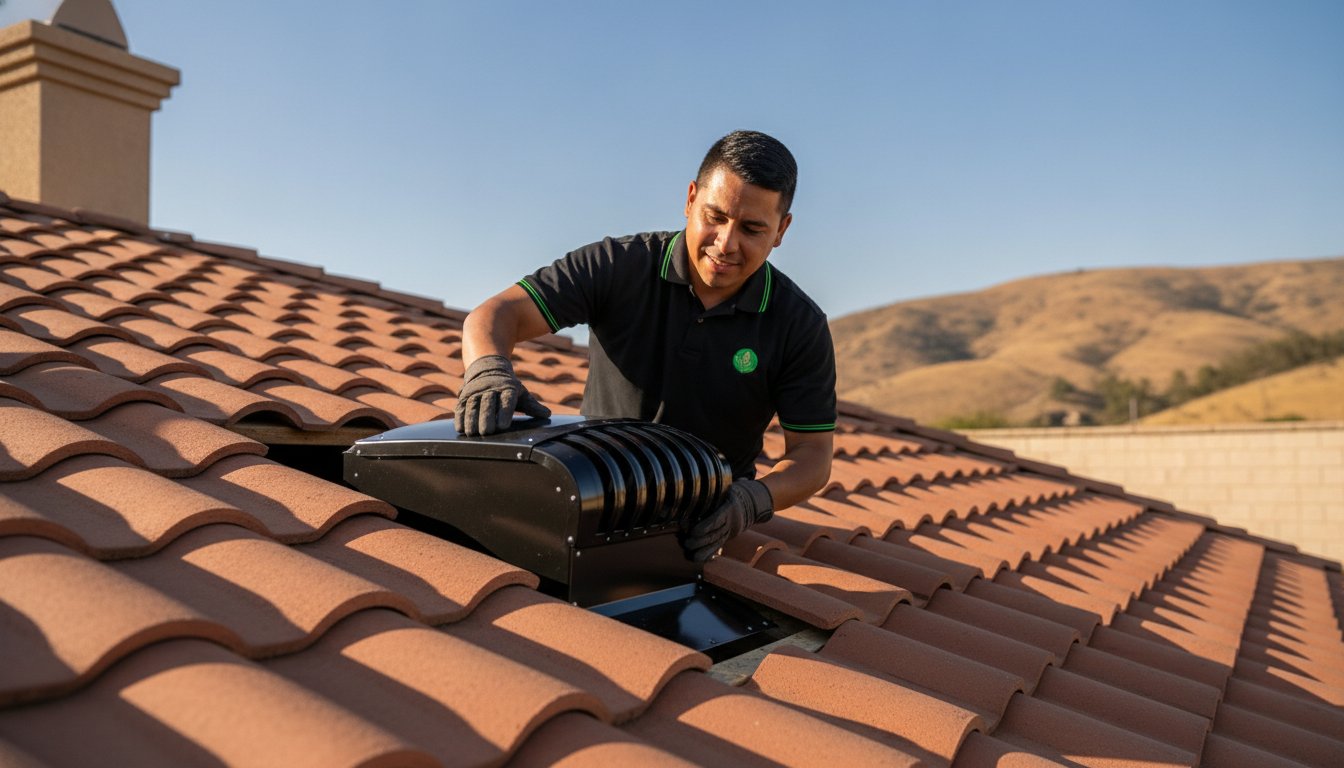
Selecting the right partner for your attic ventilation fire code upgrades requires a team that understands the complex relationship between your roof, your electrical system, and your home’s overall energy performance. At Underline Energy Concepts, we don't just swap out vents. We leverage our extensive background in roofing and electrical work to ensure every upgrade strengthens your home's entire structure. As an employee-owned local business based in Lake Elsinore, we take a personal interest in the safety of our Southern California neighbors. Our goal is to provide you with the autonomy to protect your property while optimizing your monthly utility costs.
Integrating fire-rated vents with your existing systems is where our expertise truly shines. If you have a solar array or a high-efficiency HVAC system, your ventilation needs are more specific than a standard home. We ensure your new ember-resistant vents maintain the precise airflow required to keep your solar inverters cool and your attic temperatures stable. This integrated approach maximizes your return on investment by preventing premature equipment failure and ensuring your home remains a fire-safe sanctuary. It's about combining long-term stability with environmental responsibility.
Comprehensive Energy and Safety Audits
We treat your home as a single, interconnected ecosystem. During an inspection, our experts look at the whole home rather than focusing on a single issue. We examine your attic insulation for signs of heat damage, check your ventilation ratios, and even look for aging electrical components that could pose a risk. If we find outdated wiring or compromised connections near your vents, we can include emergency electrical inspections as part of our safety check. This thoroughness ensures that when we finish our work, your home isn't just code-compliant; it's genuinely safer and more efficient.
Long-Term Value and Peace of Mind
Investing in attic ventilation fire code upgrades is a strategic move for your property's resale value. In today’s market, buyers and insurance companies prioritize hardened homes that meet the latest safety standards. Beyond the immediate protection from wildfires, these upgrades can qualify you for potential insurance premium discounts and various SCE rebates for energy efficiency improvements. It is a common-sense decision that pays dividends in both safety and savings. We believe in empowering homeowners through education, ensuring you understand exactly how your investment serves your family's future.
Take the first step toward a more resilient home today. Our Lake Elsinore team is ready to help you navigate the 2026 code changes with confidence and clarity. Don't wait for fire season to test your home's defenses. Schedule your fire-safety attic inspection with Underline Energy Concepts and gain the peace of mind you deserve.
Take Command of Your Home’s Fire Resilience
Building a fire-safe home is about making practical, informed choices before the next Santa Ana wind event. You now understand that standard vents are the weakest link in your defense, but 2026 standards provide a clear path forward. Implementing attic ventilation fire code upgrades is the most effective way to block ember intrusion while maintaining the energy efficiency your Southern California home needs. This proactive step ensures your property remains a safe haven for years to come.
Underline Energy Concepts has been a trusted, licensed Southern California General Contractor since 2002. We are employee-owned and operated in Lake Elsinore, bringing deep expertise in WUI-compliant roofing and ventilation to our local community. We don't just provide a service; we act as your partner in protecting your most valuable asset. Protect your home today: Schedule a Fire-Safety Attic Inspection with Underline Energy Concepts. Let's work together to make your home more secure, efficient, and ready for the future.
Frequently Asked Questions
Do I need to upgrade my attic vents if my home was built before 2021?
You should consider an upgrade even if it isn't strictly mandated for your specific build year. While the newest California Wildland-Urban Interface Code primarily targets new construction and major remodels, retrofitting older homes is the most effective way to prevent ember ignition. Upgrading your vents now ensures your property meets the 2026 safety standards and stays protected during our increasingly intense fire seasons.
Will fire-rated vents make my house hotter in the summer?
No, fire-rated vents are engineered to maintain high-velocity airflow while blocking hazardous debris. They provide the necessary net free area to exhaust trapped heat and moisture just as effectively as standard models. In many cases, professional attic ventilation fire code upgrades actually improve your home's circulation. This helps your air conditioning run more efficiently during the scorching Riverside County summers.
What is the difference between a standard vent and a WUI-compliant vent?
The main difference is the ability to stop wind-blown embers. Standard vents often use 1/4-inch mesh that acts as a funnel for sparks. WUI-compliant vents utilize much finer mesh and specialized internal baffles or intumescent materials that swell to seal the opening when exposed to extreme heat. These vents must pass the rigorous ASTM E2886 test to prove they can block 100% of embers in a fire event.
Can I install fire-rated attic vents myself?
You can technically attempt it, but professional installation is the safest choice for maintaining your roof's warranty and ensuring full code compliance. Correct placement and sealing are vital to prevent water leaks and ensure the vents function as intended during a fire. Our Lake Elsinore team has the specific expertise to integrate these vents with your existing roofing materials and solar arrays safely and effectively.
How much do attic ventilation fire code upgrades typically cost in Southern California?
The total investment depends on your roof's pitch, the number of vents required, and the specific hardware chosen for your home's architecture. Because every home in the Inland Empire is unique, we focus on providing tailored solutions that maximize your safety and long-term property value. Choosing high-quality, fire-rated materials is a common-sense decision that can help you avoid the much higher costs of wildfire damage or insurance non-renewal.
Does the fire code require specific vents for solar panel installations?
Yes, solar panels change the way air moves across your roof and require specific clearances to meet fire safety standards. Vents located near solar equipment must be constructed from non-combustible materials to prevent a fire from spreading into the attic space. Coordinating your attic ventilation fire code upgrades with your solar installation ensures that your entire energy system remains safe, reliable, and fully compliant with local Riverside County regulations.
What happens if my attic vents are not up to fire code during an insurance inspection?
Non-compliant vents can result in significantly higher premiums or the total loss of your coverage in high-risk zones. Many insurance providers now use drones and on-site inspections to verify "home hardening" features like ember-resistant vents. Taking proactive steps to upgrade your ventilation shows your insurer that you're serious about risk reduction. This can be a deciding factor in maintaining an affordable policy in Southern California.
Are there rebates available for fire-safe attic upgrades in Riverside County?
Rebates often focus on the energy efficiency side of ventilation, such as whole house fans or attic insulation. However, because proper fire-rated venting improves your home’s thermal performance, these projects often overlap with SCE efficiency programs. We help you look for every opportunity to stack savings while you harden your home. This approach makes the transition to new, safer technology a practical and financially savvy decision for your family.