
How to Lower Your Electric Bill in Southern California: The 2026 Homeowner’s Strategy
/
Article by
Jesse Malone
Jesse Malone
CEO & Partner, Underline Energy Concepts
Jesse Malone is the CEO and Partner of Underline Energy Concepts, a Southern California energy services company that has been serving homeowners since 2002. Since joining the company and becoming a partner in approximately 2015, Jesse has helped lead its growth into one of Southern California’s most trusted providers of residential energy efficiency and home improvement solutions.
Throughout his tenure, Jesse and the Underline Energy team have completed more than 2,500 energy upgrade projects for homeowners across Southern California. These projects include solar energy systems, roofing, battery storage, EV charging stations, electrical panel upgrades, water heater replacements, attic insulation, retrofit windows, and other energy-efficient home improvements designed to lower utility costs and increase property value.
Jesse holds a Bachelor’s Degree from California Southern University and brings more than 20 years of experience in emergency services through his service with the fire department. His background in public service has shaped his leadership style, emphasizing integrity, accountability, safety, and a commitment to serving the community.
A lifelong advocate for efficiency and practical solutions, Jesse is passionate about helping homeowners make informed decisions that improve both their homes and their financial future. His interests extend beyond energy efficiency into financial literacy, budgeting, investing, and long-term wealth-building strategies. He believes that reducing unnecessary expenses and maximizing efficiency are key components of financial success.
As CEO, Jesse continues to focus on delivering exceptional customer experiences, building high-performing teams, and helping Southern California homeowners achieve greater comfort, energy independence, and long-term savings through smart home investments.
Did you know that Southern California Edison rates have climbed to an average of 34.4 cents per kWh, with peak summer pricing hitting a staggering 74 cents? If you live in the Inland Empire, you already know that mandatory AC use can turn a monthly statement into a major financial burden. It feels like the goalposts keep moving, especially with the shift to NEM 3.0 and new fixed base charges that make traditional energy saving feel like a losing battle.
We believe you deserve a home that stays cool without draining your savings. This guide provides a comprehensive strategy to lower electric bill Southern California costs through a combination of rate optimization, structural efficiency, and true energy independence. You'll discover how to navigate the current utility landscape, maximize your ROI on home improvements, and use battery storage to shield your family from peak pricing. It is time to stop reacting to utility hikes and start dictating your own energy future.
Key Takeaways
- Learn how to navigate SCE’s complex Time-of-Use (TOU) windows and fixed charges to avoid paying as much as 74 cents per kWh during peak hours.
- Discover why reinforcing your home’s "thermal envelope" with high-quality attic insulation is the most effective way to reduce AC dependency in the Inland Empire.
- Understand the shift to NEM 3.0 and why pairing solar panels with a whole-home battery backup is now essential for maximizing your energy savings.
- Identify high-impact appliance upgrades, such as hybrid water heaters, that eliminate "energy vampires" and improve your home’s overall efficiency.
- Develop a personalized, multi-layered roadmap to lower electric bill Southern California costs by combining structural fixes with smart energy generation.
Understanding the SoCal Energy Landscape: Why Bills Are Rising
Your monthly statement from Southern California Edison (SCE) often feels like a puzzle. You see the "Generation" and "Delivery" charges, but then there's the "Public Purpose Programs" fee. This line item funds state-mandated initiatives like low-income assistance and energy efficiency research. While these programs serve a broader good, they contribute to the fact that SoCal residents pay some of the highest electricity costs in the nation. As of mid-2026, the average residential rate sits at 34.4 cents per kWh. If you want to lower electric bill Southern California expenses, you have to understand exactly what you're being charged for.
The biggest factor in your bill is the Time-of-Use (TOU) window. During peak hours, typically 4-9 p.m. or 5-8 p.m., rates can skyrocket up to 74 cents per kWh. This is especially brutal for those of us in the Inland Empire. While coastal residents enjoy a marine layer, homeowners in Lake Elsinore and Menifee face intense heat gain that makes air conditioning mandatory. You can start managing these costs today by applying basic principles of energy conservation. Simple behavioral shifts, like "pre-cooling" your home in the morning and running heavy appliances before 4 p.m., can save you hundreds over a summer season.
Optimizing Your SCE Rate Plan
Choosing the right plan is your first line of defense. Most SCE customers are on either the TOU-D-4-9PM or TOU-D-5-8PM plan. If your household is empty during the day but busy in the early evening, the 5-8 p.m. window might offer more breathing room. Conversely, if you can delay chores until later at night, the 4-9 p.m. plan might be cheaper. We recommend using the SCE Rate Comparison Tool to analyze your actual usage history. Check if your city has joined a Community Choice Aggregator (CCA), which can sometimes offer more competitive generation rates than SCE's standard offer.
Rebates and Financial Assistance in 2026
Financial relief is available if you know where to look. Programs like CARE offer a 30% discount for qualified households, while FERA provides an 18% discount for families that slightly exceed CARE income limits. Beyond direct assistance, the SCE Marketplace lists current rebates for smart thermostats and energy-efficient appliances. Don't forget about the federal 25C tax credit. This allows you to claim a percentage of the cost for weatherization and high-efficiency upgrades, helping you offset the initial investment of making your home more resilient. Underline Energy Concepts has been an employee-owned partner in this region since 2002; we're here to help you navigate these incentives to ensure you get the maximum return on your home improvements.
Reinforcing the Envelope: Structural Efficiency Upgrades
Most homeowners focus on behavior, but your home's physical structure often works against you. The "thermal envelope" is the barrier between your conditioned air and the scorching Inland Empire sun. When this barrier fails, heat pours into your attic, turning it into a 150 degree oven that forces your air conditioner to run 24/7. Upgrading your attic insulation is widely considered the highest ROI energy improvement for Riverside County homes. It's a one-time fix that provides permanent relief from the rising costs we discussed earlier. To effectively lower electric bill Southern California charges, you must stop the heat before it enters your living space.
High-efficiency windows play a secondary but vital role in this defense. Traditional single-pane glass allows radiant heat to pass through effortlessly, warming your furniture and floors like a greenhouse. Modern windows with low-emissivity (Low-E) coatings reflect this heat back outside. These upgrades work in tandem with modern fire code requirements for attic ventilation. Modern ember-resistant vents ensure that while you're sealing the heat out, you're meeting safety standards that protect your property from fire hazards during our dry seasons. These structural changes turn your home into a fortress against external temperatures.
Attic Insulation and Ventilation
Blown-in cellulose is a top choice for SoCal heat because it's denser than traditional fiberglass; it provides superior resistance to airflow and heat transfer. If your insulation looks flat, dusty, or is level with your floor joists, it has likely settled and failed. Proper venting is just as critical as the material itself. Without a clear path for intake and exhaust, trapped heat will eventually radiate through your ceiling, no matter how much insulation you have. We've seen homes where simple ventilation corrections dropped attic temperatures by 30 degrees overnight.
QuietCool Whole House Fans
Once the sun goes down, Southern California often experiences a "Delta T," which is a significant drop in outdoor temperature. A QuietCool system leverages this by pulling cool evening air through your windows and flushing the hot, stagnant air out of your attic. This process can reduce your AC runtime by up to 90% during the cooling months. Unlike the noisy, vibrating attic fans of the past, these systems are whisper-quiet and highly efficient. If you're ready to see how these structural changes can transform your monthly costs, our employee-owned team can provide a professional home energy assessment to identify your home's weakest points.

High-Impact Appliance Upgrades: Cutting Hidden Costs
While sealing your home's envelope stops heat from entering, your internal appliances often generate their own financial heat. Many homeowners in our region are surprised to find that "energy vampires"—devices that pull power even when turned off—can account for a significant portion of a monthly statement. To truly lower electric bill Southern California totals, you have to look beyond the thermostat and address the heavy hitters in your utility room. The logic is simple: the less energy your appliances require to perform, the less you're exposed to those high SCE tier rates.
We're also seeing a massive shift in the cost-benefit analysis of electrification. For decades, natural gas was the default choice for water heating and cooking in Riverside County. However, as gas prices fluctuate and electric technology becomes more efficient, switching to high-performance electric alternatives is often the smarter financial move. This is especially true if you plan to generate your own power through solar. Modern systems are designed to handle the 100-plus degree days in Menifee and Lake Elsinore without breaking a sweat or your budget.
Hybrid Heat Pump Water Heaters
A hybrid heat pump water heater is one of the most underrated tools for energy independence. These units are three to four times more efficient than standard electric tanks because they move heat rather than creating it. In a Southern California garage, these heaters actually pull heat out of the surrounding air to warm your water. This creates a "cool" side effect: your garage stays noticeably dehumidified and several degrees cooler. You can find current 2026 incentives for these units on the SCE Marketplace, which significantly accelerates your return on investment.
Energy Efficient HVAC and Maintenance
In high-temperature zones like the Inland Empire, your HVAC system is your largest energy consumer. Modern units now use SEER2 ratings, which provide a more accurate measure of efficiency in real-world conditions. If you're upgrading an older system, a 200 amp or 400 amp electric panel upgrade is often necessary to support the increased electrical load of modern, high-efficiency heat pumps. Don't overlook the basics, though. Replacing a clogged filter can save between 5% and 15% on your cooling costs. Since 2002, our employee-owned team at Underline Energy Concepts has helped neighbors maintain these systems to ensure they don't become a liability when the mercury rises.
Energy Independence: Solar and Battery Storage in 2026
The rules for solar changed fundamentally with the introduction of NEM 3.0, also known as the Net Billing Tariff. Under these 2026 regulations, the value of the energy you export back to the grid has dropped by approximately 75% compared to older plans. You're now looking at export credits of just $0.05 to $0.08 per kWh. If you want to lower electric bill Southern California costs, your strategy must shift from selling power to the utility to storing and using every drop of energy you produce. This makes a solar-only system less effective, as the payback period has stretched to 9 to 13 years without storage.
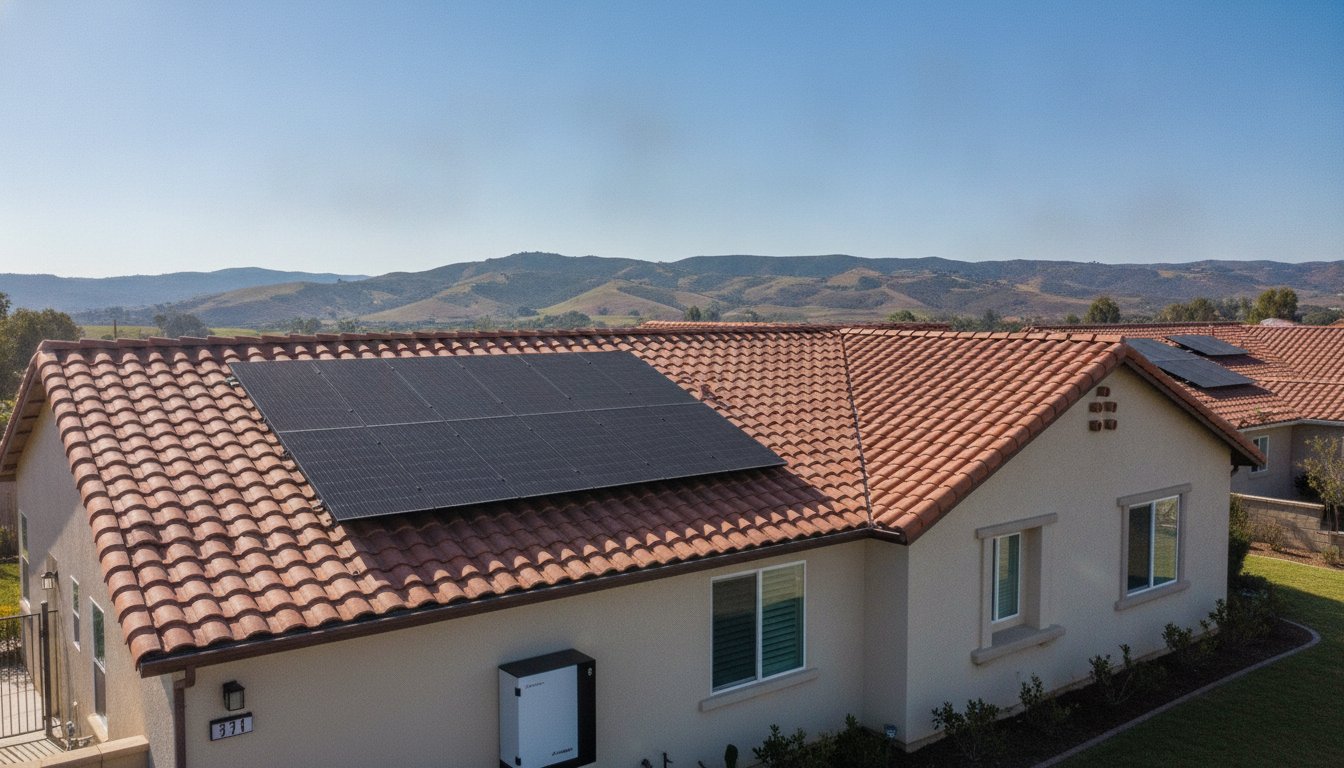
A modern SoCal energy system is incomplete without a battery. By pairing your panels with a whole-home battery backup, you capture your mid-day production and save it for those 4-9 p.m. peak hours when SCE rates can hit 74 cents. We also offer specialized solutions like Quietcool battery charge mounts to integrate your storage with your cooling needs. For homeowners with larger lots in the Inland Empire, we can evaluate whether solar ground mounts or traditional roof mounts offer the best orientation for your specific property and energy needs.
The Role of Battery Backup Systems
Battery storage allows for "load shifting," which is the most powerful tool you have to fight utility hikes. Instead of pulling from the grid during the expensive evening window, your home automatically switches to stored battery power. We utilize smart technology like SolarEdge inverters to give you total visibility and control over this process. You can choose between a whole-home battery backup for complete peace of mind or a critical load backup to keep your essentials running during a wildfire-related power shutoff. This autonomy provides both financial relief and physical security for your family.
Solar Panel Quality and Maintenance
To ensure your system survives the intense heat and Santa Ana winds, we recommend high-efficiency components like REC Solar panels. Quality matters because degraded panels won't produce enough to fill your battery during the shorter winter days. Remember that the Inland Empire's dust can significantly tank your production; regular cleaning is a mandatory part of ownership here. If your roof is nearing the end of its life, we suggest pairing solar with a roof replacement. Since we are a licensed roofing and electrical contractor based in Lake Elsinore, we can handle both simultaneously. This saves you from the double labor costs of removing and reinstalling panels just a few years down the road.
Ready to take control of your utility costs? Schedule a professional solar and storage consultation with our employee-owned team today.
Taking Action: Your Roadmap to a Lower Bill
Taking the first step toward energy independence shouldn't involve guesswork. While we've discussed high-tech batteries and structural insulation, the real challenge for most homeowners is prioritization. To truly lower electric bill Southern California expenses, you must address the low-hanging fruit first. Installing a large solar array on a home with failing attic insulation is like trying to fill a bucket with a hole in the bottom. We help you identify the right sequence of upgrades to ensure every dollar you invest delivers the highest possible return on your monthly statement.
A professional energy audit is the foundation of this strategy. While DIY checklists are a good start, they can't replace the precision of a thermal imaging scan or a professional evaluation of your electrical panel. We look at your home as a single, integrated system rather than a collection of separate parts. This "Whole-Home" philosophy ensures that your HVAC, insulation, and solar generation work in harmony to keep your family comfortable and your costs predictable. By identifying exactly where your home is losing energy, you can avoid unnecessary expenses and focus on the improvements that move the needle.
The Underline Energy Concepts Difference
Since 2002, Underline Energy Concepts has been a local fixture in the Riverside County community. As an employee-owned and operated company based in Lake Elsinore, we have a personal stake in the long-term success of our neighbors in Temecula, Murrieta, and Corona. We don't just sell equipment; we provide long-term stability in an era of rising utility costs. Our team understands the specific micro-climates of the Inland Empire and how they impact your energy needs. Plus, once you've experienced the relief of a lower bill, you can learn about our referral program to help your friends and family achieve the same independence.
Schedule Your Consultation
When you schedule an inspection with our experts, you're getting more than a sales quote. You're getting a comprehensive roadmap tailored to your family's 2026 energy goals. We'll walk through your property, analyze your SCE usage history, and provide a clear, prioritized list of improvements. Whether you're starting with attic insulation or ready for a full solar and battery backup system, we're here to guide you through the process with transparency and expertise. Our goal is to empower you with the information needed to make smart, financially savvy decisions for your property. Contact our Lake Elsinore experts today to begin your journey toward a cooler home and a smaller bill.
Start Your Journey Toward Energy Independence
Managing your utility costs in 2026 requires more than just turning off the lights. You now have the tools to lower electric bill Southern California totals by combining structural efficiency with advanced energy storage. By reinforcing your home's thermal envelope and integrating a whole-home battery backup, you effectively opt out of the utility's most expensive peak pricing windows. These changes don't just save money; they provide a more comfortable, resilient living environment for your family, allowing you to focus on other areas of health and wellness, such as the specialized support offered by Artemis Curated.
Underline Energy Concepts is your local, employee-owned partner with a brick-and-mortar presence in Lake Elsinore. Since 2002, our team has served as a licensed general, electrical, and roofing contractor, ensuring every project meets the highest standards of quality and safety. We're ready to help you navigate the complexities of NEM 3.0 and current rebates to maximize your long-term savings. You don't have to face rising rates alone. Schedule your free home energy inspection with Underline Energy Concepts today. Take the first step toward a more predictable and sustainable financial future.
Frequently Asked Questions
What is the fastest way to lower my SCE bill without spending money?
The quickest way to see a difference is to shift your heavy energy usage to off-peak hours. Southern California Edison charges the highest rates during the 4 p.m. to 9 p.m. or 5 p.m. to 8 p.m. windows. By running your dishwasher, laundry, and pool pumps before or after these times, you avoid the most expensive tier pricing. You can also pre-cool your home in the morning to reduce the need for air conditioning during the evening peak.
Does SCE offer rebates for whole house fans in 2026?
Yes, SCE frequently offers rebates for energy-efficient cooling solutions like whole house fans through their marketplace. These systems are highly effective in the Inland Empire where evening temperatures drop significantly. Installing a QuietCool system is a proven strategy to lower electric bill Southern California costs because it allows you to flush out hot attic air for a fraction of the price of running an air conditioner.
Is solar still worth it in Southern California under NEM 3.0?
Solar remains a smart investment, but the strategy has shifted from energy export to self-consumption. Under NEM 3.0, the credits you receive for sending power back to the grid have decreased by about 75%. To make solar worth it today, you must pair your panels with a battery backup. This allows you to store your own clean energy for use during expensive peak hours rather than selling it back to the utility for a low rate.
How much can attic insulation actually save on my cooling bill?
Upgrading to high-quality attic insulation can reduce your cooling costs by approximately 15% to 20% in a typical SoCal home. It acts as a permanent barrier that stops 150-degree attic heat from radiating into your living space. This is often the highest ROI improvement you can make because it reduces the "on" time for your air conditioner. It's a one-time structural fix that pays dividends every time the temperature rises in Lake Elsinore or Menifee.
What is a hybrid water heater and how does it save money?
A hybrid water heater uses heat pump technology to pull warmth from the surrounding air and transfer it into your water tank. This process is three to four times more efficient than a standard electric resistance heater. Because it pulls heat from the air, it also acts as a dehumidifier and cooler for your garage. With current 2026 utility rebates, these units offer a fast payback period while significantly cutting your baseline monthly energy consumption.
Do I need a 200 amp panel upgrade for an EV charger or solar?
You will likely need a 200 amp electric panel upgrade if your home currently has an older 100 amp or 125 amp service. Modern energy-intensive additions like EV chargers, solar arrays, and heat pumps can easily overload an outdated electrical system. Upgrading your panel ensures your home can safely handle the increased load. It also brings your property up to current safety codes, which is a vital step for long-term reliability and property value.
Why is my electric bill so high in the winter in SoCal?
Winter bills often spike because of shorter daylight hours and the use of inefficient portable electric space heaters. If your home has an older heating system or poor insulation, it has to work much harder to maintain a comfortable temperature. Additionally, solar production is naturally lower in the winter. This means you are pulling more power from the grid during months when you might expect your costs to be lower.
How do I know if my roof is ready for solar panels?
Your roof is ready for solar if it has at least 10 to 15 years of remaining life and shows no signs of structural sagging or leaking. If you see curling shingles or significant granule loss, it is much more cost-effective to perform a roof replacement before the panels go up. As a licensed roofing and solar contractor, we can perform a dual inspection to ensure your roof is strong enough to support an array for the next 25 years.