
Solar Ground Mount Installation: The Complete Southern California How-To Guide
/

Article by
Jesse Malone
Jesse Malone
CEO & Partner, Underline Energy Concepts
Jesse Malone is the CEO and Partner of Underline Energy Concepts, a Southern California energy services company that has been serving homeowners since 2002. Since joining the company and becoming a partner in approximately 2015, Jesse has helped lead its growth into one of Southern California’s most trusted providers of residential energy efficiency and home improvement solutions.
Throughout his tenure, Jesse and the Underline Energy team have completed more than 2,500 energy upgrade projects for homeowners across Southern California. These projects include solar energy systems, roofing, battery storage, EV charging stations, electrical panel upgrades, water heater replacements, attic insulation, retrofit windows, and other energy-efficient home improvements designed to lower utility costs and increase property value.
Jesse holds a Bachelor’s Degree from California Southern University and brings more than 20 years of experience in emergency services through his service with the fire department. His background in public service has shaped his leadership style, emphasizing integrity, accountability, safety, and a commitment to serving the community.
A lifelong advocate for efficiency and practical solutions, Jesse is passionate about helping homeowners make informed decisions that improve both their homes and their financial future. His interests extend beyond energy efficiency into financial literacy, budgeting, investing, and long-term wealth-building strategies. He believes that reducing unnecessary expenses and maximizing efficiency are key components of financial success.
As CEO, Jesse continues to focus on delivering exceptional customer experiences, building high-performing teams, and helping Southern California homeowners achieve greater comfort, energy independence, and long-term savings through smart home investments.
Your roof might actually be the worst place for your solar panels if you're aiming for maximum energy production. While most homeowners look up, the smartest path to energy independence often lies right on the ground. if you're tired of watching Southern California Edison rates climb while your roof faces the wrong way or sits under heavy shade, you aren't alone. A professional solar ground mount installation allows you to bypass architectural limits and position your panels for a 15% to 25% performance boost compared to a compromised roof array.
At Underline Energy Concepts, we've helped our Southern California neighbors take control of their power since 2002. As an employee-owned team based in Lake Elsinore, we understand that ground-mounted systems are precision-engineered energy plants, not just simple racks. This guide will help you master the process of planning, permitting, and installing a high-yield system that delivers a reliable return for 25 years or more. We'll cover everything from navigating local trenching requirements to optimizing your setup for the NEM 3.0 era, ensuring your property becomes a powerhouse of financial stability and long-term value.
Key Takeaways
- Discover why ground-mounted systems often outperform rooftop arrays by bypassing orientation limits and maximizing airflow for higher efficiency.
- Learn the essential steps for a successful solar ground mount installation, from Riverside County soil testing to navigating local Inland Empire permitting requirements.
- Compare fixed-tilt racking against solar trackers to determine which technology offers the best long-term return on investment for your specific property layout.
- Understand the structural engineering and trenching standards necessary to build a durable system that withstands Southern California's unique environmental conditions.
- Explore specialized maintenance strategies, including vegetation control and panel cleaning, to protect your investment and ensure peak performance for decades.
Why Choose Solar Ground Mount Installation for Your SoCal Property?
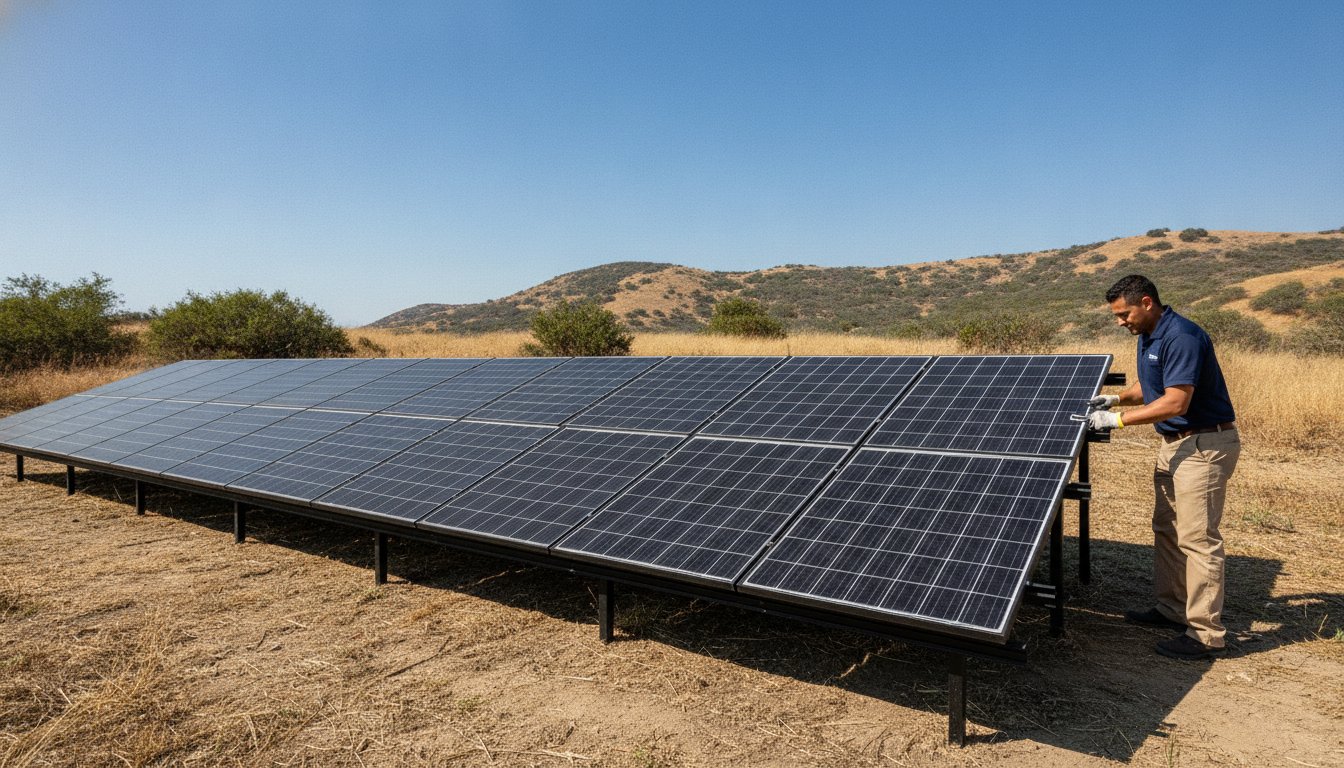
Think of a solar ground mount installation as building a custom power plant specifically for your home's needs. Unlike rooftop systems that are limited by the shape and tilt of your house, ground-mounted arrays sit on a dedicated framework anchored into the earth. These photovoltaic mounting systems provide the structural foundation for your panels, typically using concrete piers or metal piles to ensure long term stability against high winds and seismic activity.
Choosing the ground over the roof offers immediate peace of mind for your home's structural integrity. You won't have to worry about roof penetrations or potential leaks. Maintenance becomes significantly safer and easier when you can reach your panels without a ladder. For homeowners in space-rich areas like Menifee or Winchester, this approach turns underutilized acreage into a high-yield financial asset. You gain total control over panel placement, allowing you to achieve the 180-degree south-facing ideal that most roofs simply cannot offer.
The Performance Advantage: Cooling and Tilt
Efficiency thrives on two things: perfect angles and cool temperatures. In heat-prone regions like Lake Elsinore, rooftop panels often struggle because heat gets trapped between the shingles and the glass. Ground mounts solve this by allowing air to circulate freely around both sides of the panel. This natural cooling effect helps maintain peak efficiency even during our triple-digit summer days. Research indicates that optimal positioning can increase energy production by 15% to 25% compared to a roof installation with a compromised orientation. We typically set these arrays at a 30 to 35 degree tilt, ensuring you capture every possible watt from the Southern California sun.
Is Your Property a Good Candidate?
Not every lot is suited for this setup, but large parcels in Murrieta and surrounding communities are often perfect. You'll need a clear, unshaded area with enough space for the array and required setbacks from property lines. We also look for proximity to your main electrical panel to minimize trenching costs. It's vital to identify potential obstructions like septic leach fields or future landscaping plans before we break ground. If you have the space, you can effectively "future-proof" your energy needs by installing a larger system than a standard roof could ever accommodate.
Step 1: Site Assessment and Soil Testing in Riverside County
Before the first pier is driven, we must look beneath the surface. A successful solar ground mount installation depends entirely on the stability of the earth supporting it. As a local brick-and-mortar company based in Lake Elsinore, we've seen how Southern California's unique geology impacts system longevity. We begin by analyzing the specific soil composition and topography of your site. This data allows us to determine the most cost-effective and durable foundation type for your property while ensuring compliance with local Riverside County setback requirements and utility easements.
Soil Types and Foundation Choices
Inland Empire soil varies wildly from one community to the next. Homeowners in Temecula often deal with rocky, dense terrain that might require pre-drilling or specialized equipment. Conversely, the sandy soils found in parts of Corona require deeper pier depths to achieve the same structural integrity. We utilize site-specific soil reports to choose between driven piers, ground screws, or concrete ballasts. Because our region experiences powerful Santa Ana winds, every design must include structural engineering stamps. We prioritize hardware that meets the UL 2703 certification for PV mounting systems to ensure your array remains secure during extreme weather events.
Mapping the Trench Path
Connecting your array to your home's electrical system requires strategic planning. We calculate the optimal trench path to minimize voltage drop, which occurs when energy is lost over long distances of wiring. Following NEC standards, we determine the precise depth and width needed for electrical conduits. Safety is our priority, so we always coordinate the "Call 811" requirement to identify existing underground utilities before any digging begins. Our team designs these routes to avoid disrupting your existing hardscaping, irrigation systems, or sensitive landscaping features. If you are unsure where your property lines or utility easements sit, our experts can help you schedule a professional site assessment to clarify your options.
Precision at this stage prevents expensive mid-project corrections. We use professional shade analysis tools like Helioscope or Solmetric to map the sun's path across your lot for every month of the year. This ensures that nearby trees or structures won't cast shadows that could trigger the export penalties found under the current NEM 3.0 tariff. By identifying the highest-yield location now, we maximize your long-term ROI and ensure your system produces the maximum amount of clean energy for your household.

Step 2: Selecting High-Performance Racking and Panels
Choosing the right hardware transforms a standard solar ground mount installation into a high-performance energy asset. Because ground-mounted systems aren't restricted by roof dimensions, you have the freedom to select larger, more powerful modules and heavy-duty racking. We prioritize materials like galvanized steel and anodized aluminum. These industrial-grade components are designed to withstand 25 or more years of exposure to Southern California's intense UV rays and occasional high wind loads without corroding or losing structural integrity.
For the intense heat of the Inland Empire, we frequently recommend REC Solar Panels. These modules feature one of the lowest temperature coefficients in the industry. While standard panels lose efficiency as they get hotter, REC panels are built to maintain peak performance even when temperatures in Lake Elsinore or Riverside hit triple digits. We pair these high-efficiency panels with SolarEdge power optimizers. This configuration allows each panel to operate independently, ensuring that a single shaded leaf or a bit of dust doesn't drag down the production of the entire array.
Fixed vs. Tracking Systems
Most residential owners find that fixed-tilt racking offers the best long-term value. It's a reliable, low-maintenance standard that has no moving parts to service. While single-axis trackers can increase energy production by approximately 20% by following the sun's path, they also add mechanical complexity and higher upfront costs. Given the abundance of sunlight in Southern California, a properly oriented fixed-tilt system usually provides a superior return on investment by minimizing future repair needs.
Optimizing for Southern California Utilities
Your hardware choices must align with the current utility landscape. We help you select components that integrate with SCE Marketplace rebates to help offset your initial investment. Under the NEM 3.0 tariff, the focus has shifted from selling power back to the grid to maximizing your own self-consumption. This makes pairing your ground mount with a whole-home battery backup essential. By storing your midday solar harvest, you can avoid expensive peak-hour rates and achieve true energy autonomy, regardless of future utility price hikes.
At Underline Energy Concepts, we don't believe in one-size-fits-all kits. Our employee-owned team analyzes your specific energy goals to build a system that balances raw power with long-term reliability. We focus on common-sense logic: better components today mean fewer headaches and more savings tomorrow. By selecting hardware built for our specific climate, you ensure your property remains a source of clean, affordable power for decades.
Step 3: The Installation Process: From Trenching to Grid Connection
Once the site assessment is complete, we transition from planning to physical construction. A professional solar ground mount installation requires precise coordination between structural assembly and electrical engineering to ensure long-term stability. We handle the heavy lifting of securing permits and structural engineering approvals from your local building department. Whether you're in Lake Elsinore, Menifee, or Murrieta, our team's 20 plus years of experience ensures that every detail of your project meets strict local codes before we ever break ground.
The physical build begins with setting the foundations identified during your soil analysis. We then assemble the mounting rails and racking structure, creating a rigid skeleton for your energy system. This phase involves pulling wire through the trenches we mapped out, connecting the array to a combiner box that aggregates the power from your panels. This methodical approach ensures that your system is organized, safe, and ready for the final utility inspection. We prioritize a clean workspace and minimal disruption to your property throughout the entire build.
Structural Assembly and Wind Loading
In Southern California, we don't just build for the sun; we build for the wind. Our region is famous for Santa Ana wind gusts that can exceed 110 MPH. We assemble every racking frame to withstand these extreme conditions, torquing every fastener to exact manufacturer specifications. This precision prevents vibration wear and hardware fatigue over the system's 25 year lifespan. When we mount the panels, we use secure clamping techniques and safe handling protocols to protect the sensitive photovoltaic cells while ensuring they stay locked in place regardless of the weather.
Electrical Integration and Safety
Safety is the foundation of energy independence. We install dedicated DC disconnects and rapid shutdown devices to ensure your system meets all modern electrical codes. This process often involves connecting the new array to your Main Electrical Panel. If your current panel is outdated, we'll coordinate the necessary upgrades to handle the increased load safely. Before the utility meter swap, we conduct rigorous final testing to verify voltage and polarity across the entire system.
The final milestone is the utility inspection and receiving your Permission to Operate (PTO) from Southern California Edison (SCE). We manage this entire communication flow, ensuring that your system is energized only after it's been fully vetted for safety and performance. If you're ready to see how this process looks on your property, you can schedule a consultation with our local experts today. We'll walk you through every step of the installation to ensure you feel confident in your move toward energy autonomy.
Maximizing ROI: Maintenance and Long-Term Performance
A solar ground mount installation is a significant investment in your home's future autonomy. Protecting that investment requires a proactive approach to maintenance that differs slightly from rooftop systems. While ground-mounted arrays are much easier to access for routine inspections, their proximity to the earth means they face unique environmental challenges. Staying on top of a simple maintenance schedule ensures your system continues to produce at peak capacity for its entire 25 plus year lifespan, maximizing your financial return in the NEM 3.0 era.
Monitoring is your first line of defense against efficiency loss. Most modern systems include intuitive mobile apps that allow you to track individual panel performance in real time. If one panel shows a dip in production while others are thriving, you can quickly identify the cause. In dusty Inland Empire environments like Lake Elsinore or Corona, a layer of grime can significantly reduce output. Because these systems sit at ground level, a simple rinse with a garden hose and a soft brush twice a year is often all it takes to keep your energy harvest at its maximum without the safety risks of climbing a ladder.
Vegetation and Pest Management
Managing the area beneath and around your array is critical for both performance and safety. We recommend using heavy duty weed barriers or a thick layer of gravel to prevent tall grass or weeds from shading the bottom row of panels. Keeping this area clear also reduces fire hazards, which is a vital consideration for Southern California homeowners in high risk zones. You should also keep an eye out for local wildlife like ground squirrels that might try to nest near your equipment. While we use protective conduit to prevent pests from damaging sensitive wiring, seasonal inspections help you catch any signs of settling or hardware shifting before they become larger problems.
Why Professional Local Installation Matters
Choosing a local partner ensures your system is built to survive our specific regional challenges, from Santa Ana winds to intense summer heat. While DIY kits might seem like a way to save money, they often lack the structural integrity and professional engineering stamps required for long term stability and insurance compliance. At Underline Energy Concepts, our employee-owned team takes personal pride in every project we build. We've served our neighbors since 2002, and we stand by our workmanship with the confidence of a local brick-and-mortar specialist.
By prioritizing a professional solar ground mount installation today, you secure a reliable source of energy independence that will serve your family for decades to come. Take the first step toward lasting financial stability and schedule your home energy consultation with our Lake Elsinore team today. We'll help you design a system that delivers maximum performance and peace of mind.
Take Control of Your Energy Future Today
Southern California homeowners don't have to settle for the limitations of a standard roof. By choosing a professional solar ground mount installation, you're investing in a precision-engineered system that bypasses shade, optimizes every ray of sunlight, and delivers maximum efficiency for decades. You've seen how critical site-specific soil testing and high-performance hardware are to achieving a reliable return on investment, especially under the current NEM 3.0 rules.
Underline Energy Concepts has served the Southern California region since 2002. As an employee-owned and operated company, we bring the expertise of a licensed roofing, electrical, and general contractor to every project we touch. We're your local partners in Lake Elsinore, dedicated to helping you achieve energy independence while protecting your home's long-term value. We're ready to help you turn your property into a high-yield power plant that provides financial relief and environmental stability for years to come.
Schedule your professional ground mount site assessment with Underline Energy Concepts today!
Frequently Asked Questions
Do I need a permit for a solar ground mount installation in Riverside County?
Yes, you definitely need permits for a solar ground mount installation in Riverside County. This process ensures your system meets local structural and electrical safety codes. Permit fees in the City of Riverside typically range from $100 to $450, while unincorporated areas are managed by the Riverside County Planning and Development department. We handle all the paperwork and plan submissions to ensure your project stays on track and fully compliant.
How much more does a ground mount cost compared to a roof mount?
Ground-mounted systems generally cost more than rooftop arrays because they require a dedicated support structure. You're paying for concrete foundations, heavy-duty racking, and the labor for trenching electrical lines. While the initial investment is higher, the ability to orient panels perfectly often results in a 15% to 25% increase in energy production. This higher yield helps you recoup the extra costs through faster utility savings and better long-term performance.
Can I install a ground-mounted solar system myself using a kit?
While DIY kits exist, we strongly advise against them for Southern California properties. A professional solar ground mount installation requires structural engineering stamps to ensure it can withstand 110+ MPH Santa Ana winds. Additionally, improper electrical work can void your homeowners insurance or fail local fire safety inspections. Professional installation by our employee-owned team guarantees that your system is safe, efficient, and backed by a long-term warranty and reliable service.
How far away from my house can I install a solar ground mount?
You can install your array hundreds of feet from your house, but distance impacts your overall budget. Most homeowners choose a location within 50 to 150 feet of their main electrical panel. As the distance increases, we must use thicker copper wiring to prevent voltage drop, which ensures your energy makes it to your home efficiently. We'll help you map a path that balances optimal sun exposure with cost-effective trenching and electrical engineering.
What is the best foundation type for solar ground mounts in Southern California?
The ideal foundation depends entirely on your property's soil composition and local terrain. In rocky areas like Temecula, we typically use concrete piers to anchor the racking securely. For the softer or sandy soils found in Corona and Menifee, driven piles or ground screws are often more efficient. Our team uses site-specific soil reports to select the foundation type that provides the most stability for your specific Inland Empire location and environmental conditions.
Will a ground-mounted solar array increase my property taxes?
No, your property taxes will not increase under current California law. The Active Solar Energy System Exclusion prevents local assessors from adding the value of your solar system to your home's total valuation. It's important to act soon, as this exclusion is currently set to expire for systems installed after January 1, 2027. Installing your ground mount now ensures you enjoy significant energy savings without the burden of a higher property tax bill.
How do ground mounts handle the high winds in the Inland Empire?
Ground mounts are built to be incredibly resilient against the high winds common in the Inland Empire. We use industrial-grade galvanized steel or anodized aluminum racking that is engineered to handle gusts exceeding 110 MPH. By torquing every bolt to exact manufacturer specifications and using deep-set foundations, we ensure your array remains rock-solid during even the most intense Santa Ana wind events, providing peace of mind and long-term durability.
Is it easier to add battery storage to a ground-mounted system?
It is often much easier to add battery storage to a ground-mounted system compared to a rooftop array. Because we aren't limited by the space on your garage walls or the side of your house, we have more flexibility in placing battery enclosures. This extra room allows for better airflow around the batteries and makes it simpler to expand your storage capacity in the future as your energy needs grow and utility rates continue to climb.