
Whole Home Battery Backup Installation: The 2026 SoCal Guide to Energy Autonomy
/
Article by
Jesse Malone
Jesse Malone
CEO & Partner, Underline Energy Concepts
Jesse Malone is the CEO and Partner of Underline Energy Concepts, a Southern California energy services company that has been serving homeowners since 2002. Since joining the company and becoming a partner in approximately 2015, Jesse has helped lead its growth into one of Southern California’s most trusted providers of residential energy efficiency and home improvement solutions.
Throughout his tenure, Jesse and the Underline Energy team have completed more than 2,500 energy upgrade projects for homeowners across Southern California. These projects include solar energy systems, roofing, battery storage, EV charging stations, electrical panel upgrades, water heater replacements, attic insulation, retrofit windows, and other energy-efficient home improvements designed to lower utility costs and increase property value.
Jesse holds a Bachelor’s Degree from California Southern University and brings more than 20 years of experience in emergency services through his service with the fire department. His background in public service has shaped his leadership style, emphasizing integrity, accountability, safety, and a commitment to serving the community.
A lifelong advocate for efficiency and practical solutions, Jesse is passionate about helping homeowners make informed decisions that improve both their homes and their financial future. His interests extend beyond energy efficiency into financial literacy, budgeting, investing, and long-term wealth-building strategies. He believes that reducing unnecessary expenses and maximizing efficiency are key components of financial success.
As CEO, Jesse continues to focus on delivering exceptional customer experiences, building high-performing teams, and helping Southern California homeowners achieve greater comfort, energy independence, and long-term savings through smart home investments.
95% of new solar installations in Southern California now include battery storage for a reason that SCE isn't advertising. With the federal tax credit gone and NEM 3.0 export rates at an all-time low, a whole home battery backup installation has shifted from a luxury upgrade to a financial necessity. You've likely seen your neighbors in Lake Elsinore and Temecula making the switch. They're doing it to keep the lights on during the next PSPS event and to stop the bleeding from peak utility rates that now hit 74 cents per kWh.
It's frustrating to watch your solar energy get sold back to the grid for pennies while your own bills continue to climb. We understand that you want a home that remains functional even when the grid fails. This guide helps you master the technical and financial essentials of home energy storage so you can protect your family from food spoilage and medical equipment failure. We will break down battery sizing, compatibility with your current panels, and how to maximize your ROI before the solar property tax exclusion expires at the end of 2026.
Key Takeaways
- Discover why NEM 3.0 makes battery storage a requirement for financial stability and how to shield your home from frequent Inland Empire power shutoffs.
- Learn the critical difference between storage capacity and power output so you don't end up with a system that can't handle your evening energy spikes.
- Master the technical requirements of a whole home battery backup installation to ensure your air conditioner can actually start and run during a grid failure.
- Understand the installation roadmap, including why upgrading to a 200 or 400 amp panel is the foundation for a reliable and safe energy system.
- Get the facts on 2026 financial incentives and how to leverage local expertise to navigate Riverside County’s specific electrical and fire codes.
The New Reality of Southern California Power: Why Backup is Essential in 2026
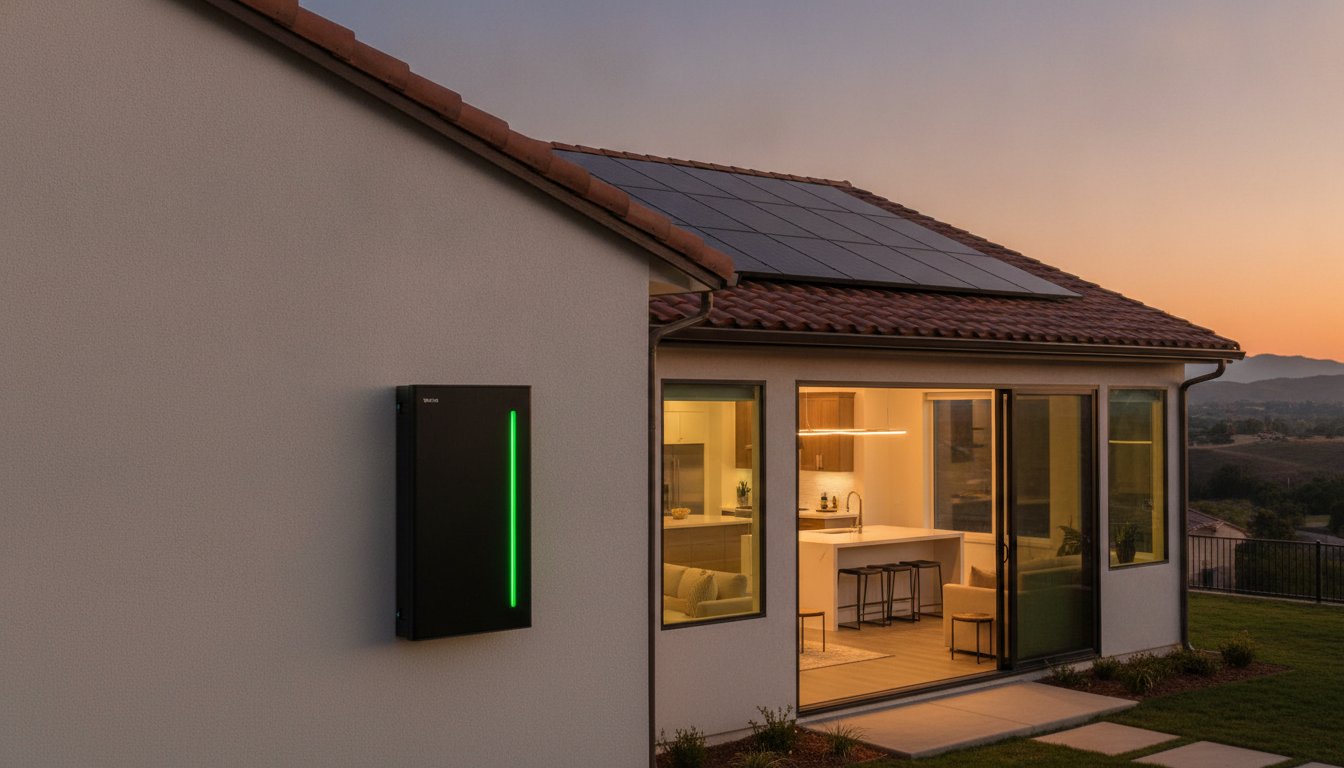
Southern California's power grid is changing fast. In 2026, relying on the utility company for 24/7 reliability is a gamble many homeowners in Riverside County are no longer willing to take. A whole home battery backup installation is more than just a safety net; it's a sophisticated energy management tool. Unlike a portable power station you'd use for camping, a whole-home system is hard-wired into your electrical panel. It communicates with your solar array and the grid to ensure your home stays powered during Public Safety Power Shutoffs (PSPS). These shutoffs have become common in the Inland Empire as a tool to prevent wildfires during high-wind events.
Modern home energy storage systems allow you to store the energy your panels produce during the day. This mitigates the "duck curve," a phenomenon where demand spikes just as solar production drops. By using stored power during SCE's peak Time-of-Use (TOU) windows, you avoid rates that can climb as high as 74 cents per kWh. Since SCE's electricity rates have seen an 83% increase over the last decade, taking control of your consumption is the only way to stabilize your monthly budget.
The NEM 3.0 Impact: Shifting from Selling to Storing
The rules of the game changed with the Net Billing Tariff (NEM 3.0). Exporting excess energy to the grid used to be profitable. Now, the utility only pays about $0.05 to $0.08 per kWh for that same energy. If you don't have a battery, you're essentially giving your power away for a fraction of what it costs to buy it back later. This is why 95% of new solar installations in Southern California now include battery storage.
Maximizing your solar ROI in 2026 depends entirely on "self-consumption." By keeping your energy at home, you reduce the payback period of your system to an estimated 7 to 9 years. For families in Lake Elsinore and Temecula, this shift ensures that every ray of sunshine benefits your bank account instead of the utility's bottom line. It's a practical, common-sense decision that turns your home into a self-sustaining power plant.
Grid Resilience vs. Financial Optimization
A whole home battery backup installation serves two masters: safety and savings. On one hand, it provides immediate relief during a blackout. Your home office stays online, and your refrigerator keeps food safe. For those with medical equipment, this isn't just a convenience; it's a critical safety requirement. You won't have to worry about the grid's instability when your system takes over in milliseconds.
On the other hand, the system performs "peak-shaving" every single day. It automatically switches your home to battery power when grid prices are highest. Energy Autonomy is the ability to control your own power costs regardless of utility hikes. By choosing to store your own clean energy, you opt out of the cycle of rising costs and grid uncertainty.
Decoding Battery Technology: Capacity, Power, and Chemistry
Selecting the right hardware for a whole home battery backup installation involves more than just picking a brand. You need to understand two critical numbers: Kilowatt-hours (kWh) and Kilowatts (kW). Think of kWh as the size of your fuel tank; it tells you how much total energy you've stored to keep your lights on overnight. Kilowatts, on the other hand, represent the size of the "tap." This determines how many appliances you can run at the exact same moment. If your battery has high capacity but low power output, you might have plenty of energy but still find yourself unable to start your air conditioner.
Safety is our primary concern at Underline Energy Concepts. That's why we prioritize Lithium Iron Phosphate (LFP) chemistry. Unlike older Nickel Manganese Cobalt (NMC) batteries, LFP is significantly more stable and less prone to "thermal runaway." This is vital for homes in Riverside and San Bernardino counties, where summer temperatures frequently exceed 100°F. These modern systems are rated for thousands of "cycles." A cycle is one full discharge and recharge. Most high-quality units today are designed to last 10 to 15 years while maintaining the majority of their original capacity. If your energy needs grow, many systems offer "stackability," allowing us to add more units to your existing setup without a total redesign.
AC vs. DC Coupling: Which Fits Your Current Solar?
If you already have solar panels, AC coupling is usually the most efficient path. It allows us to add a battery to your existing system without replacing your current inverter. For new installations, DC coupling is often preferred because it's more efficient, as the energy only converts from DC to AC once. We often utilize SolarEdge technology for these integrated solutions because their advanced inverters manage both the panels and the battery with precision. Choosing the right coupling method can also impact your eligibility for the Self-Generation Incentive Program (SGIP), which rewards homeowners for installing high-efficiency storage.
Quietcool Battery Charge Mounts and Thermal Management
Heat is the silent killer of battery performance. In cities like Temecula and Lake Elsinore, batteries installed in a hot garage can degrade faster if they aren't properly ventilated. We specialize in Quietcool battery charge mounts, which are designed to improve airflow around the unit. This specialized mounting solution helps maintain optimal operating temperatures, ensuring your system doesn't throttle its output when you need it most. Proper thermal management is the "secret sauce" that helps ensure your whole home battery backup installation remains a long-term asset for your property. If you're curious about which mounting solution fits your garage layout, feel free to speak with one of our local experts today.

Sizing Your System: Can You Really Run the AC?
The most common question we hear at Underline Energy Concepts is whether a battery can keep a Southern California air conditioner running during a blackout. The answer isn't a simple yes or no; it depends on how we design your whole home battery backup installation. To get it right, we have to distinguish between "essential" loads like your refrigerator, lights, and medical devices, and "non-essential" loads like your pool pump or electric dryer. While a single battery might keep your food cold and your Wi-Fi running for days, powering a central AC unit requires a deeper look at your equipment's specific electrical needs.
The biggest hurdle for any battery system is "Inrush Current." This is the massive surge of electricity your air conditioner's compressor needs just to kick start. This surge can be three to five times higher than the power needed to keep the unit running. If your battery's peak power output doesn't meet this demand, the system will trip. We often recommend installing a "soft starter" on your HVAC unit or stacking multiple batteries to ensure you have the raw power necessary to handle these spikes. Smart load-shedding devices also play a huge role here. These systems automatically pause high-draw appliances if they detect a grid failure, preserving your stored energy for the things that matter most.
The Load Profile Analysis
Determining your ideal system size starts with your utility bill. We look at your peak demand, not just your average monthly usage. A 10kWh battery might be plenty for a mild Murrieta night, but it won't last long during a triple-digit Moreno Valley heatwave if you're trying to keep the whole house at 72 degrees. Every home is different, which is why we provide a comprehensive energy inspection to analyze your specific consumption patterns. This ensures we don't undersize your system, leaving you in the dark, or oversize it, which hurts your return on investment. We also stay updated on the Self-Generation Incentive Program (SGIP) to see if your specific configuration qualifies for any remaining equity-based rebates.
Battery vs. Generator: The 2026 Comparison
Many homeowners ask if they should just buy a traditional gas generator instead. While generators have their place, batteries offer an "instant-on" transition that a generator can't match. When the grid goes down, your battery takes over in milliseconds; your clocks won't even blink. There's no noise, no exhaust, and no need to store volatile fuel in your garage. For residents in quiet neighborhoods like Canyon Lake or Menifee, the silence of a whole home battery backup installation is a major quality-of-life benefit. You get a maintenance-free lifestyle that integrates perfectly with your solar panels, allowing you to recharge your "fuel tank" every time the sun comes up.
The Installation Roadmap: Engineering, Permitting, and Panel Upgrades
A successful whole home battery backup installation isn't a weekend DIY project. It's a complex engineering feat that requires a clear roadmap to ensure safety and utility compliance. At Underline Energy Concepts, we've refined this process over two decades of serving Southern California. The journey from your first consultation to total energy autonomy follows five distinct steps. First, we conduct a site survey and engineering design to map your home's electrical load. Second, we handle the permitting with local building departments. Third, we perform the physical installation and any necessary electrical upgrades. Fourth, we coordinate the final inspection with Riverside County officials. Finally, we secure the Permission to Operate (PTO) from your utility provider.
In 2026, the permitting timeline in Riverside County typically takes between three to six weeks, depending on your specific city's backlog. Because we're a local brick-and-mortar company based in Lake Elsinore, we're intimately familiar with these local desks. We don't just drop equipment on your driveway; we manage every signature and inspection. This local expertise ensures your system meets every structural and electrical requirement the first time, preventing costly delays in your path to backup power.
Electrical Infrastructure: The Backbone of Backup
Many homeowners are surprised to learn that their existing electrical panel is the "secret ingredient" to a reliable system. If your home still runs on a 100-amp service, it likely won't handle the combined load of solar, a battery, and an EV charger. We often recommend a 200 amp or 400 amp electric panel upgrade to create a robust foundation. This isn't just about capacity; it's about safety. Professional wiring by licensed experts prevents the fire risks associated with uncertified labor. For a deeper technical dive into how these components interact, explore our Whole Home Battery Backup Installation Pillar.
California Fire Codes and Setback Requirements
California has some of the strictest fire codes in the country for residential energy storage. The "3-foot rule" is a primary factor in system design; batteries must generally be placed at least three feet away from windows, doors, and property lines. In high-risk areas like Lake Elsinore and the surrounding canyons, we must also adhere to specific Wildland-Urban Interface (WUI) codes. These regulations dictate where and how equipment is mounted to minimize fire spread. Whether you prefer an indoor garage mount or a protected outdoor installation, our team ensures your setup is fully compliant and aesthetically clean. Don't leave your home's safety to chance. Schedule a professional site assessment to see exactly where your battery should be placed for maximum safety and performance.
Maximizing Your Investment: Rebates, Tax Credits, and Local Expertise
Investing in a whole home battery backup installation in 2026 requires a sharp eye on the shifting financial landscape. It is important to recognize that the 30% federal residential clean energy credit expired at the end of 2025, leaving the current credit at 0% for systems placed in service this year. This change makes other local incentives and long term savings even more vital. For instance, California's property tax exclusion for newly installed solar and storage systems is set to expire on December 31, 2026. Homeowners who complete their installation before this deadline ensure the added value of the equipment isn't added to their property tax assessment. This provides an immediate and lasting financial benefit that offsets the loss of federal credits.
The Self-Generation Incentive Program (SGIP) for SCE customers has also reached a mature stage. Most standard residential budgets are currently closed to new applicants or are placing homeowners on waitlists. However, we closely monitor the Solar and Storage Equity program pathways that may still offer significant rebates for qualified families in the Inland Empire. Beyond rebates, adding a battery system significantly boosts property value in the Southern California real estate market. Buyers now prioritize "resilient homes" that can withstand grid instability. To help manage your initial costs, you can join the Underline Referral Program and earn rewards by helping your friends and neighbors achieve their own energy independence.
Local Knowledge, Long-Term Service
Choosing a local partner matters. Underline Energy Concepts is an employee-owned company based right here in Lake Elsinore. This ownership structure means every technician and consultant you meet has a personal stake in the quality of your installation. We provide a one-stop-shop experience, handling everything from roofing and electrical panel upgrades to the final battery integration. This eliminates the headache of managing multiple contractors. We also emphasize long-term maintenance and solar cleaning. Keeping your panels clear of Inland Empire dust ensures your battery recharges at maximum efficiency every day, protecting the health of your cells for years to come.
Your Next Steps to Energy Freedom
Taking the first step toward autonomy is simple. When you schedule your site-specific consultation, have your last 12 months of SCE bills ready. Our consultants will use this data to build a custom load profile for your home. We'll look at your roof health, your current electrical capacity, and your family's specific backup needs to design a system that works. Don't wait for the next rate hike or the expiration of the property tax exclusion to take action. Schedule your expert battery backup inspection with Underline Energy Concepts today.
Secure Your Energy Future in Southern California
Achieving energy autonomy in 2026 requires more than just hardware; it demands a strategic approach to your home's infrastructure. By prioritizing LFP chemistry for safety and ensuring your electrical panel is ready for the load, you turn your residence into a resilient powerhouse. The window for the solar property tax exclusion closes at the end of 2026. Taking action now locks in your system's value without increasing your tax burden.
Since 2002, our team of licensed roofing and electrical experts has helped homeowners navigate these technical shifts with confidence. As an employee-owned company with a local brick-and-mortar presence in Lake Elsinore, we provide the accountability and craftsmanship you deserve. Your journey toward a whole home battery backup installation starts with a clear plan and a trusted partner. We're ready to help you protect your family and your finances for the long haul.
Get a Free Whole-Home Battery Backup Quote
Take the first step toward lasting peace of mind today.
Frequently Asked Questions
How long will a whole home battery run my house during a blackout?
A typical system provides 12 to 24 hours of power for essential appliances like lights, refrigerators, and Wi-Fi. If your solar panels are active during the day, they will recharge the battery, which can potentially extend your backup time indefinitely. We tailor your system size to your specific energy habits to ensure you stay powered through extended PSPS events in the Inland Empire.
Can I add a battery to my existing solar panel system?
Yes, we can integrate a battery into your current solar setup using a process called AC coupling. This allows the new storage unit to work with your existing inverter without requiring a total system overhaul. It's a practical way for Lake Elsinore homeowners to upgrade their older solar arrays to meet modern energy independence standards and protect against rising utility costs.
Are there rebates available for home battery installation in Southern California?
Standard SGIP rebates for SCE and SDG&E are currently limited and often involve waitlists, but specific equity programs still offer incentives for qualified homeowners. The most reliable financial benefit today is the California property tax exclusion. If you complete your whole home battery backup installation before December 31, 2026, the added value of the system will not increase your property tax assessment.
Do I need a main electrical panel upgrade to install a battery?
Many older homes require a 200 amp or 400 amp electric panel upgrade to safely manage the combined load of solar panels and battery storage. This upgrade ensures your home's infrastructure can handle the high demand of modern appliances and EV chargers. Our team evaluates your current electrical service during the initial inspection to determine if an upgrade is necessary for your safety.
What is the difference between a partial-home and a whole-home backup?
A partial-home backup only powers "critical loads" like your fridge and medical devices, while a whole home battery backup installation is designed to run everything, including your air conditioner. Achieving true whole-home autonomy often requires stacking multiple battery units to handle the massive inrush current needed to start an HVAC system. We help you choose the level of protection that fits your family's needs.
Is a solar battery backup better than a standby generator?
Solar batteries are often the better choice for local neighborhoods because they are silent, emission-free, and require zero fuel storage. Unlike a gas generator that takes time to cycle on, a battery takes over in milliseconds, so your electronics never lose power. Since your panels recharge the battery for free using the sun, you avoid the ongoing maintenance and fuel costs of a traditional generator.
How much maintenance does a residential battery system require?
Modern lithium-based batteries are virtually maintenance-free and don't require the oil changes or spark plug replacements that generators do. You simply need to keep the area around the unit clear for proper airflow and ensure your solar panels are cleaned twice a year to maintain peak charging efficiency. Our employee-owned team provides ongoing support to ensure your system performs reliably for its entire 10 to 15 year lifespan.
Will a home battery save me money on my SCE or SDG&E bill?
A battery saves you money by performing "peak-shaving," which means you use your own stored energy when SCE rates climb as high as 74 cents per kWh. Under NEM 3.0 rules, exporting your extra solar power to the grid only pays about $0.05 to $0.08 per kWh. Storing that energy for your own evening use is the most effective way to maximize your return on investment and avoid high utility bills.