
Home Battery Backup System California: The 2026 Homeowner’s Guide to Energy Autonomy
/
Article by
Jesse Malone
Jesse Malone
CEO & Partner, Underline Energy Concepts
Jesse Malone is the CEO and Partner of Underline Energy Concepts, a Southern California energy services company that has been serving homeowners since 2002. Since joining the company and becoming a partner in approximately 2015, Jesse has helped lead its growth into one of Southern California’s most trusted providers of residential energy efficiency and home improvement solutions.
Throughout his tenure, Jesse and the Underline Energy team have completed more than 2,500 energy upgrade projects for homeowners across Southern California. These projects include solar energy systems, roofing, battery storage, EV charging stations, electrical panel upgrades, water heater replacements, attic insulation, retrofit windows, and other energy-efficient home improvements designed to lower utility costs and increase property value.
Jesse holds a Bachelor’s Degree from California Southern University and brings more than 20 years of experience in emergency services through his service with the fire department. His background in public service has shaped his leadership style, emphasizing integrity, accountability, safety, and a commitment to serving the community.
A lifelong advocate for efficiency and practical solutions, Jesse is passionate about helping homeowners make informed decisions that improve both their homes and their financial future. His interests extend beyond energy efficiency into financial literacy, budgeting, investing, and long-term wealth-building strategies. He believes that reducing unnecessary expenses and maximizing efficiency are key components of financial success.
As CEO, Jesse continues to focus on delivering exceptional customer experiences, building high-performing teams, and helping Southern California homeowners achieve greater comfort, energy independence, and long-term savings through smart home investments.
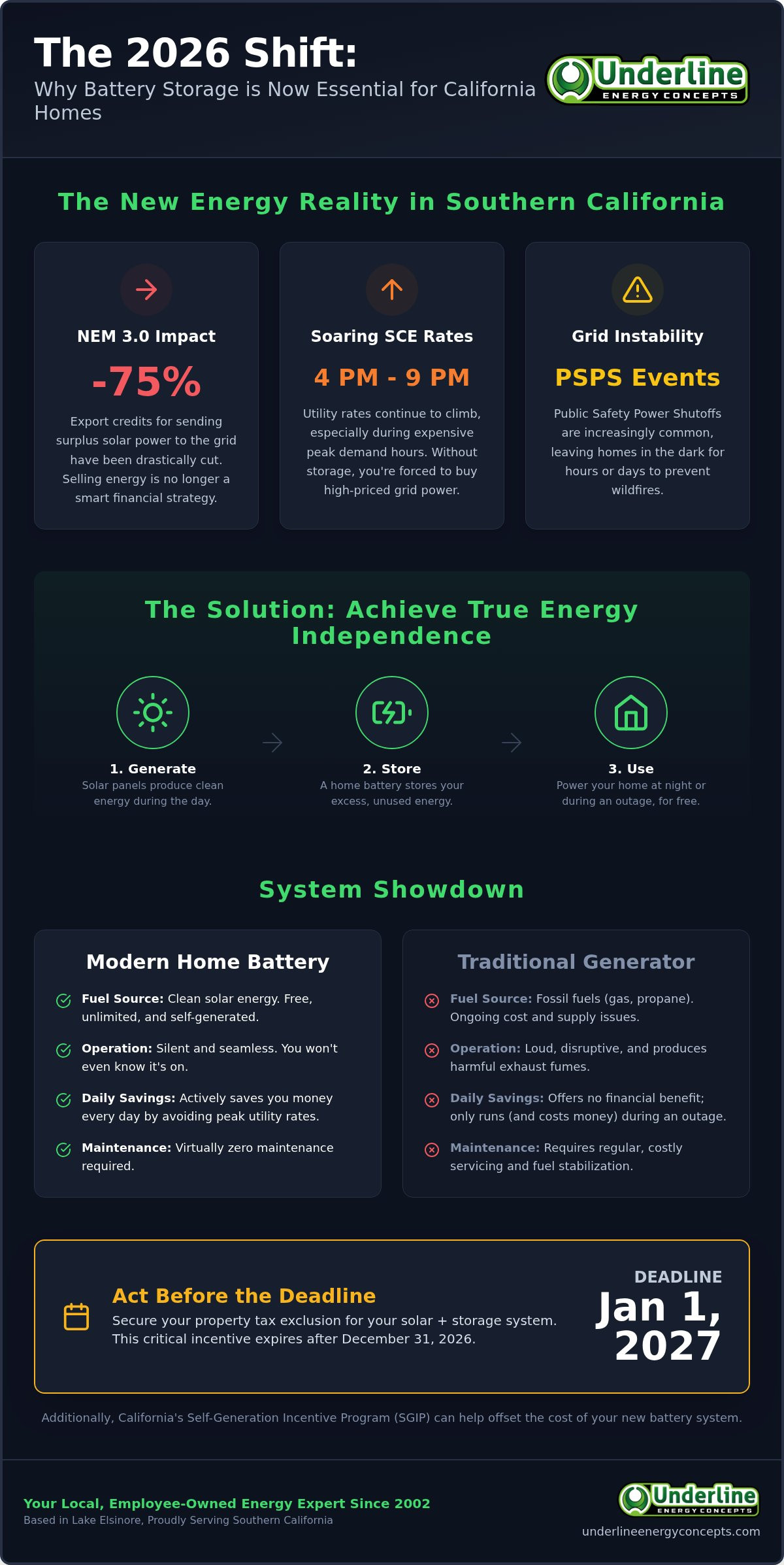
Imagine your solar panels, once a symbol of energy independence, now diminishing in value with every sunset. By 2026, a solar array without a high-performance home battery backup system California homeowners can trust is simply no longer the smart investment it once was. The generous 30% federal tax credit has vanished, and NEM 3.0 has drastically cut export rates by roughly 75%, making it financially illogical to send your surplus energy back to the grid for mere pennies. Compounding this, Southern California Edison's relentless rate hikes and the looming threat of Public Safety Power Shutoffs continue to plunge communities into darkness and financial strain.
We recognize the challenge of navigating California's constantly evolving utility landscape. This guide is specifically designed to empower you to take back control of your home's energy future. You'll learn how to store your clean, self-generated power to bypass expensive peak-hour charges, ensure uninterrupted electricity during any outage, and secure your crucial property tax exclusion before its January 1, 2027 deadline. We'll meticulously unpack the 2026 incentive programs and reveal precisely how a robust battery system transforms California's 'new normal' grid into a significant financial and lifestyle advantage for you.
Key Takeaways
- Master the economics of NEM 3.0 and learn why self-consumption is the only way to protect your household from skyrocketing utility rates in 2026.
- Compare the long-term savings and reliability of a modern home battery backup system California against traditional, fuel-dependent standby generators.
- Identify the essential hardware components, including smart inverters and gateways, needed to keep your critical appliances running during a grid failure.
- Navigate the 2026 rebate landscape and learn how to secure your property tax exclusion before the December 31 deadline.
- Discover the "Lake Elsinore Advantage" by choosing a local, employee-owned partner with the multi-license expertise required for a safe energy upgrade.
Why Every California Home Needs a Battery Backup System in 2026
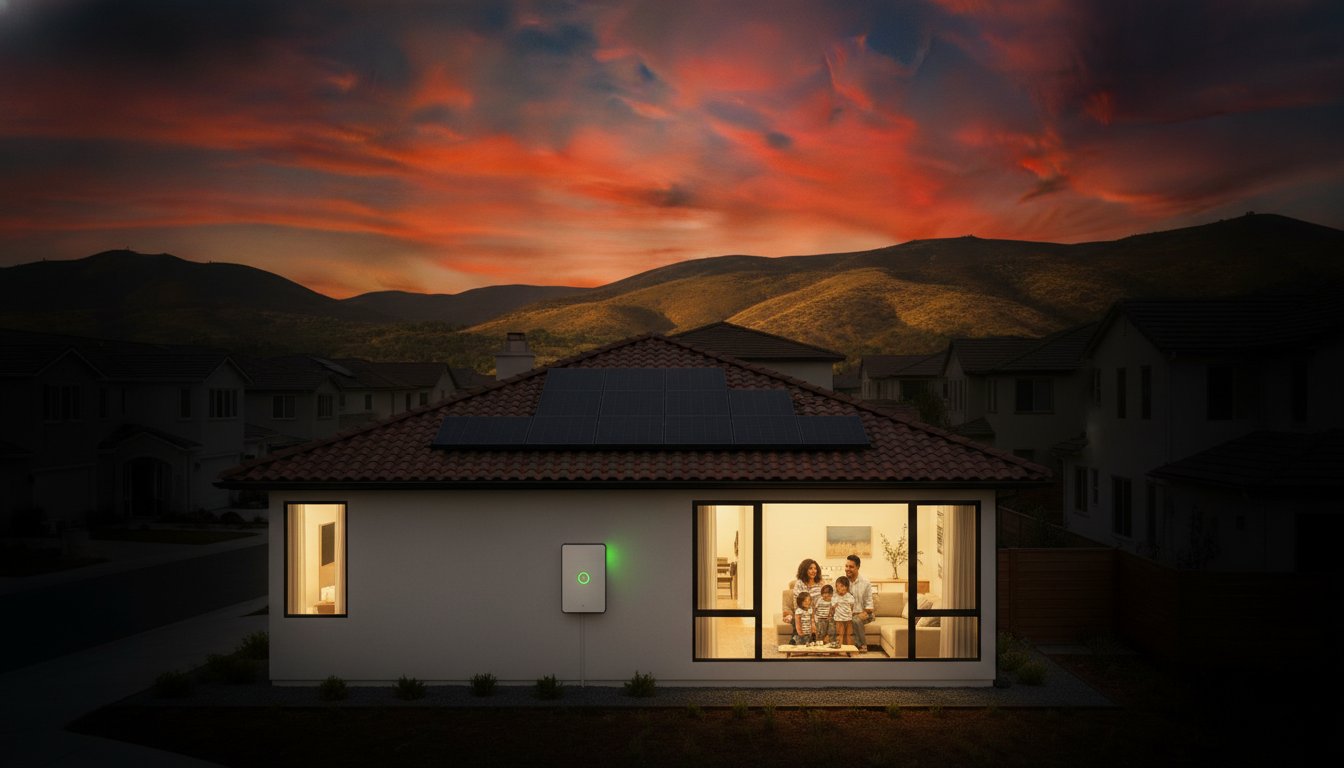
Think of your home as its own mini power plant. A home battery backup system California residents use today is a smart energy reservoir that captures excess solar power produced during the sunniest parts of the day. Instead of letting that energy go to waste or selling it back to the utility for a fraction of its value, you keep it for when you actually need it. Energy Autonomy is the ability to generate, store, and use your own power regardless of grid status. At Underline Energy Concepts, we've seen the energy landscape shift dramatically since we started in 2002. From our base of operations in Lake Elsinore, we help our neighbors across Southern California transition from being passive utility customers to active energy managers.
The NEM 3.0 Reality: Why Storage is Now Mandatory
The transition from NEM 2.0 to the current Net Billing Tariff (NEM 3.0) fundamentally changed the math for Southern California homes. Under the old rules, the grid acted like a free battery; you could bank power and get a nearly 1:1 credit. Now, those export credits have dropped by about 75%. If you produce solar at noon and send it to the grid, SCE pays you pennies, but they'll charge you full price to buy it back at 7 PM. This creates a "buy low, sell low" trap that can destroy your solar ROI. To maximize your investment, you need home energy storage systems to keep that power for yourself. For more on how this integrates with your panels, check out our guide on Solar Panel Installation Southern California: The 2026 Homeowner’s Guide.
Grid Instability and the Rise of SCE Rates
Living in the Inland Empire or coastal SoCal means dealing with two certainties: rising SCE rates and Public Safety Power Shutoffs (PSPS). Utility rates continue to climb, especially during the 4 PM to 9 PM peak windows when families in cities like Temecula or Murrieta come home and turn on the AC. Without a battery, you're forced to pay these premium prices even if you have solar panels. Beyond the cost, there's the safety factor. PSPS events are a regular occurrence during high-wind seasons to prevent wildfires. A home battery backup system California families trust ensures that when the grid goes down to protect the community, your lights, refrigeration, and medical devices stay on. It's the difference between sitting in a dark, sweltering house during a July heatwave and enjoying total peace of mind. As an employee-owned company, we prioritize your long-term stability and comfort.
Anatomy of a High-Performance Battery Backup System
A home battery backup system California homeowners rely on is much more than a simple storage container for electricity. It is a sophisticated ecosystem designed to manage power in real time. The three core pillars of this system include the battery cells, the smart inverter, and the gateway. The cells are the physical reservoir where energy sits. The smart inverter acts as the translator, converting the DC power from your solar panels into the AC power your appliances use. Finally, the gateway serves as the command center, making split-second decisions about when to pull power from your panels, the battery, or the utility grid. For a seamless experience, we often integrate high-quality hardware from industry-leading brands to ensure every component communicates perfectly.
One technical decision you will face is choosing between AC and DC coupling. DC-coupled systems are generally more efficient for new installations because they require fewer power conversions. AC-coupled systems are often the preferred choice for retrofitting an existing solar array. Regardless of the architecture, your system should be eligible for the Self-Generation Incentive Program (SGIP), which provides financial support for installing storage technology. Understanding these hardware nuances is the first step toward true energy independence.
Whole-Home vs. Critical Load Backup
You must decide which parts of your life stay powered during a blackout. A critical load backup focuses on the essentials: your refrigerator, interior lights, Wi-Fi, and perhaps a few outlets for charging devices. If you want the luxury of running your central air conditioning or electric oven during an outage, you'll need a whole-home solution. This level of performance often requires an electric panel upgrade for solar to handle the increased electrical demand. For a standard 2,500 square foot home in Southern California, we typically recommend between 13 kWh and 26 kWh of storage capacity to balance cost with comprehensive coverage.
Innovative Mounting and Efficiency Solutions
Heat is the primary enemy of battery longevity. In the Inland Empire, where summer temperatures frequently exceed 100 degrees, standard wall mounting isn't always enough. We utilize Quietcool battery charge mounts to provide temperature-regulated performance. These specialized mounts help maintain optimal operating temperatures, which preserves the chemical health of your battery cells and prevents thermal throttling. Proper ventilation and smart mounting aren't just about safety compliance; they're about protecting your financial investment for the next decade. If you want to see how these components fit your specific home layout, reach out to our Lake Elsinore team for a detailed system design.
Battery Storage vs. Standby Generators: The SoCal Verdict
Choosing between a traditional standby generator and a modern home battery backup system California homeowners trust often comes down to one question: do you want a mechanical engine or a smart electronic solution? Generators are essentially internal combustion engines that sit in your yard. They require a constant supply of natural gas or propane to function. During a 48-hour outage, the fuel costs alone can become a significant hidden expense. In contrast, a battery system uses the free, abundant sunshine of Southern California to recharge. At Underline Energy Concepts, we prioritize long-term financial logic. Why pay for fuel when you can store the energy your roof is already producing? For a deeper dive into the installation process, explore our Whole Home Battery Backup Installation: The 2026 SoCal Guide to Energy Autonomy.
Maintenance is another deciding factor. A generator requires regular oil changes, spark plug replacements, and engine testing to ensure it will actually start when the grid fails. It is a complex machine with many moving parts that can seize over time. A battery is a solid-state device with no moving parts. This means it operates silently and requires virtually no ongoing maintenance. From our base in Lake Elsinore, we've seen how the Inland Empire heat can punish mechanical systems, making the reliability of solid-state electronics even more appealing for local families.
Operational Costs and Environmental Impact
Noise ordinances and fire safety are critical in Southern California. If you live in a quiet community like Canyon Lake or Menifee, the roar of a generator can be a major disturbance to your neighbors. Batteries provide a silent solution that keeps your home running without the industrial noise. Additionally, during Red Flag warnings and high-wind events, the risk of using combustion-based systems increases. A home battery backup system California residents install is a zero-emission solution that aligns with the state's aggressive green energy goals. To help offset the initial cost of this cleaner technology, you can leverage California's Self-Generation Incentive Program (SGIP), which provides rebates for qualifying storage installations.
Switch-Over Speed: UPS vs. Manual Start
The speed of your backup power matters if you work from home or rely on medical equipment. Most standby generators have a lag time of 10 to 30 seconds before they kick in. This delay causes computers to reboot, Wi-Fi routers to reset, and clocks to blink. Batteries offer an Uninterruptible Power Supply (UPS) experience. The switch is so fast that your sensitive electronics won't even notice the grid went down. We are an employee-owned company that understands the value of a seamless home office. While a generator might be a blunt tool for power, a battery is a precision instrument that protects your digital life and provides total autonomy.
Navigating California Incentives, Rebates, and ROI
Maximizing your investment starts with understanding the 2026 financial landscape. The landscape for federal incentives has shifted significantly since the expiration of the 30% tax credit at the end of 2025, which means California homeowners must now be more strategic with state and local programs. The Self-Generation Incentive Program (SGIP) remains a primary pathway, though the general residential budget is currently waitlisted. New applicants should focus on the Equity and Equity Resiliency tiers, which remain active for households in high-fire threat districts or those meeting specific income criteria. Stacking these targeted state grants with SCE Marketplace rebates for energy-efficient upgrades can often cover a significant portion of the total system cost.
Calculating Your ROI in the NEM 3.0 Era
Under the current Net Billing Tariff, the financial logic of a home battery backup system California residents install has moved from "selling power" to "saving power." By prioritizing self-consumption, you use your stored solar energy during the 4 PM to 9 PM window when SCE rates are at their absolute highest. This smart discharging strategy typically allows the system to pay for itself over a 7 to 10 year period by avoiding expensive demand charges. Beyond the monthly bill savings, you gain a hidden ROI through increased property value and protection against the high cost of food spoilage during a Public Safety Power Shutoff. As an employee-owned company based in Lake Elsinore, we prioritize these common-sense financial wins for our local community.
Financing Options for Southern California Homeowners
We believe energy autonomy should be accessible to every household. You can choose between PACE financing, which attaches the cost to your property taxes, or traditional solar loans that offer predictable monthly payments. Each option has distinct advantages depending on your long-term goals for your property. Our team at Underline Energy Concepts takes the lead on the complex paperwork required for state-level grants, ensuring you don't miss out on available funds. You can also leverage the Underline Referral Program to earn rewards that help offset the costs of your own energy upgrade. To get a personalized breakdown of the incentives available for your specific zip code, schedule a consultation with our energy experts today.
Choosing the Right Local Expert for Your Installation
Selecting an installer for a home battery backup system California requires more than just looking at a price tag. This project is a complex electrical and structural integration that demands a multi-licensed contractor with expertise in roofing, electrical, and general construction. Since 2002, Underline Energy Concepts has served as a relatable local partner from our brick-and-mortar office in Lake Elsinore. Our employee-owned model means every technician at your home has a personal stake in the quality of the workmanship. We don't just send subcontractors; we send owners who are genuinely invested in your home's long-term stability.
In 2026, transparency in your project quote is vital for a successful outcome. Look for a detailed breakdown that includes comprehensive warranty terms, real-time system monitoring, and a clear explanation of how the hardware integrates with your existing electrical panel. We avoid the coldness of national franchises by providing a personalized approach that emphasizes homeowner education. Our goal is to move you quickly from identifying a problem to envisioning a solution that fits your specific Southern California lifestyle.
The Importance of a Comprehensive Energy Audit
A true energy expert looks beyond the battery box to ensure your entire home is operating efficiently. We conduct a comprehensive audit to identify "vampire loads" that drain power unnecessarily and inflate your storage needs. It is often more cost-effective to upgrade your HVAC or insulation before sizing your battery. This holistic view ensures you aren't paying for a larger system than you actually need. Additionally, we verify that your roof is "solar ready" during our assessment. Addressing roofing needs now prevents the double labor costs of removing and reinstalling equipment in the future.
Your Path to Energy Independence Starts Here
Your journey to autonomy begins with a detailed design phase tailored to your household's peak energy usage. We handle the heavy lifting of the permitting process with Riverside County or your local municipal department to ensure full safety compliance. Once permits are secured, our team installs your home battery backup system California families rely on with precision and care. After a successful final inspection and a thorough system walkthrough, you will have total control over your energy future. Schedule your expert home energy consultation today!
Take Control of Your Home Energy Future
The energy landscape in Southern California has reached a tipping point. With NEM 3.0 making solar export less profitable and utility rates continuing to climb, installing a home battery backup system California homeowners can depend on is the most practical path to financial stability. You've learned how storing your own power protects you from peak-hour charges and keeps your lights on when the grid fails. This isn't just about technology; it's about the relief that comes with true autonomy.
Since 2002, our team at Underline Energy Concepts has served as a trusted local guide from our base in Lake Elsinore. As an employee-owned company with licenses in roofing, electrical, and general contracting, we provide the integrated expertise your home deserves. We take pride in our workmanship and our commitment to your long-term savings. Don't leave your comfort to chance. Secure your home’s energy future with a free consultation from Underline Energy Concepts today. We're ready to help you build a more resilient and sustainable tomorrow.
Frequently Asked Questions
How long will a home battery backup system last during a power outage?
A home battery backup system California residents use typically provides 10 to 24 hours of power for essential loads on a single charge. Your specific duration depends on your battery's storage capacity and which appliances you choose to run. If you pair your system with solar panels, the battery recharges during the day, allowing you to sustain power indefinitely during multi-day outages in cities like Wildomar or Winchester. Managing your energy consumption carefully is the key to longevity.
Can I install a battery backup system without solar panels in California?
Yes, you can install a standalone battery backup system without solar panels. The system will charge directly from the grid during off-peak hours when electricity rates are lowest. You can then discharge that stored power during peak evening hours to save money on your SCE bill. This setup also provides immediate backup power during Public Safety Power Shutoffs in the Lake Elsinore and Corona regions, though you won't have the ability to recharge if the grid stays down.
What is the difference between a whole-home battery and a critical load backup?
A critical load backup only powers essential items like your refrigerator, Wi-Fi, and a few lights to keep your home functional. In contrast, a whole-home battery backup system California homeowners choose is designed to support high-power appliances like your central AC or electric water heater. Achieving whole-home coverage often requires multiple battery units and a 200 amp or 400 amp electric panel upgrade. We help you size your system based on your household's specific energy profile.
Are there still rebates available for home batteries in Southern California for 2026?
Targeted rebates are still available through the Self-Generation Incentive Program (SGIP), specifically for the Equity and Equity Resiliency tiers. These programs prioritize households in high-fire threat districts or those meeting income-qualified criteria. While the 30% federal tax credit expired at the end of 2025, you can still find local incentives through the SCE marketplace. Our employee-owned team in Lake Elsinore stays current on these shifting rules to help you maximize your savings in 2026.
How much maintenance does a lithium-ion home battery require?
Lithium-ion batteries require virtually no manual maintenance because they are solid-state devices with no moving parts. Unlike traditional generators, you don't need to change oil or replace spark plugs. However, temperature management is critical for preserving battery lifespan in the intense Inland Empire heat. We utilize Quietcool battery charge mounts to maintain optimal operating temperatures. These specialized mounts protect your investment from thermal stress, ensuring your system remains reliable for its full ten to fifteen year lifespan.
Will a home battery backup system increase my property value in SoCal?
Adding energy storage is a proven way to increase property value and marketability in Southern California. Modern buyers in communities like Menifee or Canyon Lake prioritize homes that offer energy independence and protection against rising utility costs. Additionally, if your system is completed before the January 1, 2027 deadline, it may qualify for California's property tax exclusion. This means your home's assessed value won't increase due to the energy improvement, providing long-term financial benefits.
What happens to my battery system if the grid goes down for multiple days?
If the grid fails for multiple days, your home enters island mode where your solar panels and battery work together as an independent microgrid. Your panels will power your home and recharge the battery during daylight hours, while the battery carries the load through the night. This cycle repeats daily as long as there is sufficient sunlight. This level of autonomy provides essential peace of mind for families in Temecula and Murrieta during extended emergency events.
Is it better to get a Tesla Powerwall or a SolarEdge battery system?
Choosing between brands like SolarEdge and other market leaders depends on your existing solar inverter and your specific performance goals. SolarEdge systems offer high efficiency through DC-coupling, which reduces energy loss during power conversions. Other systems might offer simpler retrofitting for homes that already have solar installed. As a local expert serving the region since 2002, we evaluate your home's electrical architecture to recommend the hardware that delivers the best reliability and return on investment.