
QuietCool vs. AC: The 2026 Southern California Cost & Efficiency Guide
/
Article by
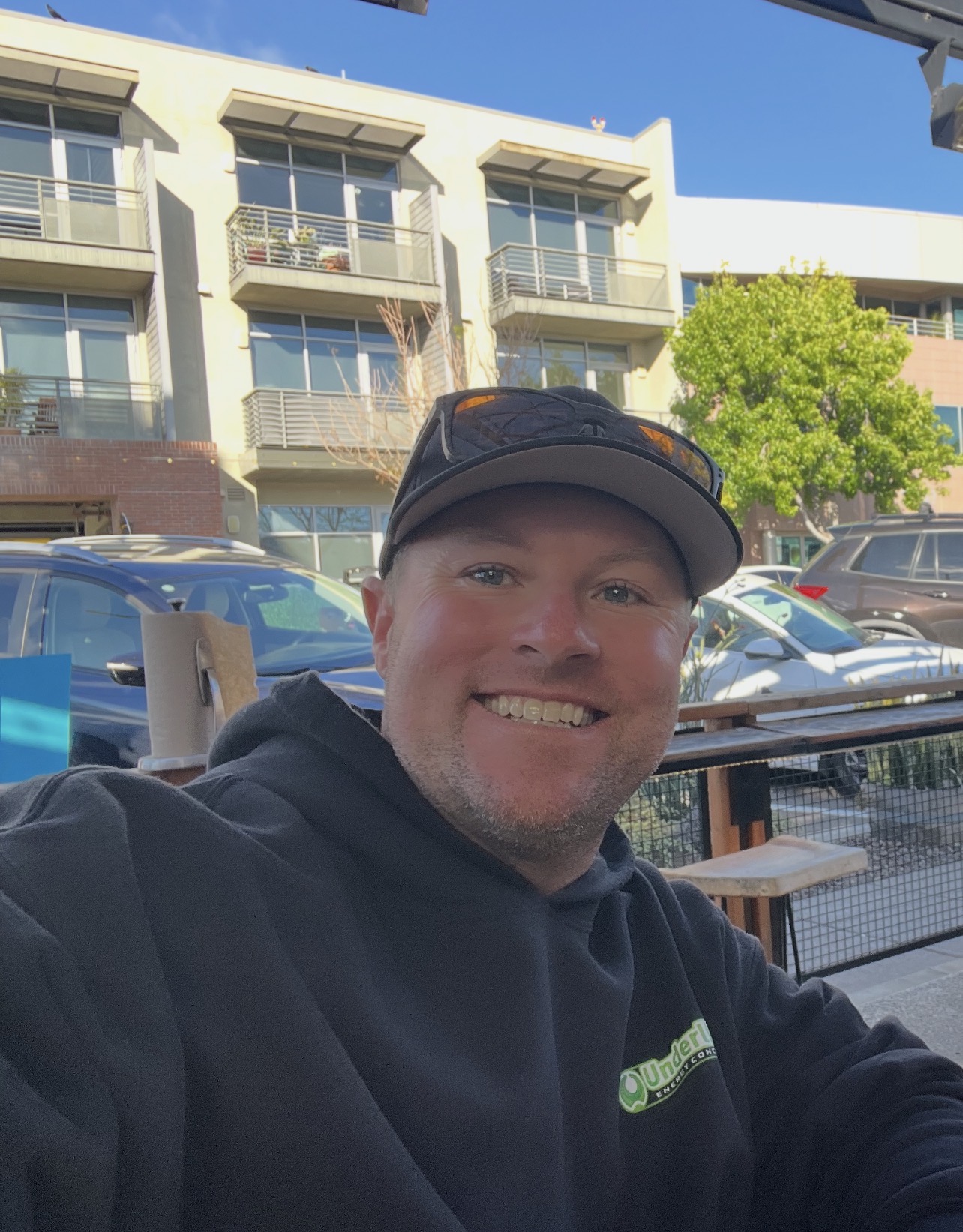
Jesse Malone
Jesse Malone
CEO & Partner, Underline Energy Concepts
Jesse Malone is the CEO and Partner of Underline Energy Concepts, a Southern California energy services company that has been serving homeowners since 2002. Since joining the company and becoming a partner in approximately 2015, Jesse has helped lead its growth into one of Southern California’s most trusted providers of residential energy efficiency and home improvement solutions.
Throughout his tenure, Jesse and the Underline Energy team have completed more than 2,500 energy upgrade projects for homeowners across Southern California. These projects include solar energy systems, roofing, battery storage, EV charging stations, electrical panel upgrades, water heater replacements, attic insulation, retrofit windows, and other energy-efficient home improvements designed to lower utility costs and increase property value.
Jesse holds a Bachelor’s Degree from California Southern University and brings more than 20 years of experience in emergency services through his service with the fire department. His background in public service has shaped his leadership style, emphasizing integrity, accountability, safety, and a commitment to serving the community.
A lifelong advocate for efficiency and practical solutions, Jesse is passionate about helping homeowners make informed decisions that improve both their homes and their financial future. His interests extend beyond energy efficiency into financial literacy, budgeting, investing, and long-term wealth-building strategies. He believes that reducing unnecessary expenses and maximizing efficiency are key components of financial success.
As CEO, Jesse continues to focus on delivering exceptional customer experiences, building high-performing teams, and helping Southern California homeowners achieve greater comfort, energy independence, and long-term savings through smart home investments.
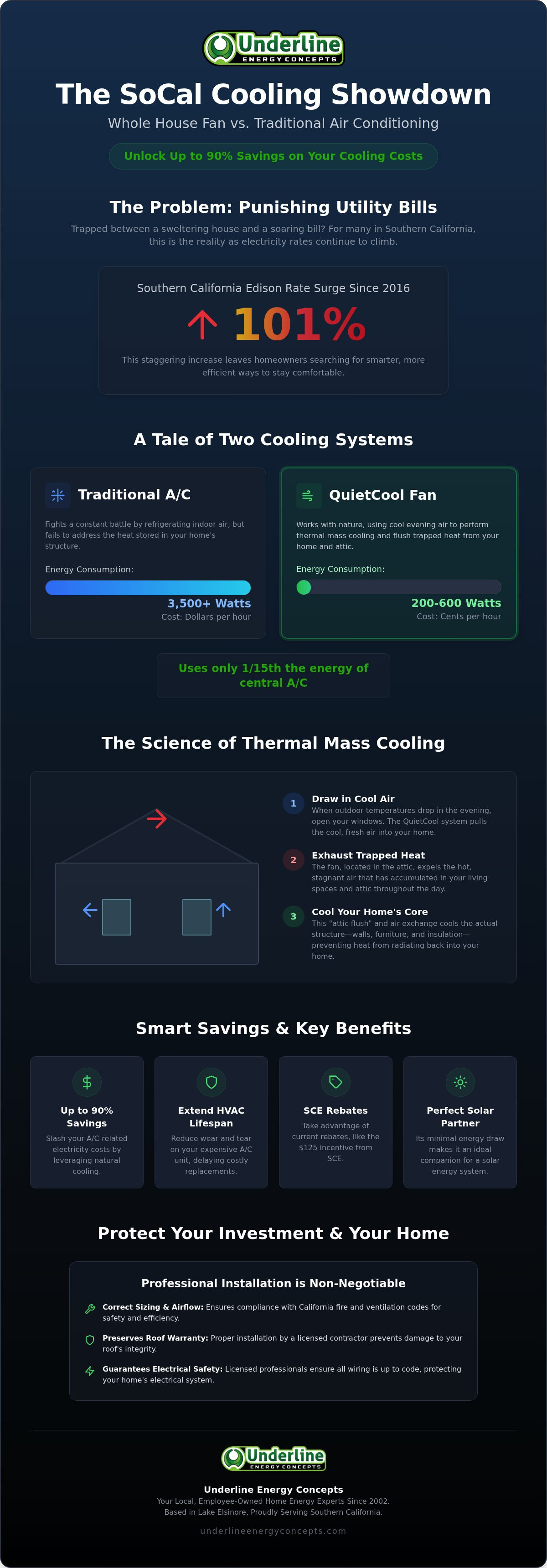
Since 2016, Southern California Edison electricity rates have surged by a staggering 101 percent, leaving local homeowners trapped between a sweltering house and a punishing utility bill. You've likely felt the frustration of watching your meter spin during a Riverside County heatwave while your AC struggles to keep up with 100 degree days. It's a common struggle in our region; however, the financial burden of staying comfortable doesn't have to be your new normal. When you evaluate the whole house fan vs air conditioning cost, the data reveals a clear path toward significant relief and home autonomy.
We understand that you want a home that feels fresh and cool without the constant noise of an overworked compressor. This guide explores how a professional QuietCool installation can slash your cooling-related energy costs by up to 90 percent while improving your indoor air quality. We'll break down the 2026 SCE rate structures, explain how to claim your $125 rebate, and show you how to leverage our cool coastal evenings to flush out stale air. By the end of this article, you'll see exactly why thermal management is the smartest investment you can make for your home's long-term value and your family's comfort.
Key Takeaways
- Learn how thermal mass cooling replaces trapped indoor heat with cool evening air to lower your home's structural temperature more effectively than traditional air conditioning.
- Analyze the significant gap in whole house fan vs air conditioning cost, specifically how a QuietCool system can operate on roughly 1/15th of the energy needed for central AC units.
- Discover how to calculate the correct airflow for your home's volume and why a zoned fan approach ensures compliance with 2026 California fire and ventilation codes.
- Understand the importance of professional installation by a licensed contractor to protect your roof warranty and ensure your home's electrical integrity remains intact.
- Explore how to maximize your savings through current SCE rebates and see how a whole house fan serves as the perfect partner for your solar energy system.
The Science of Thermal Mass Cooling: Why Fans Outperform AC in SoCal Evenings
Living in Lake Elsinore or the surrounding Inland Empire means dealing with a specific type of heat. During the day, your home acts like a giant battery, absorbing and storing thermal energy in its walls, furniture, and attic. Traditional air conditioning fights this by refrigerating the air inside, which is an energy-intensive process that doesn't address the heat trapped in the building's structure. This is where the whole house fan vs air conditioning cost debate becomes vital for homeowners looking for autonomy from high utility bills. The Science of Whole-House Fans explains that by drawing in cool evening air, you're not just changing the air temperature; you're engaging in thermal mass cooling. This process replaces trapped indoor heat with crisp outdoor air to lower the temperature of the home's actual structure, preventing that "oven effect" that keeps your house hot long after the sun goes down.
Beyond the living space, these systems perform a critical "attic flush." By pushing hot, stagnant air out through your roof vents, you cool the attic space itself. This prevents heat from radiating down into your bedrooms the following day, giving your AC a head start. Additionally, this massive air exchange exhausts VOCs, pet dander, and stale air, replacing it with fresh outdoor air in minutes. It's a proactive approach to home comfort that prioritizes health alongside savings.
Understanding the Southern California Cooling Cycle
Our region is famous for the "Delta T," the significant temperature drop that occurs between day and night in cities like Temecula and Corona. When the outside air drops below the inside temperature, running a fan becomes exponentially more efficient than running a compressor. Thermal mass cooling is the strategic exchange of hot indoor air for cool outdoor air to pre-cool the home structure. By leveraging these off-peak hours when SCE rates are lower, you can maintain comfort while keeping your financial resources in your own pocket.
QuietCool vs. Traditional Whole House Fans
If you remember the helicopter-like roar of old-style whole house fans, you'll appreciate the QuietCool difference. Older fans were often bolted directly to the ceiling joists, vibrating the entire house and creating a nuisance. Modern QuietCool systems utilize patented acoustical ducting to suspend the motor away from the ceiling, resulting in whisper-quiet operation. These units provide high CFM (Cubic Feet per Minute) ratings with minimal energy draw, allowing you to cool your entire home for pennies an hour. It's a common-sense upgrade that fixes the noise issues of the past while maximizing modern efficiency.
Comparing Operating Costs: QuietCool vs. Traditional Air Conditioning in 2026
Central air conditioning is often the single largest contributor to a Southern California utility bill. In 2026, Southern California Edison (SCE) residential rates have reached an average of 34.4¢/kWh, with peak Time-Of-Use (TOU) rates climbing as high as 74¢/kWh during summer evenings. This makes the whole house fan vs air conditioning cost comparison a critical financial calculation for Lake Elsinore residents. A QuietCool system typically uses about 1/15th the energy of a central AC unit. While an AC compressor might draw 3,500 watts or more to refrigerate your air, a high-efficiency fan often operates on just 200 to 600 watts.
This massive reduction in energy draw shifts your cooling costs from dollars per hour to mere cents. By running your fan during off-peak hours, you're not just saving money; you're preserving your expensive HVAC equipment. Reducing the workload on your AC unit prevents premature wear and tear, effectively extending its lifespan and delaying a multi-thousand dollar replacement. Following ENERGY STAR Efficiency Ratings guidelines ensures you're choosing a system designed for maximum performance with minimal waste.
The 90% Savings Framework
Homeowners can save up to 90% on AC-related electricity costs by utilizing a QuietCool system during evening hours. In a typical Riverside County home, this translates to a rapid return on investment, where the system often pays for itself through utility savings in just a few seasons. If you're planning your budget, check out our Cost of Whole House Fan Installation in Southern California: 2026 Price Guide for a detailed breakdown of the initial investment.
Maintenance and Longevity Costs
QuietCool fans require significantly less maintenance than complex HVAC compressors. There are no refrigerant levels to check or complex coils to clean. Because these fans are engineered for simplicity and durability, they come with a 15-year warranty for long-term peace of mind. You can avoid the stress of an "emergency AC repair" bill during a 100°F heatwave by having a reliable backup cooling method that works when you need it most. If you're ready to take control of your home's energy future, you can schedule a professional energy consultation to see which model fits your specific home layout.
Sizing and Safety: Navigating California Fire Codes and Attic Ventilation
Properly sizing your system is the most critical step in maximizing the whole house fan vs air conditioning cost advantage. Many homeowners make the mistake of choosing a fan based solely on square footage, but professional air exchange is actually a calculation of total home volume. To achieve the rapid cooling effect that defines the QuietCool experience, your system should move enough air to replace the entire volume of your home roughly 15 to 20 times per hour. This requires a precise Cubic Feet per Minute (CFM) rating that accounts for ceiling height and floor plan complexity.
We often recommend a zoned approach rather than relying on a single, massive unit. By installing multiple smaller fans in strategic locations like hallways and primary bedrooms, you gain granular control over your home's airflow. This allows you to cool specific rooms at night while leaving the rest of the house dormant, further driving down energy consumption. However, this air has to go somewhere. Without adequate attic exhaust ventilation, you risk creating back-pressure that chokes the fan's motor and reduces its effectiveness. A general rule of thumb for 2026 standards is providing one square foot of net free vent area for every 750 CFM of fan capacity.
Attic Ventilation and Fire Code Upgrades
Safety is our priority at Underline Energy Concepts. In many Southern California communities, especially those in Wildland-Urban Interface (WUI) zones, the 2026 California Fire Code mandates the use of ember-resistant vents. These specialized vents prevent wind-driven embers from entering your attic during a wildfire. Understanding these requirements is essential, especially when reviewing Attic Ventilation Fire Code Upgrades in SoCal to protect your property. We ensure your Net Free Vent Area (NFA) is correctly calculated so your QuietCool model performs at its peak without compromising your home's fire hardening standards.
Handling Complex SoCal Home Layouts
Newer developments in Murrieta and Menifee often feature two-story layouts and dramatic vaulted ceilings that present unique cooling challenges. Hot air naturally rises and traps itself in these high-volume spaces, making fan placement a science. For two-story homes, we focus on pulling air from the ground floor up through the stairwell while placing secondary units in upstairs bedrooms to ensure sleeping comfort. In rooms with vaulted ceilings, we position intake valves to capture the highest pockets of heat. This strategic placement ensures consistent cross-ventilation and eliminates the "dead air" zones that often plague modern Southern California architecture.
Professional QuietCool Fan Installation: Protecting Your Roof and Electrical Integrity
While the financial benefits in the whole house fan vs air conditioning cost debate are clear, the long-term success of your system depends on the quality of its installation. Cutting a hole in your ceiling and modifying your electrical panel are not tasks for the faint of heart. Professional installation by a licensed contractor protects your roof warranty and ensures your home's structural integrity remains uncompromised. We focus on precise joist placement when installing the airtight damper box; this prevents the sagging or framing issues that often plague amateur attempts.
Modern electrical requirements are stricter than ever. For 2026 code compliance, a dedicated circuit is often the safest choice to handle the fan's initial draw without interference. We also integrate smart controls and WiFi hubs into your home automation system. This allows you to manage your home's airflow from your smartphone, ensuring you never waste energy when the outdoor air isn't quite cool enough yet.
The Installation Day Process
Our team follows a methodical approach to ensure every unit operates at peak efficiency. We don't just "drop in" a fan; we engineer a solution for your specific home layout. Here is what you can expect:
- Step 1: We perform a comprehensive attic inspection and vent calculation to confirm your home has enough exhaust area for the fan capacity.
- Step 2: Our installers cut the intake ceiling opening and secure the airtight damper box between your joists.
- Step 3: We suspend the fan motor from the rafters using specialized brackets; this crucial step eliminates the vibration and noise associated with traditional fans.
- Step 4: We complete the final electrical wiring and configure your smart switches for seamless operation.
The Underline Advantage: Roofing and Electrical Synergy
Many homeowners underestimate the risk of DIY roof-mount installations. A poorly sealed vent can lead to significant water damage during intense Lake Elsinore winter storms. Because Underline Energy Concepts is a dual-licensed roofing and electrical contractor, we provide a level of protection most installers can't match. We ensure every roof penetration is leak-free and every wire meets the 2026 California Electrical Code. This comprehensive expertise means you don't have to worry about the whole house fan vs air conditioning cost being offset by expensive home repairs later. If you want the job done right the first time, schedule your professional installation today.
Maximizing Your ROI: Solar Synergy and SCE Rebates for Lake Elsinore Homeowners
Southern California Edison offers specific financial incentives to help you offset the initial investment in energy-efficient cooling. For 2026, the SCE Marketplace provides a rebate of up to $125 for the purchase and installation of a whole house fan. While this rebate covers a portion of the hardware, the real value lies in the long-term shift in your utility expenses. When calculating the whole house fan vs air conditioning cost, you must account for these immediate savings alongside the drastic reduction in monthly kWh consumption. We simplify this process by providing the professional documentation and proof of installation required to secure your maximum rebate amount without the typical administrative headache.
Our team at Underline Energy Concepts has been a fixture in Lake Elsinore, Temecula, and Murrieta since 2002. As an employee-owned company, we take a "Whole Home" perspective that goes beyond a standalone equipment fix. We evaluate your home's entire energy envelope, ensuring your insulation and roofing work in harmony with your new ventilation system. This comprehensive approach ensures that the cool air you pull in during the evening stays inside where it belongs, maximizing your return on investment for decades to come.
The QuietCool and Solar Connection
Integrating a QuietCool system with solar panels is one of the most effective ways to achieve true energy autonomy. By reducing your cooling load by up to 90 percent, you can often meet your home's energy needs with a smaller, more affordable solar array. You can learn more about this integration in our Solar Panel Installation Southern California: The 2026 Homeowner’s Guide. When you pair this efficiency with a whole-home battery backup, you gain the ability to run your ventilation system during grid outages, keeping your home fresh and habitable even when the neighborhood goes dark.
Ready to Cool Your Home? Next Steps
Taking control of your home's climate starts with a clear understanding of your property's specific needs. During your free energy efficiency consultation, our experts assess your home's volume, attic ventilation capacity, and electrical panel health. We don't use high-pressure tactics; we provide the data you need to make a common-sense decision for your family's comfort. You can review current SCE Rebates and Financial Assistance to see the latest utility offers. Don't let another summer of exorbitant electricity bills dictate your lifestyle. Contact Underline Energy Concepts today to schedule your inspection and join the thousands of Southern California homeowners who have chosen a smarter way to stay cool.
Take Control of Your Home's Energy Future
Winning the battle against rising utility rates requires a shift from passive consumption to active home management. By embracing thermal mass cooling, you're not just lowering your thermostat; you're fundamentally changing how your home interacts with the Southern California climate. When you weigh the whole house fan vs air conditioning cost, the long-term savings and improved air quality make QuietCool a clear choice for the financially savvy homeowner.
At Underline Energy Concepts, we bring over two decades of local experience to every project. Since 2002, our employee-owned team has specialized in the seamless integration of solar, roofing, and electrical systems. We ensure your installation is code-compliant, leak-free, and optimized for maximum SCE rebates. You deserve a home that remains a sanctuary of comfort without the burden of exorbitant energy bills. We're proud to serve our neighbors across Lake Elsinore and the broader Riverside County area with quality workmanship that stands the test of time.
Take the first step toward energy independence today. Schedule Your Free QuietCool Installation Quote and let our experts help you build a more efficient, sustainable future for your home.
Frequently Asked Questions
How much can I actually save on my electricity bill with a QuietCool fan?
You can save up to 90% on your air conditioning-related electricity costs by utilizing a QuietCool system. In Southern California cities like Temecula and Menifee, where summer temperatures frequently exceed 100 degrees, this shift significantly lowers your monthly utility burden. Because the fan uses a fraction of the energy required by a compressor, homeowners often see a drastic reduction in their SCE bills during the peak summer months.
Do I need to leave windows open for the QuietCool fan to work?
Yes, you must open at least one or two windows to provide an intake source for the cool outdoor air. The system works by creating a vacuum effect that pulls fresh air in and pushes hot air out through the attic. For residents in Lake Elsinore or Corona, opening windows in the evening allows the system to flush out the day's heat and replace it with crisp, evening air in minutes.
Can I install a QuietCool fan myself, or do I need a professional?
We strongly recommend professional installation to protect your home's structural and electrical integrity. As a licensed contractor serving Riverside County since 2002, we ensure that every installation meets the 2026 California Electrical Code and preserves your roof warranty. Professional setup also guarantees that the fan is suspended correctly to eliminate noise and that your attic has the precise net free vent area required for safety and performance.
Is a QuietCool fan loud enough to disturb my sleep?
No, modern QuietCool fans are designed for whisper-quiet operation and won't disturb your sleep. Unlike old-style whole house fans that vibrate the entire house, these units use patented acoustical ducting to isolate the motor from the ceiling. This makes them ideal for nighttime use in bedrooms across Murrieta and Wildomar, providing a gentle breeze and cooling relief without the disruptive roar of a traditional HVAC system or an older fan model.
Does QuietCool work in high-humidity areas of Southern California?
Yes, it works effectively throughout Southern California, though it is most efficient when the outdoor temperature is lower than the indoor temperature. While coastal areas or cities like Perris and Moreno Valley can experience humidity, the fan still provides relief by moving large volumes of air. It remains a superior alternative when comparing the whole house fan vs air conditioning cost, as it provides massive airflow for pennies per hour even on humid nights.
What is the maintenance required for a whole house fan?
Maintenance requirements are minimal compared to a central HVAC system. You should periodically check your windows and intake grilles for dust buildup and ensure your attic vents remain clear of debris. Because there are no complex refrigerant lines or compressors, the system is designed for long-term reliability. Our employee-owned team in Lake Elsinore can perform a quick inspection during your routine roofing or solar maintenance to ensure everything is functioning perfectly.
Will a whole house fan help with attic moisture or mold?
Yes, a whole house fan significantly improves attic ventilation, which helps prevent the buildup of moisture and mold. By constantly moving air through the attic space, the system reduces stagnant pockets of humidity that can damage your roof structure. This is particularly beneficial for homes in Winchester or Canyon Lake, where proper airflow protects your insulation and extends the lifespan of your roofing materials while maintaining a healthier indoor environment.
How many attic vents do I need for a QuietCool installation?
The number of vents depends on the CFM rating of your specific fan model. The general rule is one square foot of net free vent area for every 750 CFM of fan capacity. During our professional consultation, we calculate your current ventilation and install additional ember-resistant vents if needed to meet the 2026 California Fire Code. This ensures your system has enough exhaust path to operate at peak efficiency without back-pressure.