
Energy Efficiency Upgrades for California Homes: A Guide
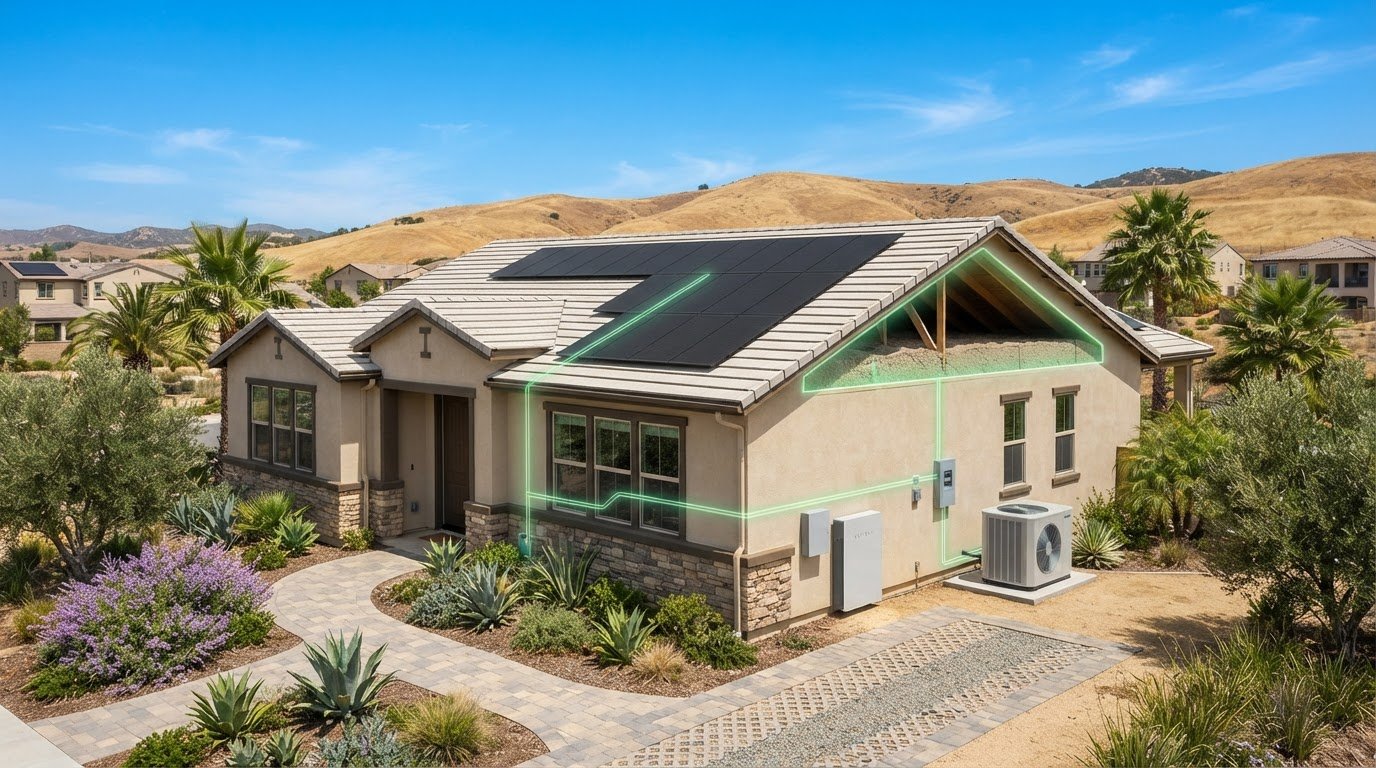
/

Article by
Jesse Malone
Jesse Malone
CEO & Partner, Underline Energy Concepts
Jesse Malone is the CEO and Partner of Underline Energy Concepts, a Southern California energy services company that has been serving homeowners since 2002. Since joining the company and becoming a partner in approximately 2015, Jesse has helped lead its growth into one of Southern California’s most trusted providers of residential energy efficiency and home improvement solutions.
Throughout his tenure, Jesse and the Underline Energy team have completed more than 2,500 energy upgrade projects for homeowners across Southern California. These projects include solar energy systems, roofing, battery storage, EV charging stations, electrical panel upgrades, water heater replacements, attic insulation, retrofit windows, and other energy-efficient home improvements designed to lower utility costs and increase property value.
Jesse holds a Bachelor’s Degree from California Southern University and brings more than 20 years of experience in emergency services through his service with the fire department. His background in public service has shaped his leadership style, emphasizing integrity, accountability, safety, and a commitment to serving the community.
A lifelong advocate for efficiency and practical solutions, Jesse is passionate about helping homeowners make informed decisions that improve both their homes and their financial future. His interests extend beyond energy efficiency into financial literacy, budgeting, investing, and long-term wealth-building strategies. He believes that reducing unnecessary expenses and maximizing efficiency are key components of financial success.
As CEO, Jesse continues to focus on delivering exceptional customer experiences, building high-performing teams, and helping Southern California homeowners achieve greater comfort, energy independence, and long-term savings through smart home investments.
What if the best energy efficiency upgrades home California homeowners can choose aren’t the biggest ones, but the ones that solve the right problem first? It’s easy to feel pulled between insulation, new equipment, solar, and advice that may not fit your home. Start with what your house needs, not a one-size-fits-all checklist.
The right first step depends on how your home performs today and how its systems work together. Improving insulation may affect heating and cooling needs; electrical capacity can shape future equipment choices. That doesn’t mean every home needs every upgrade. It means a thoughtful plan can help you avoid guesswork and prioritize improvements that make sense for your property and location.
This guide will help you assess your Southern California home, compare common upgrades, and understand how improvements can complement one another. You’ll also learn how to plan around existing systems, from windows and insulation to heating and cooling, solar, and battery storage. Underline Energy Concepts offers a range of home energy improvements, including solar, roofing, electrical upgrades, and heating and cooling. By the end, you’ll have a clearer way to choose a practical next step without feeling pressured to do everything at once.
Key Takeaways
- Start by noting comfort concerns, current equipment, and planned replacements so your priorities reflect your home, not a generic checklist.
- See how insulation, windows, heating and cooling, hot water, and electrical capacity can affect one another before deciding what to tackle first.
- Compare energy efficiency upgrades home California homeowners may consider by the needs each addresses and the systems they connect to.
- Use a simple planning process to assess your home, set priorities, coordinate related work, and review options without committing to every upgrade at once.
- Use a Southern California perspective to shape practical next steps for your home, whether you live in Canyon Lake, Menifee, Temecula, Murrieta, Wildomar, Corona, Moreno Valley, Perris, Lake Elsinore, or Winchester.
Energy Efficiency Upgrades for California Homes: Start with the Home
Before comparing equipment or looking at solar, assess the house itself. A home energy efficiency upgrade is an improvement that reduces wasted energy or helps a home perform more effectively. The right energy efficiency upgrades home California homeowners prioritize depend on the home’s condition, existing systems, daily routines, and local setting. Start with the problem you want to solve, not a checklist that assumes every home needs the same work.
What counts as an energy efficiency upgrade?
Different improvements address different sources of energy use. Attic insulation helps slow heat transfer through the ceiling, while air sealing closes gaps that let conditioned air escape or outdoor air enter. Efficient heating and cooling equipment is designed to manage indoor temperatures, and windows influence how heat and air move through the home. Hybrid water heaters use a different approach to heating household water. The role of each upgrade depends on the house and how its systems are used, so don’t assume one change will solve every comfort or energy concern.
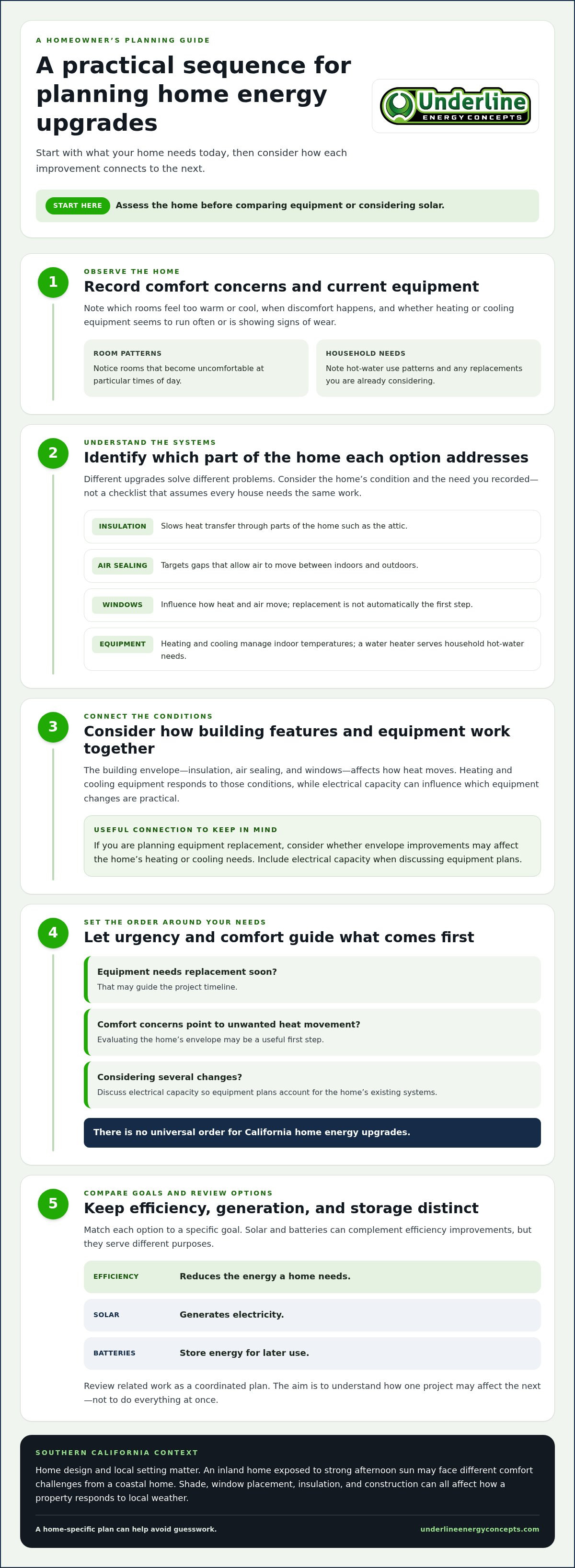
Efficiency reduces the energy a home needs; solar generates electricity, and batteries store energy for later use. Solar and battery systems may complement efficiency improvements, but they aren’t efficiency upgrades on their own. Keep those purposes separate when comparing projects so you can match each option to a specific goal.
Why California homeowners should begin with an assessment
Before planning work, record what you notice. Which rooms feel too warm or cool? Is heating or cooling equipment showing signs of wear, or are you already considering a replacement? When does your household use the most hot water? Note patterns such as rooms that become uncomfortable at certain times of day or equipment that seems to run often. These details help connect a possible upgrade to a real household need.
Location and home design matter, too. An inland home exposed to strong afternoon sun may face different comfort challenges from a coastal home. Shade, window placement, insulation, and construction also affect how a property responds to local weather. Don’t assume homes in the same community need identical solutions.
California’s energy standards offer useful context for efficiency decisions. Learn more about California's Building Energy Efficiency Standards, then keep your own home’s condition and planned improvements at the center of the assessment. A clear record of concerns gives you a practical starting point for coordinating upgrades without committing to work that may not fit your needs.
How Home Energy Upgrades Work Together in Southern California
A home uses energy through connected systems, not isolated parts. The building envelope, including insulation, air sealing, and windows, affects how heat moves indoors and out. Heating and cooling equipment responds to those conditions, while a water heater serves a separate household need. Electrical capacity can also influence which equipment changes are practical, especially when planning multiple upgrades.
Coordinated improvements can address heat flow through the envelope, the energy used for heating, cooling, and hot water, and the electrical capacity needed to support equipment choices. The goal isn’t to do everything at once. It’s to understand how one project may affect the next.
Insulation, air sealing, and windows
Insulation slows heat transfer through parts of the home such as the attic. Air sealing targets gaps that allow air to move between indoors and outdoors. They address related but different issues, so a home may need one, both, or neither as a priority. Windows can also affect heat and air movement, but replacing them isn’t automatically the first step. Consider them as part of the broader envelope plan, alongside the home’s condition and comfort concerns.
For a closer look at the window option, explore our guide to energy-efficient window planning.
Heating, cooling, and hot water systems
Heating and cooling equipment manages indoor temperature; a hybrid water heater addresses household hot water. These are distinct equipment-focused upgrades, and the right timing depends on each system’s condition and your household’s needs. If you’re already planning an equipment replacement, consider how envelope improvements may affect the home’s heating or cooling needs. That relationship can help shape project scope and sequencing without assuming a particular change will deliver a set level of savings.
There’s no universal order for energy efficiency upgrades home California homeowners should follow. If equipment needs replacement soon, that may guide the timeline. If comfort issues point to unwanted heat movement, evaluating the envelope may be a useful first step. If you’re considering several changes, include electrical capacity in the conversation so equipment plans fit the home’s existing systems.
A coordinated plan helps you avoid treating each decision in isolation. Underline Energy Concepts provides home energy improvements including heating and cooling, hybrid water heaters, electrical panel upgrades, and solar installations. Talk through your home’s upgrade priorities.
How to Compare California Home Energy Upgrades Without Overcommitting
You don’t have to replace every system to start improving how your home uses energy. Compare each option by the concern it addresses, the systems it may affect, and the timing that makes sense for your household. This keeps energy efficiency upgrades home California homeowners consider grounded in the home’s needs rather than a universal “do it all” plan.
Which upgrade fits the problem you are trying to solve?
Use the table as a starting point, not a promise that a particular upgrade will resolve a concern. Your home’s condition and equipment matter.
| Upgrade category | Home concern it may address | Related systems | Planning questions |
|---|---|---|---|
| Insulation and air sealing | Uncomfortable rooms or unwanted air movement | Building envelope; heating and cooling | Where does the discomfort occur, and what parts of the home may need attention? |
| Heating and cooling | Equipment condition or indoor temperature management | Building envelope; electrical capacity | Is replacement approaching, and how does the home’s current condition affect equipment planning? |
| Hot water | Water-heating equipment concerns or household hot-water needs | Water heater; electrical capacity | How is hot water used, and what is the condition of the existing system? |
| Windows | Window condition or comfort near windows | Building envelope; heating and cooling | Are windows a priority on their own, or part of a wider envelope plan? |
| Solar | Interest in generating electricity at home | Electrical system; energy use | Are you exploring energy generation separately from reducing the home’s energy demand? |
Solar serves a different purpose from insulation, windows, or efficient equipment: it generates electricity rather than directly reducing the energy the home needs. Battery storage is another distinct consideration, focused on storing energy for later use. Keep those goals separate as you compare options.
How to weigh timing, scope, and available support
Start with immediate concerns, then consider equipment that may need replacement and work that could be coordinated. For example, a planned heating and cooling replacement may be a good time to consider how the home’s envelope and electrical capacity relate to the project. That doesn’t mean every related improvement must happen at once. Project scope should follow the home’s assessed needs.
Costs, potential savings, and payback depend on the property, selected equipment, existing systems, and project details. Without that information, a general estimate may not reflect your situation. Treat rebates or assistance as a separate research step, since program terms and eligibility can change. For current program information, review the SCE Marketplace rebates page.
A Practical Upgrade Planning Process for California Homeowners
A simple planning process can turn a long list of possible projects into manageable next steps. Before discussing project scope, document what’s in the home, what you’re noticing, and what you expect to replace. This gives the conversation a practical starting point and helps keep decisions tied to your property.
Create a home-priority list
Sort observations into four categories: comfort, equipment condition, energy use, and resilience. Note the rooms that feel uncomfortable, the age or condition of equipment as you understand it, and any patterns in when energy is used. Record resilience goals, too, such as interest in backup power. These notes help frame the discussion, but they don’t establish the cause of a problem. An assessment can help evaluate concerns that need a closer look.
Plan in five steps
- 1. Record concerns. Describe comfort issues, recurring patterns, and the home’s priorities in plain language.
- 2. Assess existing systems. List heating and cooling equipment, the water heater, insulation or window concerns, electrical equipment, and any planned replacements. Treat observations as starting points, not diagnoses.
- 3. Prioritize needs. Separate urgent equipment decisions from improvements you’re considering for comfort, energy use, or resilience. Choose a first project based on the home’s condition and your goals, not a universal upgrade order.
- 4. Coordinate related work. Consider whether planned roofing, electrical, or equipment work could affect the timing or scope of another project. For example, a solar plan may make electrical capacity relevant, while roof work may need to be considered alongside rooftop equipment.
- 5. Review options. Discuss project scope using your notes, the home’s assessed needs, and the systems each option may involve. If you’re considering assistance programs, research current local resources and review their terms and eligibility before relying on them.
Keep the plan focused. You may be able to address one clear priority first, then revisit other options as equipment needs, household plans, or project timing change. A checklist helps organize the conversation, but it can’t replace a project-specific evaluation. That’s especially true when considering energy efficiency upgrades home California properties may need, because homes, systems, and local conditions differ.
Underline Energy Concepts is a licensed roofing, electrical, and general contractor serving Southern California. Schedule a consultation to discuss your home’s upgrade priorities and map out a practical next step.
Plan Your Home Energy Efficiency Upgrades with a Local Southern California Team
Better upgrade decisions start with your home, not a preset package. Assess its condition, define what matters to your household, and coordinate improvements that fit those priorities. That approach helps you focus on relevant work without assuming every property needs new windows, insulation, equipment, solar, or battery storage.
Underline Energy Concepts is a licensed roofing, electrical, and general contractor serving Southern California. The company installs solar panels and battery backup systems and provides roofing, electrical upgrades, attic insulation, windows, heating and cooling, and hybrid water heaters. The right scope depends on your home and what you want to address.
What a whole-home conversation can help clarify
Bring your notes about comfort concerns, existing equipment, household routines, and planned replacements. A whole-home conversation can help connect those details to possible project priorities and sequencing. For example, a planned equipment replacement may raise questions about the home’s existing electrical capacity, while insulation or window concerns may be relevant to heating and cooling decisions.
These connections don’t mean every improvement belongs in one project. They help clarify which options relate to your goals, which questions need a closer assessment, and what may be practical to address first. The scope should follow the property’s condition and needs, not a one-size-fits-all checklist.
Take the next step for your California home
Use what you’ve learned to frame the discussion: what needs attention now, what may need replacement later, and which improvements you’re still exploring. This gives you a clearer basis for reviewing options and deciding whether to take one step or coordinate related work.
For homeowners planning energy efficiency upgrades home California, a local perspective can help turn broad ideas into a property-specific conversation. Underline Energy Concepts serves homeowners in Canyon Lake, Menifee, Temecula, Murrieta, Wildomar, Corona, Moreno Valley, Perris, Lake Elsinore, and Winchester. Talk with our team about your home energy upgrades and explore a practical next step for your home.
Take the Next Step Toward a More Efficient Home
The right improvements begin with your home’s actual needs. Assess comfort concerns and existing systems, then prioritize projects that fit your goals. Insulation, windows, and efficient equipment can help manage energy use, while solar generates electricity and batteries store it. A coordinated plan can help you consider these options without assuming every upgrade belongs on your list.
Underline Energy Concepts is a licensed roofing, electrical, and general contractor serving Southern California homeowners. The team can help you discuss project priorities and how relevant improvements may fit together. Every home is different, so the next step should reflect your property and plans.
Ready to make your energy efficiency upgrades home California plan more specific? Talk with our team about your home energy upgrades and discuss a practical next step for your home.
Frequently Asked Questions
What are the most common energy efficiency upgrades for California homes?
Common options include attic insulation, air sealing, efficient heating and cooling equipment, window improvements, and hybrid water heaters. Which one makes sense depends on the home’s condition, existing systems, and household needs. A practical plan for energy efficiency upgrades home California residents can use starts by identifying the concern each improvement may address. Homeowners in Lake Elsinore, Canyon Lake, Menifee, Temecula, Murrieta, Wildomar, Corona, Moreno Valley, Perris, and Winchester can use the same home-first approach.
Which home energy upgrade should I do first?
Start with the issue that matters most in your home, then assess the related systems before choosing a project. Write down comfort problems, equipment condition, recurring energy-use patterns, and planned replacements. A room that feels uncomfortable may call for an assessment of the building envelope or heating and cooling equipment, but the symptom alone doesn’t confirm its cause. Priorities vary, so there isn’t one upgrade order that fits every home.
Do energy efficiency upgrades increase home value?
They may make a home’s comfort and energy features more appealing to some prospective buyers, but no particular upgrade guarantees a higher sale price or a specific return. Property value depends on the home, the work completed, and local market conditions. Consider improvements first for how they address your household’s needs and how they fit your longer-term plans. Keep project costs, potential savings, and resale value as separate questions to evaluate.
Can insulation and new windows reduce heating and cooling needs?
They can help manage heat movement through the home, which may affect how much heating or cooling is needed to maintain indoor comfort. Insulation slows heat transfer through parts of the home, while windows influence heat and air movement at openings. Their role depends on existing conditions, installation, home design, and local exposure to sun and weather. An assessment can help determine whether either improvement should be part of your project plan.
Are rebates available for home energy efficiency upgrades in California?
Some state or utility programs may offer support, but availability, terms, and eligibility can vary and change. Check current program information for your utility and location before including a rebate in your project budget. Don’t assume an incentive described in older materials still applies, or that your household or upgrade qualifies. Treat potential assistance as a research step, not a guaranteed part of the project’s financial plan.
Do I need to upgrade my electrical panel for home energy improvements?
Not necessarily. Whether an electrical panel upgrade is needed depends on the panel’s condition and capacity, the existing electrical load, and the equipment you plan to add or replace. Projects involving heating and cooling equipment, an EV charger, or other electrical additions may make panel capacity relevant. Have the home’s electrical system assessed as part of planning rather than assuming an upgrade is required or unnecessary.
Can solar panels make a home more energy efficient?
Solar panels generate electricity; they don’t directly reduce the amount of energy a home needs. Insulation, air sealing, windows, and efficient equipment address energy use in different ways. Solar may be part of a broader home energy plan, but it’s useful to keep generation separate from efficiency when comparing project goals. Battery storage is distinct as well, since it stores energy for later use rather than reducing demand by itself.