
Installing Solar Panels on a Tile Roof: A Homeowner’s Guide
/

Article by
Jesse Malone
Jesse Malone
CEO & Partner, Underline Energy Concepts
Jesse Malone is the CEO and Partner of Underline Energy Concepts, a Southern California energy services company that has been serving homeowners since 2002. Since joining the company and becoming a partner in approximately 2015, Jesse has helped lead its growth into one of Southern California’s most trusted providers of residential energy efficiency and home improvement solutions.
Throughout his tenure, Jesse and the Underline Energy team have completed more than 2,500 energy upgrade projects for homeowners across Southern California. These projects include solar energy systems, roofing, battery storage, EV charging stations, electrical panel upgrades, water heater replacements, attic insulation, retrofit windows, and other energy-efficient home improvements designed to lower utility costs and increase property value.
Jesse holds a Bachelor’s Degree from California Southern University and brings more than 20 years of experience in emergency services through his service with the fire department. His background in public service has shaped his leadership style, emphasizing integrity, accountability, safety, and a commitment to serving the community.
A lifelong advocate for efficiency and practical solutions, Jesse is passionate about helping homeowners make informed decisions that improve both their homes and their financial future. His interests extend beyond energy efficiency into financial literacy, budgeting, investing, and long-term wealth-building strategies. He believes that reducing unnecessary expenses and maximizing efficiency are key components of financial success.
As CEO, Jesse continues to focus on delivering exceptional customer experiences, building high-performing teams, and helping Southern California homeowners achieve greater comfort, energy independence, and long-term savings through smart home investments.
What helps protect a tile roof during solar installation? Start by assessing the roof and planning the mounting work as part of the same project. It’s reasonable to worry that installation could crack tiles or create leaks. Installing solar panels on a tile roof requires a plan that accounts for the roof’s condition, the attachment method, and the panel layout together.
This guide explains what to consider before installation, how mounting approaches differ, and how an aging or damaged roof can affect project timing. It also covers the practical steps from roof assessment and system design through installation and final review.
Underline Energy Concepts installs solar panels and provides roofing services for homeowners in Southern California. Read on to understand the key decisions and plan your tile-roof project with a clear view of what needs to be assessed.
Key Takeaways
- Installing solar panels on a tile roof starts with assessing its condition and planning an array that accounts for the roof’s protective role.
- The mounting plan should suit the roof structure, tile profile, and proposed panel layout.
- If the roof needs repairs or replacement, coordinate that work with solar planning to avoid unnecessary disruption and rework.
- Understanding the stages, from assessment and design through installation and review, helps you prepare for the project.
- A roofing and solar team can consider roof readiness and system planning together.
Can You Install Solar Panels on a Tile Roof in Southern California?
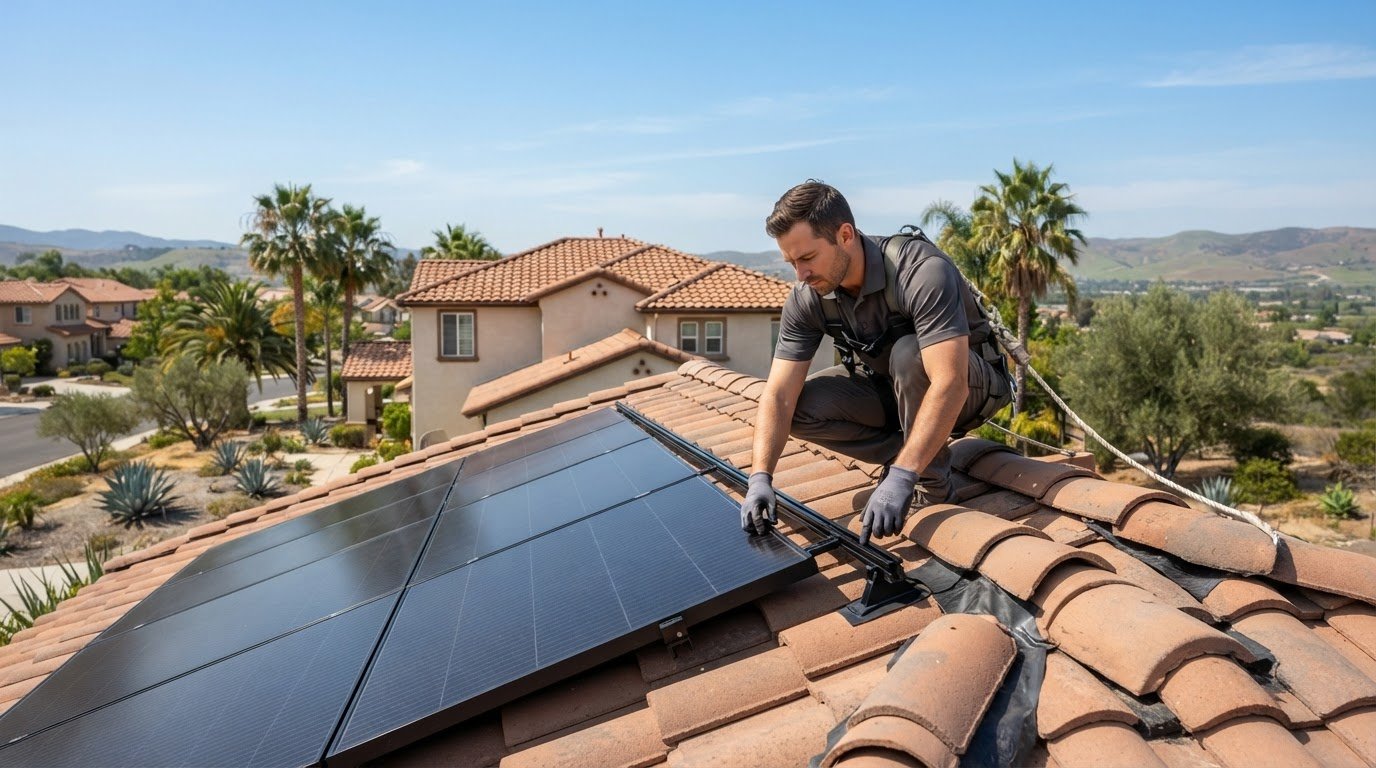
Yes, a tile roof can be suitable for solar when its condition, layout, and proposed system are assessed together. The goal isn’t simply to place panels on the roof. Installing solar panels on a tile roof means mounting a photovoltaic (PV) system while preserving the roof’s ability to protect the home.
Suitability depends on more than the tile itself. Roof condition, usable area, orientation, shade, structural considerations, and tile type all inform the design. An assessment can also identify concerns to address before panels are installed, so homeowners can plan solar and roofing work together and avoid preventable rework.
For a visual overview of one tile-roof mounting example, watch this installation demonstration:
What makes a tile roof suitable for solar panels?
Start by considering whether the roof offers a sound, practical location for an array. An assessment considers:
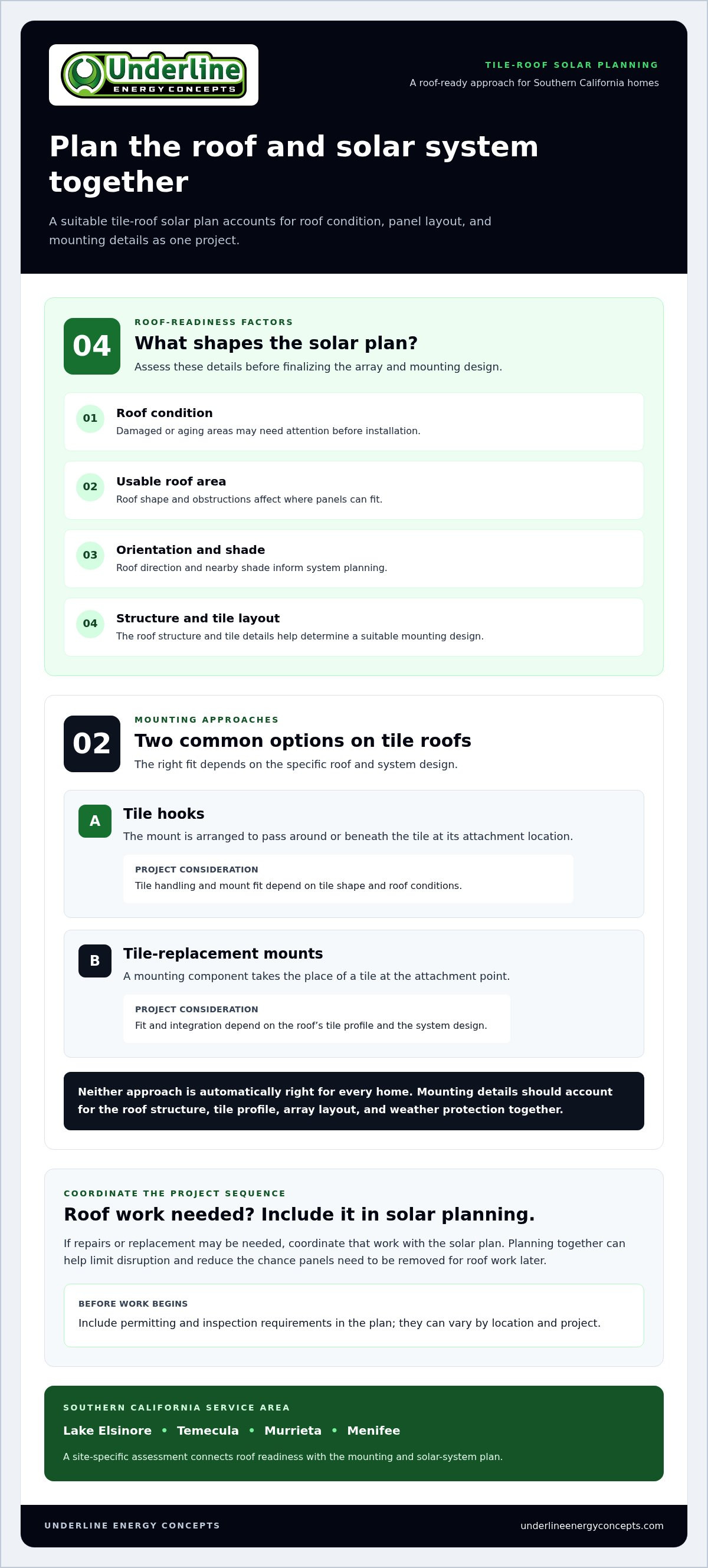
- Roof condition: Damaged or aging areas may need attention before installation.
- Usable roof area: Roof shape and obstructions affect where panels can fit.
- Orientation and shade: The direction of roof sections and nearby shade inform system planning.
- Structure and tile layout: These details help determine a mounting design suited to the home.
These factors help guide planning, but they don’t mean every tile roof is compatible. A rooftop photovoltaic power system combines panels with mounting and electrical components. Its design must account for how those components connect with the roof. Tile material and roof layout can influence the installation approach, so a site-specific assessment is more useful than assuming one solution fits every home.
What should homeowners in Southern California consider first?
Begin with roof condition. If repairs or replacement may be needed, consider that work alongside the solar project. Coordinating the plans can help limit disruption and reduce the chance that panels need to be removed for roof work later. Underline Energy Concepts installs solar panels and provides roofing services for homeowners in Southern California, including Lake Elsinore, Temecula, Murrieta, and Menifee.
Permitting and inspection requirements can vary by location and project. Include them in the planning process and identify what applies to the specific home before work begins. The guiding principle is simple: assess roof readiness, mounting design, and solar plans together.
How Tile-Roof Solar Mounting Works Without Treating Every Roof the Same
Solar panels need a mounting system that connects the array to the home’s roof structure. On a tile roof, the plan must account for how attachments connect to the structure beneath the tiles while preserving the roof covering’s protective role. Mounting details should suit the roof assembly because the tile, structure, and weather-protection layers work together.
Attachment points are planned for the specific roof, not chosen based on tile appearance alone. The design considers the structure beneath the tiles, tile profile and material, array layout, and how the mounting connection will integrate with the roof. The International Residential Code provides a reference for residential PV provisions, but applicable requirements depend on the project and location.
How do installers plan attachment points on a tile roof?
A professional assessment helps determine where the array can connect to the roof structure and how the surrounding tiles and weather-protection details should be handled. Attachment locations are project-specific. Clay and concrete tiles, for example, can differ in shape and layout, so the plan should account for those differences rather than assume one detail works everywhere.
Careful tile handling matters because cracked or displaced tiles can affect the roof’s protective function. The attachment and weatherproofing details should be considered as part of the complete roof assembly, not left as an afterthought.
How do mounting approaches differ on tile roofs?
Two common approaches are tile hooks and tile-replacement mounts. The names describe different ways to accommodate the mounting connection at the tile surface. Neither approach is automatically right for every home; tile profile, roof structure, and system design all influence the choice.
| Approach | General consideration | Project-dependent trade-off |
|---|---|---|
| Tile hooks | The mount is arranged to pass around or beneath the tile at its attachment location. | Tile handling and mount fit depend on the tile shape and roof conditions. |
| Tile-replacement mounts | A mounting component takes the place of a tile at the attachment point. | Fit and integration depend on the roof’s tile profile and the system design. |
These are general descriptions, not installation instructions. A sound plan addresses the roof structure, tile handling, and weather protection together. Grinding into a tile and sealing over it is not a substitute for a properly designed mounting detail. For homeowners in Temecula and nearby communities, a coordinated roofing and solar project discussion can connect roof condition with mounting decisions before work begins.
Tile Roof or Solar First? Compare the Installation Planning Choices
The right sequence depends on the roof’s condition and your plans for the home, not its age alone. A tile roof may be ready for solar, or it may need repairs or replacement first. Making that assessment before finalizing the panel layout helps align the work and can prevent avoidable disruption later.
There are two main planning paths:
- Serviceable roof: Assess its condition and plan the solar system around the existing roof and layout.
- Roof work needed: Coordinate repairs or replacement with solar planning so both projects are considered before installation begins.
When might roof work belong before solar installation?
Visible damage, needed repairs, or an upcoming roof replacement are reasons to assess sequencing before placing panels. If roofing and solar work are both needed, coordinating the plans can reduce repeated disruption and help avoid rework, such as finalizing an array before the roof work is settled. The appropriate order depends on the home and the scope of work.
For a closer look at this decision, read Roof Replacement for Solar: Prep Your Home for Success and Integrated Roofing and Solar Installation: A Case Study in Southern California Energy Independence. These topics can help frame practical questions about roof readiness and coordinating the work.
When can solar planning proceed alongside an existing tile roof?
If the roof is in serviceable condition, solar planning can proceed with an assessment of the roof and proposed system layout. Before panel placement is finalized, consider the available roof area, tile arrangement, and your project priorities. Roof age may be one factor, but it doesn’t determine the sequence by itself. Current condition and anticipated roof work matter more.
For broader system-planning context, consult a Southern California solar installation guide alongside a roof-specific assessment. Installing solar panels on a tile roof is a sequencing decision as well as a system decision: assess the roof, then coordinate the work around the home’s needs.
Underline Energy Concepts provides roofing and solar installation for Southern California homeowners, including in Temecula. If you’re weighing roof work against solar timing, you can discuss your roof and solar plans with the team.
What to Expect During Tile-Roof Solar Installation
A well-planned project moves from understanding the roof to designing the system, completing the installation, and reviewing the finished work. The specific steps depend on the home, roof, and project plan. For homeowners, it helps to know which decisions should be made before work begins on the tiles.
What happens before the crew installs the panels?
Preparation starts with assessing the roof and proposed system together. The design needs to account for roof condition, usable areas, tile layout, and planned attachment points. Electrical needs are also part of system planning, with details that depend on the home.
- Roof review: Identify visible concerns that may affect the plan or require roof work first.
- Site and layout planning: Determine where panels can fit based on the roof and project goals.
- System and attachment design: Coordinate the array and mounting approach with the roof assembly.
- Project preparation: Identify applicable local permit and inspection steps for the home and project.
Before work begins, share relevant information about past roof or electrical work and make agreed-upon access areas available. Keep preparation simple and safe: leave roof access and tile handling to the installation professionals.
What happens during and after the installation?
Once the project plan is ready, installation follows the home-specific design. The array mounting connects to the roof structure, and the panels and related electrical components are installed according to the project scope. If roofing work is part of the plan, coordinate it with the solar installation sequence.
After installation, review the roof surfaces and completed work. The final review is an opportunity to go over the project and any applicable next steps. Permit and inspection requirements, where relevant, depend on the local jurisdiction and project, so don’t assume they are identical across Southern California.
In short, the stages are roof assessment, system and attachment planning, coordinated installation, and a final review. This gives homeowners a clear way to understand installing solar panels on a tile roof without assuming every home follows identical details or timing. To discuss your roof and solar plans in Temecula, schedule a solar and roofing consultation.
Plan Tile-Roof Solar With a Southern California Roofing and Solar Team
A tile-roof solar project involves several connected decisions: assess the roof, plan the array and mounting, coordinate any needed roofing work, and review the completed installation. Considering these choices together helps keep the roof’s condition and the solar plans aligned from the start.
What should a tile-roof solar plan account for?
Before finalizing a plan, consider the roof’s condition, tile type, usable layout, attachment design, and any roof work that may affect project sequencing. Each factor shapes how the solar system can be planned around the existing roof. A solution suited to one tile profile or roof structure may not suit another, so the final approach depends on an assessment of the home.
If the roof needs repair or replacement, include that work in the planning conversation before solar installation proceeds. If it’s in serviceable condition, plan the array around its layout and the project’s other requirements. In either case, coordinate the work while respecting the roof’s protective role, without assuming a particular performance, savings, or roof outcome.
For broader information about system planning beyond tile-roof considerations, refer to Underline Energy Concepts’ Southern California solar installation guide. A tile-roof assessment adds the home-specific details needed to connect general planning with the roof itself.
How can homeowners take the next step?
Underline Energy Concepts provides roofing and solar installation for Southern California homeowners. Bringing both services into the project conversation makes it possible to consider roof work and solar planning together rather than as unrelated decisions.
Before a conversation, gather any information you have about past roof repairs, current concerns, or plans for future work. These details can help frame the discussion, while an assessment of the home guides project-specific decisions. Homeowners in Temecula and nearby communities can discuss a tile-roof solar project with the team.
Move Forward With a Roof-Ready Solar Plan
A tile roof can be suitable for solar when its condition and the project design are assessed together. The key decisions are practical: confirm the roof is ready, choose a mounting plan suited to its tile and structure, and coordinate any needed roofing work before installation. This sequence helps keep the roof’s protective role in view while planning the solar system around your home.
Installing solar panels on a tile roof doesn’t have to be guesswork. Underline Energy Concepts provides roofing and solar installation, bringing those parts of the project into one planning conversation. The company serves homeowners in Southern California, including Temecula and nearby communities.
Ready to understand what your roof and solar project may involve? Discuss your tile-roof solar project with our local team. A clear assessment is a practical first step toward an informed plan for your home.
Frequently Asked Questions
Can solar panels be installed on a tile roof?
Yes, tile roofs can be suitable for solar when the roof and system design are assessed for the home. Installing solar panels on a tile roof involves planning panel placement and mounting while preserving the roof’s protective function. Roof condition, usable area, orientation, shade, tile layout, and the structure beneath the tiles all inform the plan. A site-specific assessment helps determine whether the roof is ready and which approach fits.
How are solar panels attached to a tile roof?
Solar mounting connects the array to the roof structure beneath the tiles. Attachment locations and installation details depend on the home’s structure, tile profile, and system layout. Common approaches include tile hooks and tile-replacement mounts, but neither suits every roof. The design also needs to account for tile handling and weather protection, so mounting is planned as part of the complete roof assembly.
Will installing solar panels crack or damage roof tiles?
Tile damage is possible if tiles are mishandled, but careful, project-specific planning and installation help protect the roof surface. Tile type and layout affect how the mounting work is approached, and the roof should be reviewed for cracked or displaced tiles before and after installation. Avoid improvised attachment methods. A professional assessment helps identify roof concerns and plan work around the tiles and underlying structure.
Should I replace my tile roof before installing solar panels?
Not necessarily. The decision depends on the roof’s current condition and whether repairs or replacement are needed, not age alone. If you see damage or know roof work is planned, assess the roof before finalizing solar placement. Coordinating roofing and solar work can help avoid repeated disruption or rework. If the roof is serviceable, plan the solar design around its existing layout.
Does installing solar panels on a tile roof take longer?
The project may involve additional planning and tile handling compared with other roof types, but the schedule depends on the home, roof condition, system design, and scope of work. A roof that needs repairs or coordinated roofing work may also affect sequencing. Base expectations on the project plan, including any location-specific permit or inspection steps that apply, rather than on a general time estimate.
Can solar panels be installed on both clay and concrete tile roofs?
Clay and concrete are both tile materials that can be considered during solar planning, but compatibility depends on the specific roof and system design. Tile shape, arrangement, condition, and the structure underneath all affect the mounting plan. An assessment helps determine how the array can be laid out and attached while maintaining the roof’s protective function. Material alone doesn’t establish that every roof is suitable.
What should I check before installing solar panels on a tile roof?
Start with roof condition, then consider tile type, usable area, orientation, shading, the structure beneath the tiles, and any planned repairs or replacement. These factors shape panel placement, attachment design, and project sequencing. Identify applicable local permitting and inspection steps for your home. Underline Energy Concepts serves Southern California communities including Temecula, Murrieta, Menifee, Lake Elsinore, Canyon Lake, Wildomar, Corona, Moreno Valley, Perris, and Winchester.