
Upgrading to a Hybrid Water Heater: The 2026 Southern California Guide
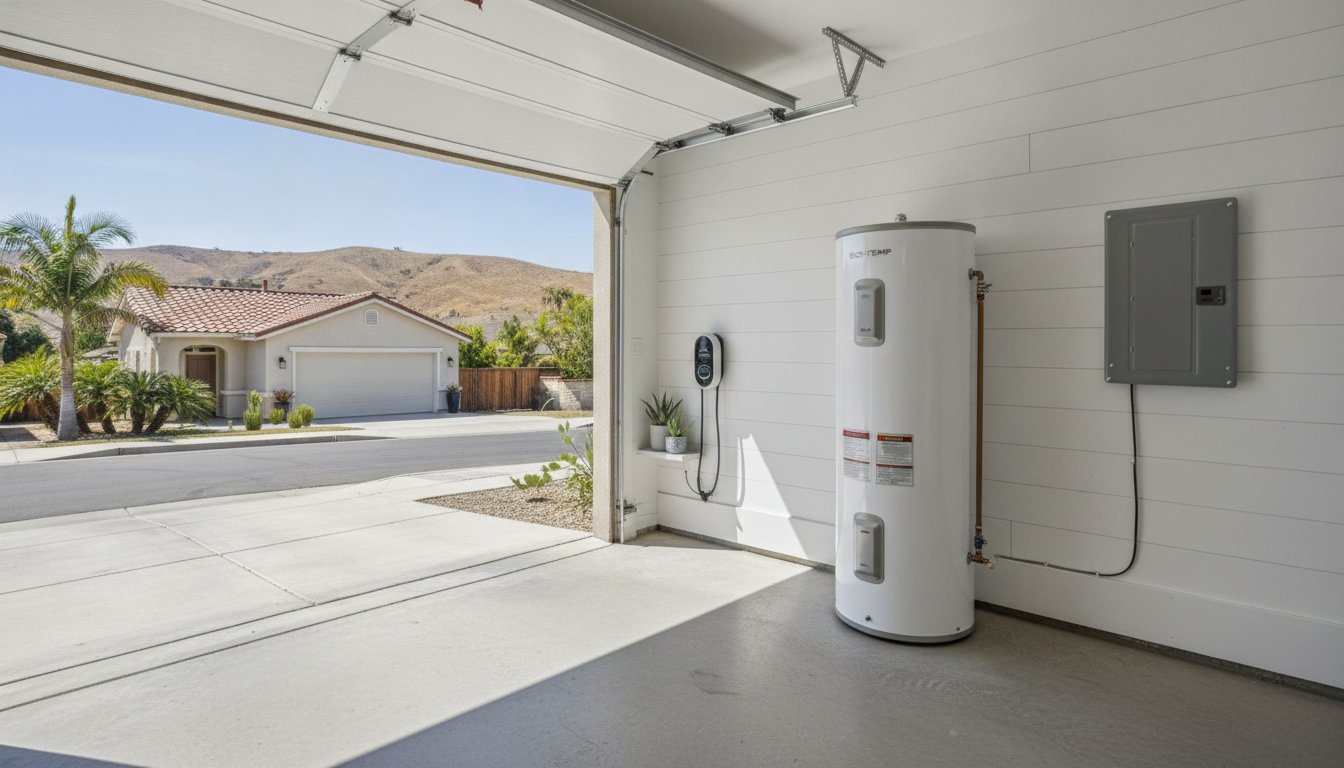
/

Article by
Jesse Malone
Jesse Malone
CEO & Partner, Underline Energy Concepts
Jesse Malone is the CEO and Partner of Underline Energy Concepts, a Southern California energy services company that has been serving homeowners since 2002. Since joining the company and becoming a partner in approximately 2015, Jesse has helped lead its growth into one of Southern California’s most trusted providers of residential energy efficiency and home improvement solutions.
Throughout his tenure, Jesse and the Underline Energy team have completed more than 2,500 energy upgrade projects for homeowners across Southern California. These projects include solar energy systems, roofing, battery storage, EV charging stations, electrical panel upgrades, water heater replacements, attic insulation, retrofit windows, and other energy-efficient home improvements designed to lower utility costs and increase property value.
Jesse holds a Bachelor’s Degree from California Southern University and brings more than 20 years of experience in emergency services through his service with the fire department. His background in public service has shaped his leadership style, emphasizing integrity, accountability, safety, and a commitment to serving the community.
A lifelong advocate for efficiency and practical solutions, Jesse is passionate about helping homeowners make informed decisions that improve both their homes and their financial future. His interests extend beyond energy efficiency into financial literacy, budgeting, investing, and long-term wealth-building strategies. He believes that reducing unnecessary expenses and maximizing efficiency are key components of financial success.
As CEO, Jesse continues to focus on delivering exceptional customer experiences, building high-performing teams, and helping Southern California homeowners achieve greater comfort, energy independence, and long-term savings through smart home investments.
In 2026, your water heater shouldn't just be a hidden appliance; it should be a strategic thermal battery that transforms Southern California heat into financial autonomy. If you feel like you're losing the battle against rising utility rates, you aren't alone. Most homeowners in Lake Elsinore and across the Inland Empire are tired of sky-high electricity bills and the constant worry of an old unit failing mid-shower. We understand that the pressure of local building codes and complex permit requirements can feel overwhelming, but these changes actually offer a unique path to long-term stability.
By upgrading to a hybrid water heater, you can take back control of your home's energy consumption. This guide will show you exactly how to slash your monthly overhead, maximize your existing solar investment, and secure local SCE or LADWP rebates that can reach up to $3,100. We'll walk you through the 2026 Title 24 standards, explain the current rebate waitlists, and provide a clear roadmap for a reliable installation that qualifies for maximum savings. It's time to stop reacting to utility hikes and start building a more efficient, independent home.
Key Takeaways
- Identify the critical warning signs that your current unit is nearing the end of its life and why the 10-year benchmark is the ideal time to act.
- Learn how upgrading to a hybrid water heater leverages advanced heat pump technology to deliver efficiency ratings that far outperform traditional electric tanks.
- Understand the essential infrastructure needs for your Southern California home, including how an electrical panel upgrade supports a modern, energy-efficient system.
- Discover how to stack local utility rebates with your solar power to transform your appliance into a high-performing thermal battery.
- Gain a clear roadmap of the professional installation process, ensuring your transition to energy independence is safe, permitted, and code-compliant.
Signs You Should Consider Upgrading to a Hybrid Water Heater
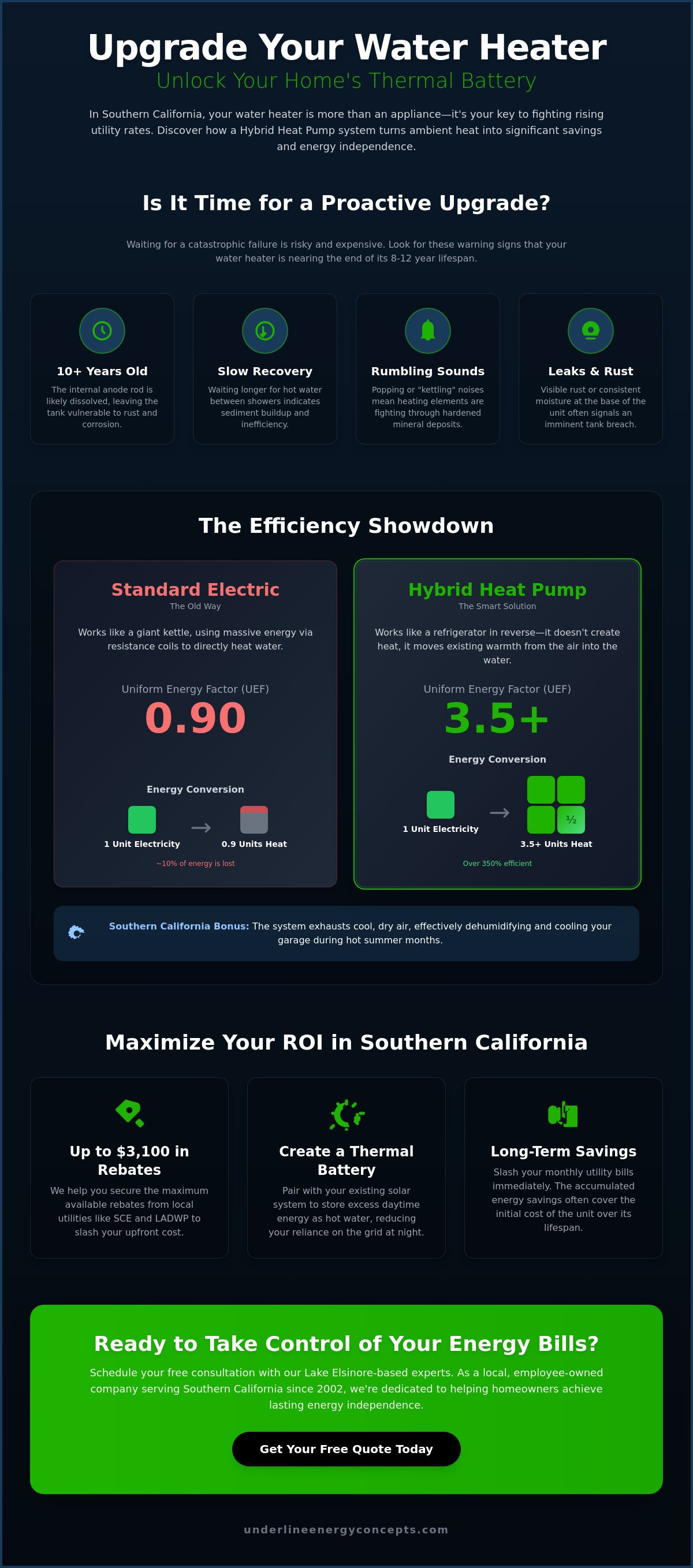
Most homeowners don't think about their water heater until they're met with an icy spray during a morning shower. However, waiting for a total failure is a risky and expensive strategy. If your current unit was installed in the mid-2010s, 2026 represents a critical 10-year benchmark. Traditional storage water heater systems typically last between 8 and 12 years. By the time a tank reaches its tenth birthday, the internal protective anode rod has likely dissolved, leaving the steel tank vulnerable to rust and internal corrosion. Upgrading to a hybrid water heater before this happens prevents property damage and allows you to choose a system based on logic rather than panic.
Performance shifts are often the first quiet warnings of a failing system. You might notice that your family is waiting longer for hot water between showers, or the "recovery time" has slowed significantly. This happens because sediment builds up at the bottom of the tank, creating a barrier between the heating element and the water. This buildup also causes the infamous "kettling" sound; a popping or rumbling noise that signals your heating elements are struggling to work through layers of mineral deposits. These sounds aren't just annoying. They are a direct indicator that your tank is losing efficiency and nearing an imminent breach.
Visual and Audible Red Flags
Take a moment to inspect the area around your tank. Look closely at the inlet and outlet nipples for any signs of rust or white, crusty calcium buildup. While a small amount of condensation can be normal in certain weather, any consistent moisture at the base of the unit usually indicates a slow tank leak. If you hear a persistent rumbling when the unit is heating, it means the sediment has hardened. This forces the tank to overheat to reach the desired temperature, which eventually cracks the internal glass lining and leads to a catastrophic leak.
The Hidden Cost of Procrastination
Procrastination carries a heavy price tag, especially for homeowners in Lake Elsinore or Corona who have water heaters located in attics or finished garages. A sudden tank failure can cause thousands of dollars in water damage before you even realize there's a problem. Beyond the risk of damage, emergency replacements often force you to settle for whatever model is in stock, usually a standard, inefficient unit. By being proactive, you can research the best SCE rebates and ensure your home is properly prepared for a high-efficiency upgrade. Taking control now means you secure the best technology and the highest financial incentives available in 2026.
Standard Electric vs. Hybrid Heat Pump: The Efficiency Gap
Conventional electric water heaters are essentially giant kettles. They use massive amounts of energy to create heat through electrical resistance coils. By contrast, Heat pump water heaters don't create heat; they move it. This technology works like a refrigerator in reverse, pulling ambient warmth from the surrounding air and transferring it into your water tank. This simple shift in physics makes upgrading to a hybrid water heater one of the most impactful decisions you can make for your home's long-term efficiency.
Efficiency is measured by the Uniform Energy Factor (UEF). A standard electric tank typically carries a UEF of around 0.90, meaning it loses nearly 10% of the energy it consumes. Hybrid models frequently achieve ratings of 3.5 or higher. This means for every unit of electricity you pay for, you get three and a half times the amount of hot water. In the warm climate of Southern California, these units perform at their absolute peak. Our naturally high ambient temperatures mean the system doesn't have to work hard to find heat. As an added benefit, these units exhaust cool, dry air. This effectively dehumidifies and cools your garage or utility room during our sweltering summer months.
Calculating Your Return on Investment (ROI)
For a family of four in Riverside County, the monthly savings on utility bills are immediate. Because a hybrid unit uses significantly less electricity than a standard model, the SCE bill reductions can be substantial over the life of the appliance. Over time, the accumulated energy savings often cover the initial cost of the unit. These systems are built for long-term stability, often featuring robust 10-year warranties that provide a level of reliability standard tanks simply can't match. Choosing to move forward with upgrading to a hybrid water heater is a practical way to protect your household from future rate hikes. You can speak with a local specialist at Underline Energy Concepts to see how these savings apply to your specific home layout.
Operational Modes: Customizing Your Comfort
Modern hybrid systems give you total control over how you use energy. You can choose from several distinct modes to match your family's daily needs:
- Heat Pump Only: This is the most efficient setting, perfect for maximizing savings during warm Southern California summers.
- Hybrid Mode: This smart setting balances the heat pump with standard heating elements to ensure you never run out of hot water during high-use periods.
- Electric/High Demand: This mode uses the resistance coils for the fastest possible recovery time. This is ideal when you have houseguests or a full laundry day.
Home Readiness: Electrical Panels and Space Requirements
Successfully upgrading to a hybrid water heater involves more than just clearing a path to the garage. Unlike standard tanks, hybrid models require specific environmental conditions to operate at peak performance. Because of how heat pump water heaters work, they need a consistent supply of ambient air to extract heat. Most manufacturers require roughly 700 to 1,000 cubic feet of surrounding air space. If your utility closet is small, you might need to install louvered doors to ensure the unit can "breathe" properly. Without this airflow, the system will struggle to find heat, forcing it to rely on less efficient backup elements.
Condensate management is another critical factor often overlooked in DIY guides. As the unit cools and dehumidifies the air, it produces moisture that must be drained. If your current water heater is in a location without a floor drain, we'll need to install a small condensate pump to safely move that water outdoors or into a nearby plumbing line. This keeps your floors dry and prevents the mold issues often associated with older, poorly ventilated systems. By addressing these infrastructure needs upfront, you ensure your new system runs at the highest possible efficiency from day one.
The Importance of a Main Panel Upgrade
Your electrical system is the backbone of your energy independence. Many older homes in the Inland Empire were built with 100-amp or 125-amp service, which often lacks the capacity for a new 240V circuit. We frequently recommend a 200-amp electric panel upgrade for homeowners planning to maximize their solar investment. This provides the "headroom" needed for modern appliances, EV chargers, and battery backups. During our inspection, we also look for outdated Zinsco or Federal Pacific panels. These brands are notorious for failing to trip during a surge, posing a significant fire risk. Replacing these isn't just about efficiency; it's a fundamental safety priority for your family.
SoCal Code Compliance and Safety
Southern California's unique geography requires specific safety measures during installation. Seismic strapping is a mandatory California requirement. We secure your tank with heavy-duty steel straps to ensure it remains upright during an earthquake, preventing gas line ruptures or water damage. Additionally, we install thermal expansion tanks. These small tanks handle the pressure changes that occur as water heats up in a closed-loop system, protecting your pipes from bursting. As of January 1, 2026, the California Title 24 Building Energy Efficiency Standards have increased the push toward heat pump technology. Ensuring your installation meets these rigorous codes protects your home's value, making upgrading to a hybrid water heater a smart, long-term investment.
The Professional Installation Process: What to Expect
While DIY videos might suggest a quick three-hour swap, upgrading to a hybrid water heater involves intricate electrical and plumbing synchronization that requires a professional touch. At Underline Energy Concepts, our team handles every phase of the project to ensure your home remains safe and code-compliant. We start with a comprehensive site inspection to verify your electrical load and ensure your space meets the airflow requirements we discussed earlier. This isn't just about making the unit fit; it's about confirming your home's infrastructure can support the new technology without overloading your circuits.
Once the plan is set, our employee-owned team follows a methodical five-step process:
- Step 1: Electrical Load Verification. We confirm your panel has the capacity for the new 240V circuit.
- Step 2: Safe Decommissioning. We remove your old unit and handle its eco-friendly disposal, so you don't have to worry about the heavy lifting or recycling.
- Step 3: Precision Placement and Bracing. We position the new unit and install heavy-duty seismic bracing to meet California's strict earthquake safety standards.
- Step 4: Plumbing and Condensate Integration. We connect the system to your existing lines and install a dedicated drainage solution for the unit's condensation.
- Step 5: Final Commissioning. We perform a full system test to ensure the heat pump cycle is running at peak efficiency before we leave.
Permitting and Inspections in Temecula and Murrieta
In cities like Temecula and Murrieta, local building departments are strict about water heater permits. We handle all the "red tape" for you, from filing the initial application to meeting the inspector for the final walkthrough. Unpermitted work can create massive headaches during home insurance claims or when you try to sell your property. By choosing a licensed professional, you protect your investment and ensure your installation is fully recognized by local authorities. To ensure your system is installed correctly the first time, schedule your professional installation assessment with our Lake Elsinore team today.
Maintenance for Longevity
Southern California's water is notoriously hard, which can lead to rapid mineral buildup. To protect your new system, we recommend flushing the tank once a year to prevent sediment from damaging the heating elements. You should also check the air filter every few months; it only takes five minutes to clean, but it preserves the airflow needed for maximum efficiency. Finally, have a professional inspect the anode rod every few years. This simple maintenance routine ensures your hybrid unit serves your family reliably for a decade or more.
Maximizing ROI: Rebates, Solar, and Incentives
Investing in your home's infrastructure is about more than just replacing a broken tank; it is a financial strategy. By upgrading to a hybrid water heater, you position yourself to capture significant local incentives that offset the initial cost. While federal tax credits for these units expired at the end of 2025, Southern California homeowners still have access to some of the most robust local support in the country. For example, the TECH Clean California program offers rebates of up to $3,100 for replacing a gas unit with a heat pump model. Additionally, LADWP provides up to $2,500 for qualifying ENERGY STAR units. Stacking these local incentives with long-term energy savings creates a compelling return on investment that standard electric tanks cannot match.
A hybrid heater acts as a "thermal battery" for your home, especially when paired with a solar array. If you have solar panels, you can program your heater to run during the middle of the day when your system produces peak power. Instead of sending that excess energy back to the grid for a lower credit, you store it as hot water for evening use. This synergy significantly increases your energy independence. In communities like Canyon Lake, energy-conscious buyers specifically look for these integrated systems. This makes the upgrade a practical way to boost your property value while lowering your monthly overhead.
Navigating Southern California Edison (SCE) Rebates
The first step in your upgrade is using the SCE marketplace to verify which models qualify for current incentives. It is important to note that many programs, including TECH Clean California, often require professional installation to ensure the unit meets rigorous efficiency and safety standards. Once installed, your new water heater allows you to take full advantage of "Time-of-Use" rates. By scheduling the recovery cycle during off-peak hours, you further reduce the cost of keeping your water hot, putting you back in control of your utility spend.
Building a Comprehensive Energy Strategy
True autonomy comes from a holistic approach to home efficiency. We see the best results when homeowners combine water heater upgrades with a solar panel installation and an energy efficient HVAC installation. These systems work together to create a high-performance home envelope. When you integrate these with whole home battery backups, your home remains powered and your water stays hot even during grid outages. If you are ready to take the next step toward energy independence, you should schedule an energy inspection with our Lake Elsinore team to build your custom roadmap.
Secure Your Energy Future with High-Efficiency Hot Water
By now, it's clear that upgrading to a hybrid water heater is more than a simple appliance swap; it is a strategic move toward home autonomy. You have seen how these units act as a thermal battery for your solar power and why a robust electrical panel is the foundation of a modern home. From meeting strict 2026 California building codes to securing thousands in local rebates, every step you take builds long-term financial stability.
Underline Energy Concepts has served Southern California homeowners since 2002. As an employee-owned and operated local business, we take pride in our workmanship and our commitment to your home's performance. Our team includes licensed Roofing, Electrical, and General Contractors who understand the specific environmental and regulatory needs of the Inland Empire. Take control of your utility costs and enjoy the peace of mind that comes with a reliable, efficient system.
Schedule your free hybrid water heater and energy inspection with Underline Energy Concepts today. We're ready to help you build a more independent and valuable home.
Frequently Asked Questions
Is a hybrid water heater worth the extra cost in Southern California?
Yes, the investment is highly effective because the energy savings typically pay back the price difference within a few years. In our warm local climate, heat pump technology operates at peak efficiency year round. When you combine reduced monthly bills with available utility incentives, the long-term financial autonomy far outweighs the initial cost of a standard tank.
How much can I save on my electric bill by upgrading to a hybrid model?
Most homeowners see their water heating costs drop by nearly 70% after upgrading to a hybrid water heater. Since water heating is typically the second largest energy expense in a home, this shift has a massive impact on your monthly utility bill. These savings are permanent and help protect your household budget against future rate hikes from SCE or LADWP.
Does my electrical panel need an upgrade for a hybrid water heater?
Many Southern California homes require a 200-amp electric panel upgrade to support the new 240V circuit. If you are switching from a gas unit to an electric model, you will definitely need new wiring. Our team at Underline Energy Concepts evaluates your current load during our inspection to ensure your system can safely handle upgrading to a hybrid water heater without risking a fire.
Are hybrid water heaters noisy?
Hybrid models produce a low hum similar to a modern dishwasher or a large kitchen fan while the heat pump is running. Most units operate at roughly 45 to 55 decibels. If your unit is located in a garage or an attic, you likely won't hear it inside your living space at all. Professional installation with vibration pads can further minimize any sound.
Do I need a permit for electric water heater replacement in Riverside County?
Yes, a permit is a legal requirement for all water heater replacements in Riverside County and throughout California. This ensures the installation meets seismic strapping and safety codes. Our Lake Elsinore team handles the entire permitting process for you, including the final inspection, to ensure your property remains compliant and your insurance coverage stays valid.
How long does a hybrid heat pump water heater last?
You can expect a professionally installed hybrid unit to last between 10 and 15 years. This longevity depends on regular maintenance, such as flushing the tank and cleaning the air filter. Because these units are built with higher quality components to meet strict efficiency standards, they often outlast the standard electric tanks found in many older homes.
Will a hybrid water heater work during a power outage?
A hybrid unit requires electricity to operate and will not heat water during a power outage on its own. However, many of our clients integrate their heaters with a whole home battery backup. This allows you to maintain a supply of hot water even when the grid goes down, providing your family with essential comfort and reliability during local emergencies.
Can a hybrid water heater be installed in a closet?
Installation in a closet is possible as long as there is enough cubic feet of air for the heat pump to function properly. You will likely need to install louvered doors to allow for essential ventilation. If the space is too tight, the unit may struggle to find heat, which lowers its efficiency and increases your monthly operating costs.