
QuietCool Battery Solar Integration: The 2026 Guide to 24/7 Energy-Efficient Cooling
/

Article by
Jesse Malone
Jesse Malone
CEO & Partner, Underline Energy Concepts
Jesse Malone is the CEO and Partner of Underline Energy Concepts, a Southern California energy services company that has been serving homeowners since 2002. Since joining the company and becoming a partner in approximately 2015, Jesse has helped lead its growth into one of Southern California’s most trusted providers of residential energy efficiency and home improvement solutions.
Throughout his tenure, Jesse and the Underline Energy team have completed more than 2,500 energy upgrade projects for homeowners across Southern California. These projects include solar energy systems, roofing, battery storage, EV charging stations, electrical panel upgrades, water heater replacements, attic insulation, retrofit windows, and other energy-efficient home improvements designed to lower utility costs and increase property value.
Jesse holds a Bachelor’s Degree from California Southern University and brings more than 20 years of experience in emergency services through his service with the fire department. His background in public service has shaped his leadership style, emphasizing integrity, accountability, safety, and a commitment to serving the community.
A lifelong advocate for efficiency and practical solutions, Jesse is passionate about helping homeowners make informed decisions that improve both their homes and their financial future. His interests extend beyond energy efficiency into financial literacy, budgeting, investing, and long-term wealth-building strategies. He believes that reducing unnecessary expenses and maximizing efficiency are key components of financial success.
As CEO, Jesse continues to focus on delivering exceptional customer experiences, building high-performing teams, and helping Southern California homeowners achieve greater comfort, energy independence, and long-term savings through smart home investments.
Imagine it is 7:00 PM on a scorching July evening in Murrieta. The sun has finally dipped below the horizon, but your attic is still trapped at a sweltering 150 degrees, radiating heat directly into your bedrooms. Most solar fans have already clocked out for the day, which is why Quietcool battery solar integration has become the essential solution for homeowners tired of their AC battling thermal mass during expensive peak-rate hours. It is a common frustration to feel like your cooling technology is quitting exactly when the Inland Empire heat is at its worst.
At Underline Energy Concepts, we believe you deserve a cooling strategy that works on your schedule, not just when the sun is shining. This guide explores how integrating battery technology with your attic ventilation provides a robust, round-the-clock thermal shield for your home. By pairing advanced fans with dedicated storage, you can maintain a cool environment 24/7 without relying on the grid or draining your primary home battery. We will break down how this setup slashes AC wear and tear, maximizes your existing solar investment, and provides the energy autonomy needed to stay comfortable in Lake Elsinore, Menifee, and beyond.
Key Takeaways
- Understand the shift from traditional solar fans to hybrid models that offer round-the-clock protection against extreme attic heat.
- Master the mechanics of Quietcool battery solar integration to keep your home’s thermal shield active even after the sun goes down.
- Learn how to bypass high SCE Time-of-Use rates by using stored solar energy to power your cooling system during peak evening hours.
- Identify the ideal CFM sizing and mounting options for your specific roofline to ensure maximum airflow and energy savings.
- Leverage over 24 years of local expertise from Lake Elsinore’s own Underline Energy Concepts to build a resilient, independent home energy system.
What is QuietCool Battery Solar Integration?
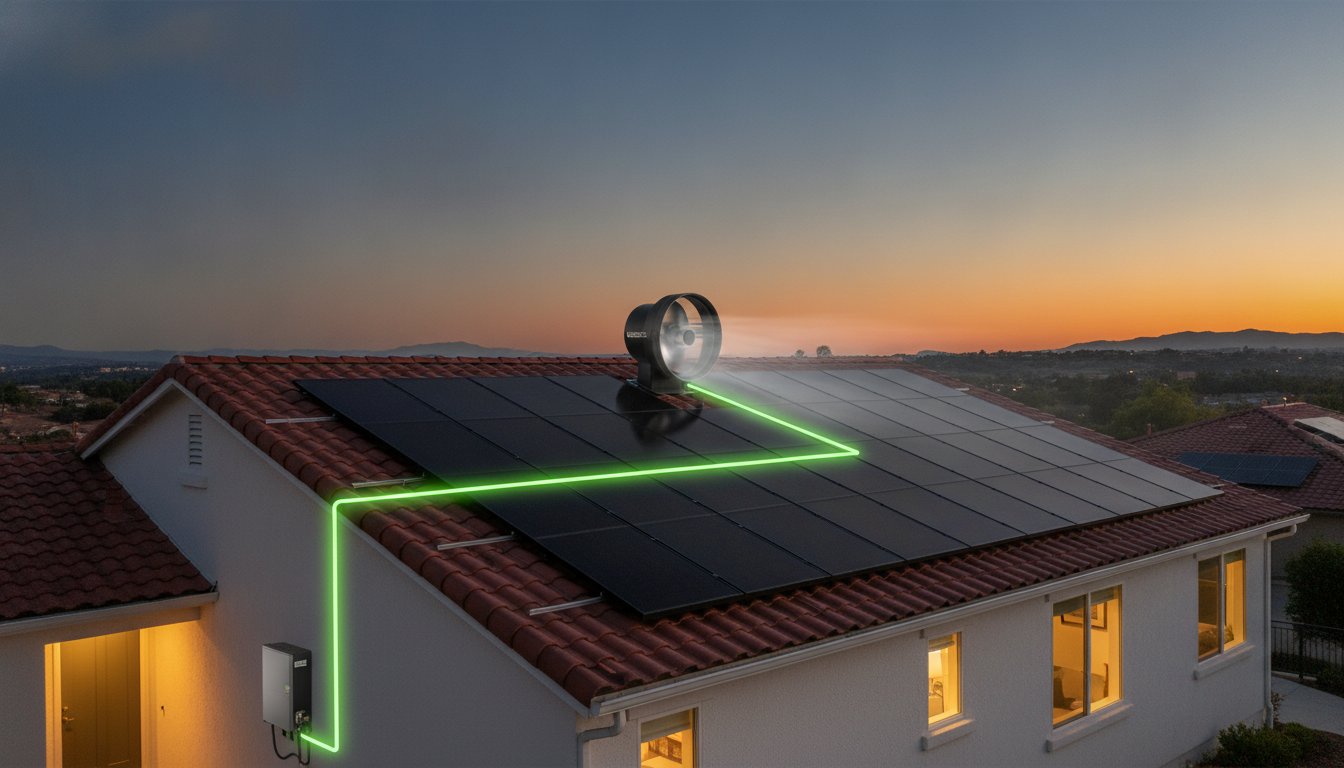
Quietcool battery solar integration represents the next generation of attic climate control. It is not just a fan mounted on your roof; it is a smart, self-sustaining thermal management system designed to pull heat out of your home around the clock. At Underline Energy Concepts, we have served Southern California homeowners since 2002, and we have seen how traditional ventilation often fails when you need it most. This integrated technology combines high-efficiency solar panels with dedicated battery storage to ensure your attic stays cool long after the sun goes down.
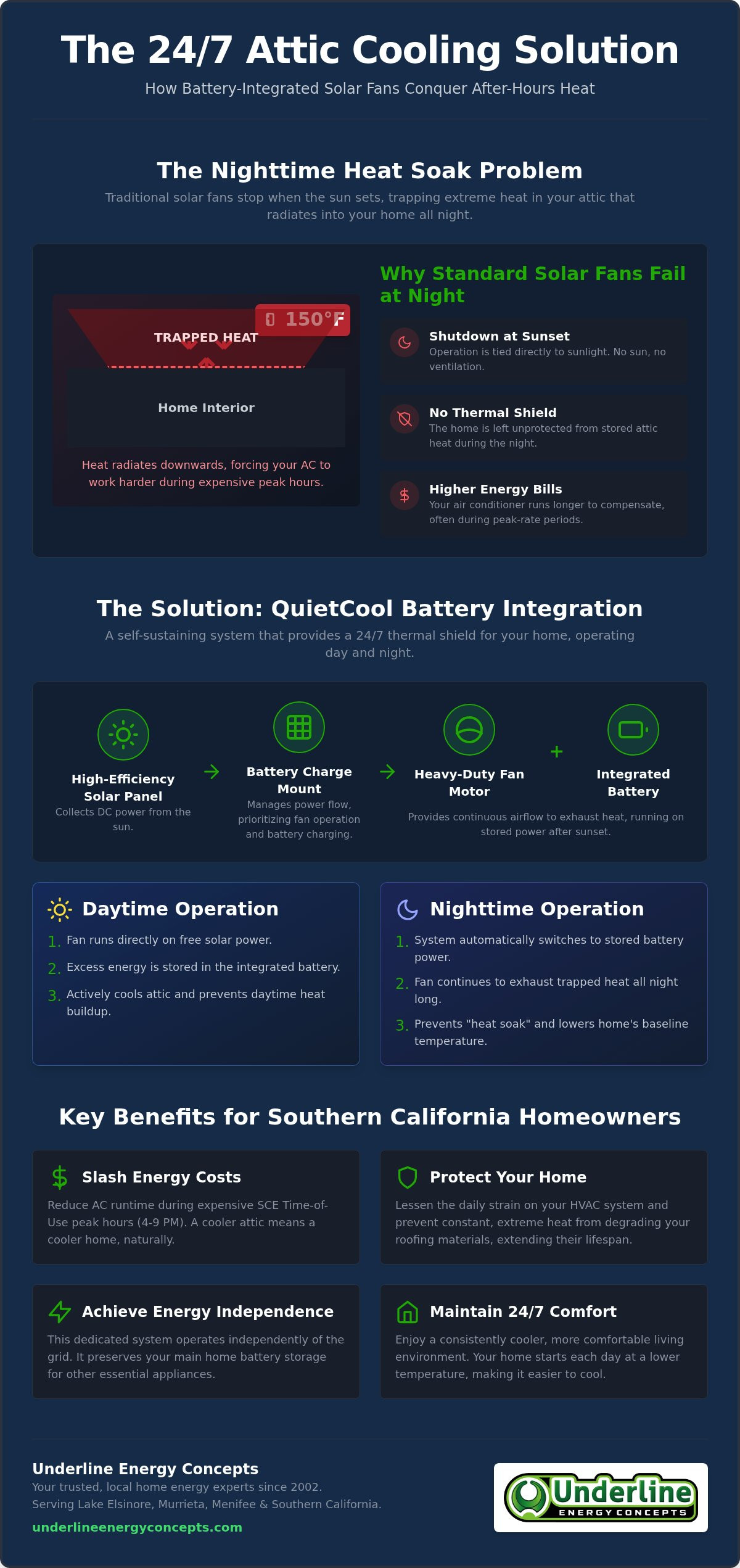
The core of this system relies on three specific components: a high-output solar panel, a heavy duty fan motor, and the Quietcool battery charge mount. This setup allows the fan to operate independently of the electrical grid during the day while simultaneously charging a battery. This stored energy is then used to maintain airflow through the evening, providing a consistent "thermal shield" that protects your home from the rising electricity costs associated with peak hour air conditioning use.
The Evolution of Attic Ventilation
For decades, homeowners relied on passive vents that hoped hot air would rise and exit on its own. Active solar fans were a step forward, but they had a significant limitation: they stopped working the moment a cloud passed or the sun set. This creates a "nighttime heat soak" problem. In cities like Murrieta and Menifee, attic temperatures can soar to 150 degrees during the day. Without 24/7 ventilation, that heat stays trapped in your insulation and radiates into your living spaces all night. Battery integration solves this by providing the power needed to flush out that trapped heat during the cooler night hours, significantly extending the lifespan of your roofing materials by preventing constant heat degradation.
Hybrid Power: How AC and DC Work Together
A modern Quietcool system utilizes an AC/DC inverter to manage power sources with high efficiency. The system is designed with a "solar first" priority, meaning it will always use free energy from the sun or the battery before drawing from the utility grid. The Quietcool battery charge mount acts as the critical regulator in this process. It manages the energy flow to ensure the fan maintains peak RPMs regardless of the time of day.
If you already have a solar array, this integration complements your existing setup by reducing the overall load on your home's main battery or grid connection. By using a dedicated power source for attic ventilation, you preserve your main energy reserves for other high-draw appliances. This level of autonomy is a practical, common sense decision for anyone looking to optimize their home's energy performance. You can learn more about utility challenges and potential savings by visiting the SCE marketplace to stay updated on current energy trends in Southern California.
How Solar Battery Integration Powers Your Fan 24/7
Achieving true energy independence requires more than just a solar panel. It requires a logical flow of power that ensures your attic stays cool during the hottest parts of the day and the darkest hours of the night. In a Quietcool battery solar integration, the process starts with high-efficiency panels collecting DC power. This energy is routed through a specialized controller that splits the duty: part of the power drives the fan motor immediately, while the rest charges the integrated battery. This dual-path system ensures that your ventilation never skips a beat, even when the sun is not at its peak.
The real magic happens after sunset. Attic insulation acts as a thermal sponge, soaking up heat all day and releasing it into your living space at night. By utilizing stored battery power, your QuietCool fan continues to exhaust this trapped heat long after your neighbors' standard solar fans have stopped. This proactive approach prevents "heat soak," allowing your home to start the next morning at a much lower baseline temperature. Because some smart attic fans draw as little as 15 watts on their lowest setting, the stored energy goes a long way toward maintaining a comfortable climate without any grid reliance.
The QuietCool Battery Charge Mount Explained
The QuietCool battery charge mount is the critical link that makes 24/7 cooling possible. Unlike basic mounting brackets that simply hold the unit in place, this component acts as a sophisticated power regulator. It ensures the battery is charged safely and efficiently without overtaxing the solar cells. For homeowners in Lake Elsinore or Menifee, this means your ventilation remains reliable even during the hazy "June Gloom" mornings common in our region. Standard mounts often leave the fan underpowered during low-light conditions, but the high-efficiency charge mount maintains consistent RPMs to keep air moving when you need it most.
Energy Management and Smart Switching
Modern systems are designed to handle the variable nature of solar energy without any manual intervention. When the system detects a voltage drop from the solar panel, whether from a passing cloud or the approaching dusk, it initiates a seamless transition to battery power. This prevents the fan from slowing down or losing its "draw," ensuring that the vacuum effect required for proper attic ventilation remains unbroken. Smart Inverter Technology serves as the brain of the system, constantly monitoring power inputs to ensure the fan operates at peak efficiency regardless of environmental changes.
If you already have a whole-home solar array or a battery backup system, this integration acts as a dedicated partner to your existing technology. It protects your primary energy reserves by handling the heavy lifting of attic cooling independently. Since every roofline in Southern California is unique, you can consult with our local experts to see how this setup fits into your current energy profile and maximizes your long-term savings.
The Financial and Thermal Benefits for SoCal Homeowners
Operating a home in Southern California requires a strategic approach to utility costs. With Southern California Edison (SCE) rates averaging 34.5 cents per kWh in 2026, the financial burden of traditional cooling is heavier than ever. A central air conditioner can draw between 3,000 and 5,000 watts, costing you roughly $1.21 per hour to run. By contrast, Quietcool battery solar integration allows you to swap that heavy load for a fan drawing as little as 300 watts, costing only about 10 cents per hour. This transition can save homeowners between 50% and 90% on their air conditioning-related energy expenses.
Beyond the monthly bill, this system acts as a preservative for your most expensive asset: your roof. When your attic reaches 150 degrees in the peak of summer, your shingles are essentially baking from the inside out. This extreme heat causes materials to become brittle and fail prematurely. Constant, battery-powered ventilation flushes this heat out 24/7, significantly extending the lifespan of your roofing system and preventing the need for early, costly repairs. At Underline Energy Concepts, we prioritize these long-term gains because we know a cool roof is a durable roof.
Lowering Your AC Bills in Menifee and Temecula
In communities like Menifee and Temecula, the "heat soak" effect is a daily reality. When your attic insulation absorbs heat all day, it acts like a giant radiator, pushing warmth into your living spaces long after you have turned the AC on. Studies show that proper attic venting can lead to a 10 to 15 degree reduction in home temperatures. This makes your primary HVAC system much more efficient because it is not fighting a constant thermal invasion from above. This setup is a perfect companion to a Solar Panel Installation in Southern California, as it lowers your overall energy demand and helps you achieve true autonomy.
Maximizing Your Solar Investment
For many homeowners, the goal is to stop sending money to the utility company during peak hours. California’s current energy policies prioritize self-consumption, meaning the more solar energy you use at home, the more you save. A dedicated solar-battery fan setup is the ideal first step toward efficiency. It reduces the strain on a Whole Home Battery Backup Installation by handling the high-priority task of attic cooling with its own power source. This ensures your main battery reserves are kept for essential appliances like refrigerators and lights during a grid outage.
While the federal tax credit for residential clean energy expired at the end of 2025, the return on investment for solar-integrated fans remains incredibly high. In the current 2026 landscape, the lack of state-level rebates for the general market means your ROI is driven by pure energy savings. Many of our clients in Lake Elsinore find that the system pays for itself in as little as one summer season simply by bypassing those expensive SCE peak rates from 4:00 PM to 9:00 PM. As an employee-owned company, we focus on these common-sense financial wins that provide immediate relief and long-term stability.
Selecting and Planning Your Solar Battery Setup
A successful Quietcool battery solar integration depends on more than just high quality hardware; it requires a precise calculation of your attic's unique volume and structural needs. At Underline Energy Concepts, we have been helping Southern California homeowners optimize their properties since 2002. We know that every roofline in Lake Elsinore or Corona presents different challenges. Planning your setup correctly today ensures that your system remains reliable for decades, providing the energy autonomy you need to stay comfortable during our intense summer months.
Before installation begins, we evaluate two primary factors: your roof's physical condition and your electrical readiness. While these fans operate on solar power, the integration of a battery charge mount requires a stable mounting surface and clear access for wiring. If your roof is nearing the end of its lifespan, it is often more practical to coordinate your cooling upgrade with a roof repair or replacement. This proactive approach prevents future labor costs and ensures the seal around your new fan is watertight and secure.
CFM and Attic Volume: Getting the Math Right
Airflow is measured in Cubic Feet per Minute (CFM). To ensure optimal performance, industry standards dictate that you should aim for at least 1 CFM of airflow for every square foot of attic space. However, we often recommend "over-sizing" your fan capacity. In the Inland Empire, where temperatures routinely exceed 100 degrees, having extra power allows your system to flush out heat faster during the critical transition from afternoon to evening. Remember that your fan is only as good as its "lungs," which means you must have enough intake vents (soffit or gable vents) to allow fresh air to replace the hot air being exhausted.
Local Considerations: From Corona to Moreno Valley
Geography plays a major role in how we plan your installation. In high wind areas like Corona and the Cajon Pass, roof mount stability is a top priority. We use reinforced mounting techniques to ensure your solar panels and fan housing remain secure during Santa Ana wind events. Additionally, Riverside County has specific fire code requirements for attic ventilation. We utilize fire rated vents designed to prevent embers from entering your attic during a wildfire, a critical safety feature for homes near open brush or canyons.
As you plan for the future, consider how your attic cooling fits into your broader energy goals. Many homeowners start with a solar fan and later expand to a full solar array. By positioning your QuietCool system strategically now, you can leave the best roof real estate open for future panels. If you are ready to see how a custom cooling plan can transform your home's efficiency, schedule a professional attic inspection with our employee-owned team today. We will help you calculate the exact CFM you need and ensure your installation meets all local safety codes.
Why Underline Energy Concepts for QuietCool Integration?
Underline Energy Concepts is more than just a contractor; we are your dedicated partner in home energy optimization. Since 2002, we have served the Southern California region from our brick-and-mortar base in Lake Elsinore. This long standing presence has allowed us to master the specific challenges of Inland Empire climates, from the high winds of Corona to the extreme heat of Menifee. We are an employee-owned and operated company, which means every technician on your roof has a personal stake in the quality of your installation. This ownership structure ensures a level of workmanship and accountability that large, faceless corporations simply cannot match.
Choosing us for your Quietcool battery solar integration means you get the benefit of a licensed roofing, electrical, and general contractor all under one roof. We understand that a solar fan is not a standalone appliance; it is an integral part of your home's structural and electrical systems. By handling every aspect of the project internally, we eliminate the need for subcontractors. This ensures that your roof's integrity and your home's electrical panel are preserved and optimized for long term performance, reliability, and safety.
The Underline Difference: Professional Advocacy
Our approach is rooted in professional advocacy rather than aggressive sales tactics. We prioritize thorough energy audits before recommending any hardware. We want you to understand exactly how heat moves through your home and where your money is going. Our "no-pressure" philosophy means we focus on education, helping you see the logic behind upgrades like QuietCool battery charge mounts. Because we are based locally in Lake Elsinore, we provide rapid support to our neighbors in Murrieta and Temecula, ensuring your system operates at peak efficiency for years to come.
Schedule Your Energy Efficiency Inspection
When you book a consultation, you are not getting a sales pitch; you are getting a comprehensive assessment of your home's thermal shield. We examine your attic insulation, roof condition, and current ventilation to create a tailored plan. Our team often helps homeowners bundle roofing repairs with solar and cooling installations, which maximizes your immediate savings and protects your property value. Take control of your energy future and Contact Underline Energy Concepts today to schedule your expert inspection. Let us show you how a local, employee-owned team can make energy independence a practical reality for your family.
Take Control of Your Home’s Thermal Future
Achieving a cool home shouldn't be a daytime-only luxury. By implementing Quietcool battery solar integration, you transform your attic from a sweltering heat trap into a 24/7 thermal shield. This system does more than just lower your monthly AC bills; it preserves your roof's lifespan and grants you true autonomy from rising SCE peak rates. You have the power to optimize your home’s efficiency with a reliable solution that works long after the sun sets.
At Underline Energy Concepts, we bring over 24 years of local expertise to every project. As an employee-owned company based in Lake Elsinore, our licensed roofing and electrical contractors prioritize your long-term comfort and financial stability. We've served Southern California homeowners since 2002, and we remain committed to providing the education you need to make savvy energy decisions in a changing utility landscape.
Schedule your free energy efficiency inspection with Underline Energy Concepts today! Your journey toward a more resilient, cost-effective, and comfortable home is just a consultation away.
Frequently Asked Questions
Can a QuietCool solar fan really run at night?
Yes, a QuietCool solar fan can run throughout the night when paired with a dedicated battery system. During daylight hours, the solar panels collect energy to power the fan and charge the battery simultaneously. This stored power allows the unit to continue exhausting trapped attic heat after sunset. This 24/7 operation is essential for preventing heat soak, where your attic insulation radiates warmth into your living space long after the sun goes down.
What is the difference between a hybrid fan and a battery-integrated fan?
A hybrid fan typically switches between solar power and your home's grid electricity, while a battery-integrated fan uses a dedicated storage unit to hold solar energy for later use. Quietcool battery solar integration prioritizes self-consumption, meaning you rely on free, stored power rather than drawing from the grid during expensive peak hours. This setup provides true energy independence and ensures your cooling system remains functional even during local power outages.
Do I need a new electrical panel for QuietCool battery integration?
Most homeowners don't need an electrical panel upgrade for a standalone solar-battery fan because it operates on a self-contained DC circuit. However, if you choose a hybrid configuration that requires an AC backup connection, we will inspect your current panel to ensure it can safely handle the load. As licensed electrical contractors, we verify all connections meet local safety codes in Lake Elsinore and surrounding Riverside County communities.
How much can I save on my electric bill with a solar attic fan?
Homeowners can significantly lower their monthly utility bills by reducing the thermal stress on their primary HVAC system. By exhausting hot air before it migrates into your living space, your air conditioner runs less frequently and for shorter durations. This shift can slash AC-related energy consumption by up to 90%. In the intense heat of the Inland Empire, this efficiency helps you avoid expensive tiered pricing from utility providers.
Does the solar fan integrate with my existing Tesla Powerwall or home battery?
While a solar fan can be integrated with a whole-home battery like a Tesla Powerwall, it is often more efficient to use a dedicated QuietCool battery charge mount. This allows the fan to operate on its own independent power loop. By separating the attic cooling load, you preserve your main home battery reserves for high-priority appliances like refrigerators and medical equipment during a grid failure or overnight period.
What maintenance is required for a solar-integrated QuietCool system?
Maintenance for these systems is remarkably low and primarily involves keeping the solar panels clear of heavy dust or debris. We recommend a quick visual inspection of the roof-mounted panel once or twice a year to ensure maximum sunlight absorption. Since the motors are sealed and designed for longevity, there are no filters to change or internal parts that require regular lubrication or homeowner intervention.
Are there tax credits available for solar attic fans in 2026?
The federal tax credit for residential clean energy expired at the end of 2025, and California's SGIP rebate program is currently closed to new general market applications. While some waitlist-only programs exist for specific income-qualified households, most homeowners should evaluate this upgrade based on its direct impact on monthly SCE bills. The immediate reduction in grid reliance provides a reliable return on investment through pure energy savings and increased home comfort.
Can I install a QuietCool battery charge mount myself?
Professional installation is highly recommended because the process involves complex roofing penetrations and precise electrical wiring. Attempting a DIY install can void your product warranty and potentially lead to roof leaks or fire code violations. Our employee-owned team at Underline Energy Concepts ensures that your battery charge mount is positioned for peak efficiency while maintaining the structural integrity and wildfire safety ratings of your roof.