
Adding Battery Backup to Existing Solar Panels: The 2026 Retrofit Guide
/
Article by
Jesse Malone
Jesse Malone
CEO & Partner, Underline Energy Concepts
Jesse Malone is the CEO and Partner of Underline Energy Concepts, a Southern California energy services company that has been serving homeowners since 2002. Since joining the company and becoming a partner in approximately 2015, Jesse has helped lead its growth into one of Southern California’s most trusted providers of residential energy efficiency and home improvement solutions.
Throughout his tenure, Jesse and the Underline Energy team have completed more than 2,500 energy upgrade projects for homeowners across Southern California. These projects include solar energy systems, roofing, battery storage, EV charging stations, electrical panel upgrades, water heater replacements, attic insulation, retrofit windows, and other energy-efficient home improvements designed to lower utility costs and increase property value.
Jesse holds a Bachelor’s Degree from California Southern University and brings more than 20 years of experience in emergency services through his service with the fire department. His background in public service has shaped his leadership style, emphasizing integrity, accountability, safety, and a commitment to serving the community.
A lifelong advocate for efficiency and practical solutions, Jesse is passionate about helping homeowners make informed decisions that improve both their homes and their financial future. His interests extend beyond energy efficiency into financial literacy, budgeting, investing, and long-term wealth-building strategies. He believes that reducing unnecessary expenses and maximizing efficiency are key components of financial success.
As CEO, Jesse continues to focus on delivering exceptional customer experiences, building high-performing teams, and helping Southern California homeowners achieve greater comfort, energy independence, and long-term savings through smart home investments.
Southern California Edison's summer peak rates have climbed as high as $0.74/kWh in 2026, meaning your evening electricity now costs over 200% more than your morning power. You likely invested in solar to escape these rising utility costs, yet you're still feeling the sting of high bills or sitting in the dark when the grid fails. It's a common frustration for homeowners in Lake Elsinore and across the region who have the panels but lack the storage to use that energy when it is most valuable.
We believe you deserve full control over the power you produce. Discover how adding battery backup to existing solar panels can transform your current array into a self-sufficient powerhouse that works through blackouts and wipes out those expensive evening charges. This 2026 retrofit guide simplifies the confusion between AC and DC coupling while highlighting current SGIP rebates that make storage more accessible for Southern California families. We will walk you through the technical steps and local regulations to ensure your system provides the long-term stability and energy independence you deserve.
Key Takeaways
- Learn why almost any grid-tied system is compatible with modern storage and how to assess your current setup for a seamless upgrade.
- Compare AC and DC coupling strategies to determine the most cost-effective way of adding battery backup to existing solar panels without needing to replace your entire system.
- Identify the essential electrical panel upgrades required to transform your home into a resilient hub capable of whole-home backup during grid failures.
- Understand the financial shift under NEM 3.0 and how to leverage available SGIP rebates to maximize your long-term return on investment.
- Discover the advantage of working with a licensed general contractor who manages the structural, electrical, and solar components of your retrofit as a single, cohesive project.
Can You Add a Battery Backup to Existing Solar Panels?
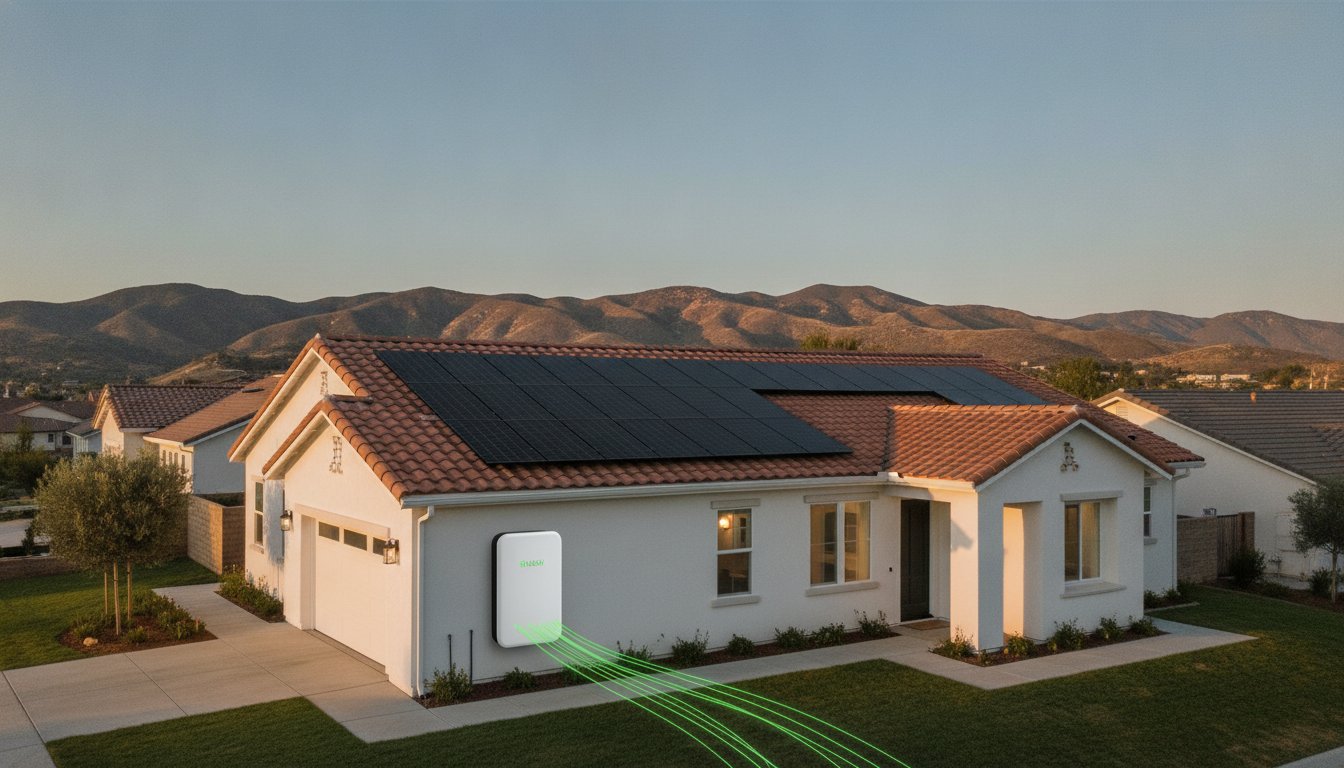
The short answer is a resounding yes. Almost any grid-tied solar system installed in the last two decades can be retrofitted with a storage solution. While many homeowners assume they need to wait for their current system to age out before upgrading, the technology available in 2026 allows for a seamless integration that doesn't require tearing off your existing panels. Adding battery backup to existing solar panels has become the most requested upgrade for our team at Underline Energy Concepts, especially as Southern California homeowners seek relief from a volatile utility environment.
In 2026, the "Retrofit Advantage" is all about achieving true energy autonomy. Without a battery, your solar panels are legally required to shut down during a grid blackout to prevent back-feeding the lines while utility crews work. This means you could be sitting in the dark in Lake Elsinore despite having a roof full of panels. A battery retrofit solves this by creating a "microgrid" for your home, allowing your panels to keep producing power and charging your cells even when the rest of the neighborhood is without light.
You must first decide between a "Partial Home" and "Whole Home" backup goal. A partial backup keeps your critical loads running, such as your refrigerator, lights, and Wi-Fi. A whole-home backup, often requiring more storage capacity, allows you to run high-draw appliances like your air conditioner or electric dryer. Choosing the right path depends on your budget and how much comfort you want to preserve during an outage.
The "Solar FOMO" Reality: Why Retrofitting is Trending
Many Southern California residents feel a sense of frustration when they realize their panels don't work during SCE outages. The industry is shifting from a model of selling power back to the grid to one of storing that power for personal use. A solar retrofit is the integration of energy storage into a pre-existing photovoltaic system. By making this change, you stop relying on the grid's stability and start relying on your own home energy storage systems to bridge the gap between sunset and sunrise.
Identifying Your Current System Type
Your first step is identifying what equipment is already on your wall. Some newer systems feature "battery-ready" inverters, such as specific SolarEdge models, which make the connection straightforward. These units were designed with future storage in mind and often require less labor to integrate. If your system was installed during a simpler, grid-only era, you likely have a standard string inverter or microinverters that don't have a direct battery port.
Don't worry if your equipment is older. The age of your panels matters far less than the type of inverter you use. Even if your system is ten years old, we can use a method called AC coupling to add storage without disturbing your original solar setup. If you aren't sure what you have, you can always contact our local Lake Elsinore office for a quick equipment review. We've helped thousands of neighbors across Southern California understand their hardware since 2002.
AC Coupling vs. DC Coupling: Choosing Your Retrofit Path
When you decide on adding battery backup to existing solar panels, you face a critical technical fork in the road. You must choose between AC and DC coupling. This decision dictates how much of your existing equipment stays, how much labor is required, and how efficiently your home will store energy. At Underline Energy Concepts, we prioritize solutions that maximize your current investment while providing the reliability you need during Southern California's frequent grid stresses. Understanding these Solar Energy and Storage Basics helps you choose the path that fits your home's unique electrical profile.
How AC Coupling Works for Retrofits
AC coupling is the most common and cost-effective method for homeowners in Lake Elsinore who already have a functional solar array. In this setup, your existing solar panels and inverter continue to work exactly as they do now. We simply add a second "storage inverter" that manages the battery. This allows the battery to communicate with the solar panels through your home's existing electrical panel without needing to rewire the entire rooftop system.
The primary advantage here is compatibility. Because the two systems "talk" via alternating current, we can install an AC-coupled battery regardless of which brand of panels or solar inverter you currently own. It's a fast, non-invasive installation process that avoids messing with your original roof penetrations or panel strings. For most Southern California families, this is the "sweet spot" where installation speed meets financial common sense.
The DC Coupling Alternative
DC coupling is often considered the high-efficiency route because it involves fewer energy conversions. However, for a retrofit, this path is usually more complex. It typically requires replacing your current solar inverter with a "hybrid" model that can handle both panels and batteries simultaneously. We define DC coupling as a streamlined energy path that reduces conversion losses by keeping power in DC form from panel to battery.
While this method is slightly more efficient, the higher hardware and labor costs of replacing a working inverter often outweigh the small gains in energy preservation for a retrofit. We usually recommend this path only if your current inverter is nearing the end of its lifespan or if you are planning a significant expansion of your solar capacity at the same time. If you aren't sure which path your current hardware supports, you can request a technical equipment audit from our Lake Elsinore team to see which coupling method offers you the best return on investment.
Our employee-owned team focuses on what makes sense for your specific roof and budget. We don't push one-size-fits-all solutions. Instead, we use our decades of local experience to ensure your battery retrofit works in perfect harmony with the equipment you already have on your wall.

Critical Technical Requirements for SoCal Retrofits
Your main electrical panel acts as the brain of your entire energy ecosystem. When you begin the process of adding battery backup to existing solar panels, this panel is often the first thing our technicians inspect. It manages the flow of electricity from your panels to your appliances, the grid, and now, your new storage system. If this "brain" is outdated, it won't have the physical space or electrical capacity to handle the sophisticated switching required for energy independence.
We also pay close attention to where your equipment sits. Southern California's climate presents unique challenges for sensitive electronics. We prioritize thermal management by integrating Quietcool battery charge mounts, which help dissipate heat and preserve the long-term health of your cells. Additionally, as a licensed roofing and general contractor, we ensure that the physical weight and placement of your battery system don't compromise your roof's integrity or violate local fire codes. Every installation we perform in Lake Elsinore and the surrounding communities follows strict safety protocols to protect your home and your investment.
The 200 Amp Upgrade: A Hidden Prerequisite
Many homes in older parts of Menifee, Murrieta, or Lake Elsinore still rely on 100-amp or 125-amp service panels. These older units often fail to meet the modern electrical codes required for a whole home battery backup. To achieve true autonomy, you will likely need a 200 amp electric panel upgrade or even a 400 amp electric panel upgrade. This provides the necessary "headroom" for your battery to discharge enough power to run heavy loads like your HVAC system during a blackout.
One of the biggest advantages of working with Underline Energy Concepts is our ability to handle the panel upgrade and battery installation as a single, coordinated project. You won't have to hire a separate electrician and coordinate schedules. A modern, code-compliant panel doesn't just enable storage; it improves the overall safety of your home's electrical system and prepares you for future additions like an EV charging station.
Space and Environment Planning
Physical placement is more than just a matter of convenience. You must choose between a garage or an exterior installation based on both fire code requirements and environmental exposure. Batteries are sensitive to the extreme Southern California heat. If you choose an exterior mount, it must be shaded and properly ventilated to prevent the system from throttling its performance during 100-degree summer afternoons.
Current fire regulations also dictate specific clearances from windows, doors, and vents to ensure safety. Our employee-owned team understands these local Southern California mandates intimately. We design your system layout to maximize efficiency while ensuring full compliance with the latest safety standards. This methodical approach ensures your transition to adding battery backup to existing solar panels is both a functional success and a safe addition to your property.
The ROI of Adding Storage: SCE Rates and Rebates
The implementation of the Solar Billing Plan, known as NEM 3.0, fundamentally changed the financial logic for Southern California homeowners. Exporting your excess solar energy to the grid now only yields a credit of about $0.08/kWh. Meanwhile, Southern California Edison (SCE) charges you up to $0.74/kWh during summer peak hours. This massive gap makes adding battery backup to existing solar panels a financial necessity rather than a luxury. By storing your own power, you avoid buying back electricity at retail prices that are often 200% higher than off-peak rates.
Your "Avoided Cost" is the true measure of your return on investment. Instead of giving your power away for pennies at noon, you use that same energy to run your home during the expensive 4 PM to 9 PM window. You can find specific tools to calculate these savings and explore current equipment incentives through the SCE Marketplace. Our team at Underline Energy Concepts helps you navigate these utility shifts to ensure your system is optimized for maximum preservation of your hard-earned dollars.
Time-of-Use (TOU) Arbitrage
Your battery acts as a personal energy bank. It "buys" cheap solar power from your roof at midday and "sells" it back to your home when the sun goes down. For a typical 2,500 square foot home in Temecula or Corona, this shift can drastically reduce monthly utility obligations. While the financial savings are clear, the "Peace of Mind" value is equally important. During Public Safety Power Shutoffs (PSPS) or unexpected grid failures, your home remains powered while your neighbors sit in the dark. This reliability is a common-sense logic that many of our Lake Elsinore neighbors are now embracing to gain control over their energy future.
Available Incentives in 2026
The financial landscape for energy storage has shifted since the start of 2026. While some federal tax programs have expired for residential owners, California's Self-Generation Incentive Program (SGIP) remains a powerful tool for reducing your upfront costs. Depending on your specific situation, standard residential rebates can range from $150 to $500 per kWh of storage capacity. If you live in a high-fire-threat district or have experienced multiple outages, you may even qualify for Equity Resiliency rebates as high as $1,000 per kWh.
We specialize in stacking these incentives to get you the best possible result. Our employee-owned team manages the complex paperwork for these rebates so you don't have to. You can also explore our Underline referral program to earn additional credits when you help your friends and family achieve energy independence. If you want a personalized breakdown of your potential savings, schedule a financial consultation with our local experts today.
The Underline Advantage: Why a General Contractor is Better for Retrofits
Choosing the right partner for adding battery backup to existing solar panels is just as important as the hardware you select. Many companies in the solar industry operate as sales organizations that outsource the actual labor to various third-party crews. At Underline Energy Concepts, we take a different approach. We are licensed roofing, electrical, and general contractors. This multi-trade expertise means we understand how your battery interacts with your roof's structural integrity, your home's main electrical service, and your existing solar array as a single, unified system.
Since 2002, our employee-owned and operated team has served Lake Elsinore and the broader Southern California region with a "No-Subcontractor" promise. When you work with us, you are working with the people who actually own the company. This creates a level of accountability and quality workmanship that a standard solar salesman simply cannot match. We don't just drop a battery in your garage; we ensure your entire home energy ecosystem is safe, reliable, and optimized for the next 25 years.
Seamless Integration of Trades
A battery retrofit often requires working on the roof to adjust wiring and at the main panel to upgrade your electrical service. Having a roofer and an electrician on the same team prevents the common "finger-pointing" that happens when multiple companies are involved in a single project. We take full responsibility for protecting your existing solar panel installation in Southern California while we integrate the new storage components. Our commitment to customer education ensures you understand the "why" behind every wire and every connection we make.
Next Steps for Your Home
Before you commit to any hardware, it is essential to conduct a professional energy audit. This audit identifies your actual consumption patterns and determines the exact storage capacity you need to meet your goals. During an Underline Energy Concepts consultation, we review your SCE bills, inspect your current panel, and design a custom whole home battery backup installation that fits your family's needs. We believe in providing common-sense logic that empowers you to make a practical, everyday decision for your home's future.
A battery retrofit is an investment in both home value and family security. If you are ready to stop relying on the grid and start relying on yourself, contact our Lake Elsinore office to schedule your inspection today. We look forward to helping you achieve the energy independence you deserve.
Secure Your Energy Future Today
Taking control of your home's energy doesn't require starting from scratch. By adding battery backup to existing solar panels, you turn a passive rooftop system into an active shield against rising utility costs and grid instability. You now understand how AC coupling offers a streamlined path to storage and why a modern 200A or 400A electrical panel upgrade is the essential foundation for whole-home resilience. These upgrades ensure your home is ready for the demands of 2026 and beyond.
Since 2002, our employee-owned team has served Lake Elsinore and the Southern California region as licensed general, electrical, and roofing contractors. We manage every technical detail of your upgrade to ensure your roof, electrical system, and battery work in perfect harmony. Don't leave your family's comfort to the mercy of the next blackout or utility price increase. We are here to provide the common-sense solutions you need for long-term stability and preservation of your home's value.
Schedule your professional battery retrofit inspection with Underline Energy Concepts today. We look forward to helping you build the energy-independent home you deserve.
Frequently Asked Questions
Will adding a battery to my solar panels void my existing warranty?
Adding a battery to your system won't void your existing solar panel warranty as long as the installation is performed by a licensed professional. By using an AC-coupled approach, we keep the battery electronics separate from your original solar inverter. This ensures your existing equipment continues to operate under its original terms while we integrate the new storage components.
How long will a battery backup power my home during an outage?
Most residential batteries provide 8 to 12 hours of power for critical loads like refrigeration, lights, and Wi-Fi. If you are adding battery backup to existing solar panels for whole-home coverage, the duration depends on how often you run high-draw appliances like your air conditioner. Because your solar panels recharge the battery during daylight hours, you can maintain power indefinitely through multi-day outages.
Can I add a battery to a DIY solar system?
You can technically add a battery to a DIY system, but we strongly advise against it due to complex permitting and utility interconnection requirements. Southern California utility providers and local building departments have strict fire safety codes for energy storage. Our employee-owned team ensures your retrofit meets every local mandate to keep your home insurance valid and your family safe.
Do I need to replace my solar panels to add a battery?
You don't need to replace your solar panels to add a storage system. As long as your current panels are in good condition and producing electricity, they are perfectly capable of charging a new battery bank. We focus on the electrical infrastructure and the inverter technology rather than disturbing the panels already on your roof.
How much does it cost to add a battery to existing solar in 2026?
The total investment for adding battery backup to existing solar panels depends on your home's unique electrical profile and your specific backup goals. Your final cost is influenced by the battery capacity you choose, whether you need a 200 amp electric panel upgrade, and which SGIP rebates you qualify for. We provide a comprehensive energy audit to give you a clear picture of the necessary upgrades for your property.
Is a battery better than a backup generator for SoCal homes?
Batteries are generally a better choice for Southern California homeowners because they offer silent, automatic operation without the need for fuel storage. While a generator backup power system requires regular maintenance and a constant supply of gasoline or propane, a battery recharges for free using your existing solar panels. This makes storage a more reliable and cost-effective solution for our local climate.
Can I add more batteries later if my energy needs grow?
Yes, most modern energy storage systems are modular and allow you to expand your capacity as your needs change. If you decide to add an EV charging station or a new heat pump in the future, we can simply install additional battery units to your existing setup. We design your initial retrofit with this future growth in mind to ensure your home remains adaptable.