
Backup Generator Installation: The Homeowner’s Resource for SoCal Energy Resilience
/
Article by
Jesse Malone
Jesse Malone
CEO & Partner, Underline Energy Concepts
Jesse Malone is the CEO and Partner of Underline Energy Concepts, a Southern California energy services company that has been serving homeowners since 2002. Since joining the company and becoming a partner in approximately 2015, Jesse has helped lead its growth into one of Southern California’s most trusted providers of residential energy efficiency and home improvement solutions.
Throughout his tenure, Jesse and the Underline Energy team have completed more than 2,500 energy upgrade projects for homeowners across Southern California. These projects include solar energy systems, roofing, battery storage, EV charging stations, electrical panel upgrades, water heater replacements, attic insulation, retrofit windows, and other energy-efficient home improvements designed to lower utility costs and increase property value.
Jesse holds a Bachelor’s Degree from California Southern University and brings more than 20 years of experience in emergency services through his service with the fire department. His background in public service has shaped his leadership style, emphasizing integrity, accountability, safety, and a commitment to serving the community.
A lifelong advocate for efficiency and practical solutions, Jesse is passionate about helping homeowners make informed decisions that improve both their homes and their financial future. His interests extend beyond energy efficiency into financial literacy, budgeting, investing, and long-term wealth-building strategies. He believes that reducing unnecessary expenses and maximizing efficiency are key components of financial success.
As CEO, Jesse continues to focus on delivering exceptional customer experiences, building high-performing teams, and helping Southern California homeowners achieve greater comfort, energy independence, and long-term savings through smart home investments.
In 2024, residents in communities like Temecula and Menifee faced up to 12 separate Public Safety Power Shutoffs, leaving families in the dark while wildfire risks loomed outside. It's exhausting to watch your food spoil and your HVAC system sit idle every time the wind picks up. You deserve a home that remains a sanctuary, regardless of what's happening with the utility grid. Many homeowners start their journey by researching the cost of whole home generator installation, only to find a confusing maze of equipment options, labor requirements, and permitting fees that vary across Southern California.
At Underline Energy Concepts, our employee-owned team in Lake Elsinore has spent over two decades helping neighbors gain true energy independence. We understand that you want more than just a motor in your backyard; you want the peace of mind that comes from professional, code-compliant electrical work. This guide will help you master the technical requirements and strategic considerations of standby power. You'll learn how these systems integrate with your electrical panel, how they compare to battery storage, and what to expect during the local permitting process so you can make a savvy decision for your family's safety and long-term property value.
Key Takeaways
- Understand why a permanent standby generator is a vital insurance policy against the unique grid challenges and power shutoffs facing Riverside County homeowners.
- Identify potential bottlenecks in your home's electrical system, including the critical role of the Automatic Transfer Switch and the possible need for an electric panel upgrade.
- Break down the total cost of whole home generator installation by looking beyond the unit price to include essential factors like gas line extensions and local permits.
- Evaluate the strategic trade-offs between continuous fuel-based generators and solar-integrated battery backups to find the right runtime solution for your specific energy needs.
- Follow a clear installation roadmap that simplifies the complex permitting and load calculation process with the help of a trusted, local expert.
The Case for Backup Generator Installation in Southern California
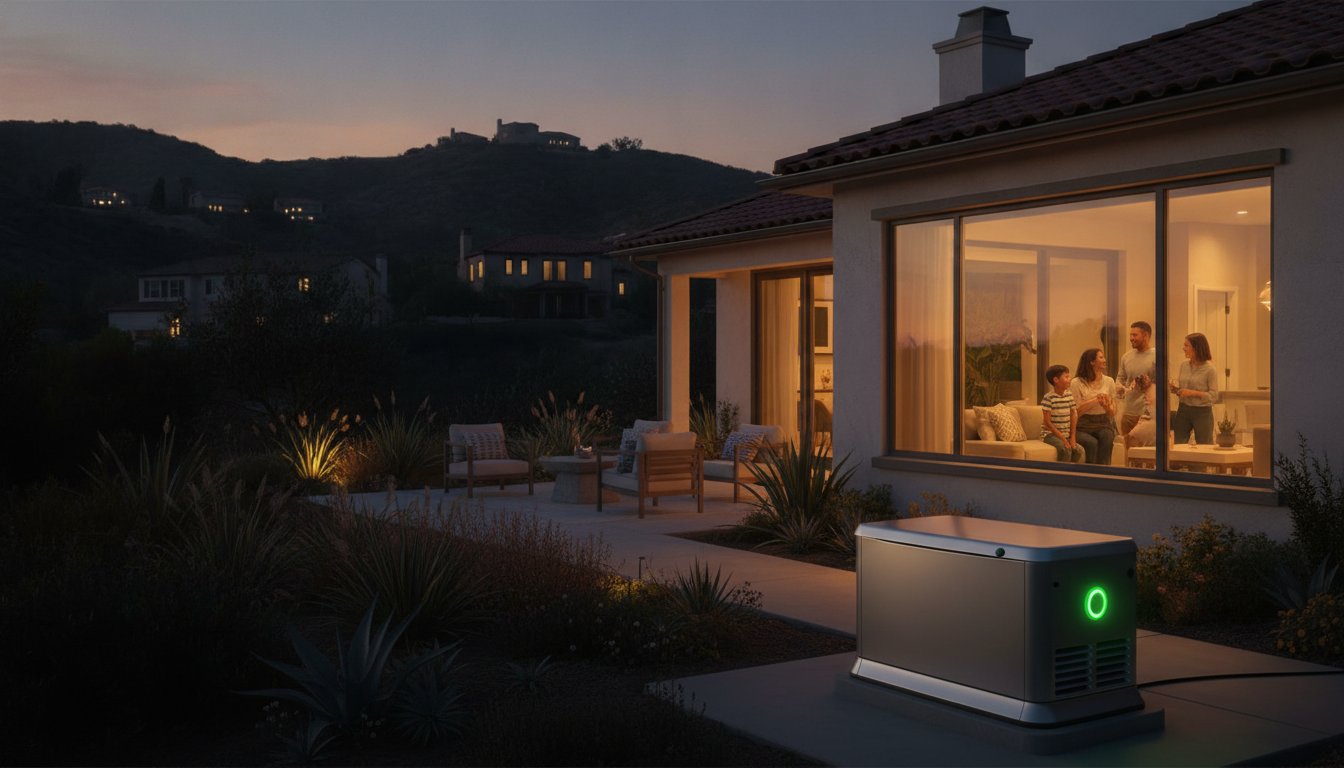
A Standby generator is far more than just a piece of outdoor machinery; it functions as a permanent, hardwired insurance policy for your lifestyle. Unlike portable units that sit in a garage gathering dust until a crisis hits, these systems are integrated directly into your home's electrical infrastructure. They stand ready to take over the moment the grid fails. For families in Riverside County and the Inland Empire, this level of readiness has become a necessity rather than a luxury. In 2026, our local energy landscape faces a unique set of pressures, from aging transmission lines to the increasing frequency of extreme weather events that push the grid to its breaking point.
When summer temperatures in Lake Elsinore or Menifee regularly soar past 100 degrees, a power outage is more than an inconvenience. It's a safety hazard. Without a reliable backup, your HVAC system shuts down, turning your home into an oven within hours. A professional backup power system ensures your air conditioning remains operational, protecting vulnerable family members and pets from heat-related illness. Beyond climate control, these systems safeguard critical medical equipment, such as CPAP machines or oxygen concentrators, and prevent unexpected surges from damaging sensitive electronics in your home office. When you evaluate the cost of whole home generator installation, you aren't just buying hardware; you're securing the ability to maintain a normal life when the world outside goes dark.
The Reality of PSPS Events and Grid Instability
Southern California Edison (SCE) frequently utilizes Public Safety Power Shutoffs (PSPS) to mitigate wildfire risks during high-wind events. These proactive outages are designed to prevent equipment from sparking fires, but they leave thousands of residents in communities like Wildomar and Menifee without power for days at a time. You can monitor local grid status and potential rebates through the SCE marketplace, but these resources don't keep your lights on. Portable generators often fail to meet the energy demands of a modern Southern California home because they lack the wattage to start large appliances like central air units or well pumps. They also require you to store and handle flammable gasoline, which is the last thing you want to do during a high-wind fire warning.
Economic Resilience: Protecting Your Property Value
Investing in a permanent backup solution is a strategic move for your long-term financial health. It prevents the immediate, painful costs of a multi-day outage, such as hundreds of dollars in spoiled groceries or the need for emergency hotel stays. From a real estate perspective, a standby generator is a high-value asset that sets your property apart in the competitive Southern California market. Buyers today prioritize energy resilience, and a pre-installed system provides immediate peace of mind. While the initial cost of whole home generator installation represents a commitment, the long-term value is clear. Homeowners in Lake Elsinore typically see a significant boost in property appraisal values when they can demonstrate a home is fully equipped for energy autonomy.
Technical Requirements: Electrical Panels and Automatic Transfer Switches
Installing a home standby generator involves much more than simply placing a unit on a concrete pad. To function safely and effectively, the system must be fully integrated into your home's existing electrical infrastructure. This integration is where many homeowners encounter unexpected hurdles that can impact the final cost of whole home generator installation. The two most critical components in this process are the Automatic Transfer Switch (ATS) and your main electrical panel. Without ensuring these parts are up to code and properly sized, your backup power system won't just be inefficient; it could be dangerous.
Compliance with California Title 24 and local fire regulations is mandatory for any permanent installation in Southern California. These rules govern everything from the distance the generator must sit from your windows to how it interacts with the utility grid. According to Consumer Reports' generator tests, professional installation is the only way to guarantee that these complex technical requirements are met without compromising home insurance coverage or safety. It's a foundational part of the cost of whole home generator installation that ensures your family stays protected during a crisis.
The Automatic Transfer Switch: Your Grid Gatekeeper
Think of the Automatic Transfer Switch (ATS) as the brain of your backup system. It constantly monitors the utility power coming into your home. The moment it detects a drop or total loss of voltage, it signals the generator to start and then safely disconnects your home from the utility grid before engaging the backup power. This "break-before-make" mechanism prevents backfeeding, which is a lethal hazard for utility workers repairing lines in your neighborhood. While some try to save money with manual interlock kits, hardwired ATS units provide a seamless transition that happens in seconds, often before you even realize the power is out. At Underline Energy Concepts, our team performs a comprehensive electrical inspection before every project to ensure your ATS is perfectly matched to your home's specific load requirements.
Main Electrical Panel Upgrades for High-Demand Homes
Many older Southern California homes are still equipped with 100-amp or 125-amp electrical panels. These panels weren't designed to handle the simultaneous load of a modern HVAC system, an EV charger, and high-draw appliances like hybrid water heaters. If your panel is already at capacity, it becomes the primary bottleneck for your backup power. You may find that a 200 amp electric panel upgrade is necessary to safely support a whole-home generator. This upgrade ensures your system can handle the "startup surge" required by large appliances without tripping breakers.
To manage power more efficiently, we often implement "load shedding." This technology allows the generator to prioritize essential circuits, like medical equipment and refrigerators, while temporarily pausing non-essential loads like a dryer or pool pump if the total demand exceeds the generator's capacity. This smart management keeps your home running smoothly without needing an oversized, more expensive generator unit. If you're unsure if your current system is ready, you can schedule a professional load calculation with our Lake Elsinore-based experts to get a clear picture of your home's needs.

Generator vs. Battery Backup: Choosing the Right Solution
Choosing between a traditional standby generator and a whole home battery backup is one of the most important decisions you'll make for your property's resilience. While both systems protect you from grid failure, they operate on completely different logic. A generator relies on a mechanical engine fueled by natural gas or propane, providing high-wattage power for as long as the fuel flows. In contrast, battery systems store energy from your solar panels or the grid, offering a silent, emission-free alternative. When evaluating the cost of whole home generator installation, you must weigh the lower upfront equipment price against the ongoing mechanical upkeep and fuel costs that batteries simply don't have.
Maintenance profiles differ significantly between the two technologies. Generators require regular oil changes, spark plug replacements, and "exercise" cycles to ensure the engine remains ready for action. Batteries are solid-state devices with almost no moving parts, making them a "set it and forget it" solution for busy families. You should also consider local noise ordinances. Modern standby generators have become much quieter, but they still produce a mechanical hum that might be a factor in densely packed residential neighborhoods. Batteries operate in total silence, which is a significant advantage for homeowners who value a quiet environment during an outage.
When a Generator Wins: Long-Duration Outages
For outages lasting longer than 48 hours, the generator often takes the lead. In areas like Corona and Moreno Valley, where summer heatwaves place an immense load on HVAC systems, a battery might deplete faster than solar panels can recharge it. A natural gas-powered generator provides an indefinite runtime, ensuring your air conditioning keeps running until the utility company restores service. This reliability makes a generator the preferred choice for homes with high energy demands or critical medical needs that can't risk a depleted battery during a multi-day PSPS event.
The Hybrid Approach: Solar, Battery, and Generator
You don't always have to choose just one. Many Southern California homeowners are now opting for a "triple-threat" energy system that combines solar, battery storage, and a standby generator. By using Quietcool battery charge mounts, you can create a sophisticated ecosystem where solar and batteries handle your daily needs and short-term outages. The generator remains in reserve as a fail-safe for extended emergencies. This hybrid strategy maximizes your efficiency and ensures you're never left in the dark. It's a savvy way to manage the cost of whole home generator installation by sizing your generator smaller while relying on clean energy for the bulk of your backup needs.
The Installation Roadmap: From Permitting to Power-On
A successful installation requires more than just a delivery truck. It's a multi-stage engineering project that ensures your home remains safe, efficient, and fully compliant with local laws. At Underline Energy Concepts, our team has refined this process over two decades of serving Southern California. By following a clear, structured roadmap, we eliminate the guesswork and hidden delays that often inflate the final cost of whole home generator installation. Taking a methodical approach ensures that when the grid fails, your backup system performs exactly as promised.
The process moves through five critical stages to guarantee reliability:
- Step 1: Site Assessment. We perform a comprehensive load calculation to determine your home's peak energy demand, ensuring the generator is sized perfectly for your needs.
- Step 2: Permitting. Our team manages the submittal process with Riverside County or your specific city building department to secure all necessary electrical and plumbing permits.
- Step 3: Site Preparation. This involves pouring a reinforced, level concrete pad and plumbing the high-pressure gas lines required to fuel the unit.
- Step 4: Electrical Integration. Licensed technicians install the Automatic Transfer Switch and complete the hardwiring to your main electrical panel.
- Step 5: Testing and Orientation. We conduct a rigorous "blackout test" to simulate a real power failure and walk you through every feature of your new system.
Navigating SoCal Permitting and Zoning
Municipal red tape is often the most daunting part of the project for homeowners. In cities like Murrieta and Temecula, zoning laws dictate strict setbacks; usually requiring the unit to be at least five feet from property lines and away from windows or vents. Noise compliance is another major factor. Residential areas often have decibel limits that influence where a generator can be placed. Working with an employee-owned local expert ensures these details are handled correctly the first time, preventing costly rework or fines from city inspectors.
Fuel Sources: Natural Gas vs. Liquid Propane
Your choice of fuel depends largely on your location. Most urban homes can tap into existing natural gas lines, which provides an endless fuel supply. This is a convenient option that keeps the long-term cost of whole home generator installation manageable. However, for properties in more rural areas like Winchester or Perris, liquid propane is the standard. This requires a dedicated tank sized to provide several days of continuous runtime. Regardless of the source, our team follows strict safety protocols for trenching and connection to ensure your fuel system is leak-proof and earthquake-resilient. To get started on your customized energy plan, schedule a professional site assessment with our Lake Elsinore experts today.
The Underline Advantage: Expert Backup Power Installation
Since 2002, Underline Energy Concepts has served as a dedicated advocate for Southern California homeowners. We operate as an employee-owned, local brick-and-mortar company based in Lake Elsinore. This ownership structure means every technician who visits your property is personally invested in the quality of your workmanship and the safety of your home. We prioritize education over high-pressure sales tactics because we believe a well-informed homeowner makes the best decisions for their family's future. When you evaluate the cost of whole home generator installation, you deserve a partner who provides honest data and logical solutions rather than aggressive marketing.
Our 20 plus years of experience in both roofing and electrical systems gives us a unique perspective on home energy resilience. We don't just drop a generator in your yard. We ensure the entire installation is seamless and durable. A backup power system is a long-term commitment that requires ongoing attention to remain reliable. We provide comprehensive maintenance plans and emergency inspections to ensure your engine is ready to fire the moment the grid goes down. Choosing a local specialist ensures that help is always just a short drive away when you need it most.
Mastering the Integrated Energy Home
We specialize in creating a holistic energy ecosystem for your property. By combining roofing, backup power, and solar panel installation in Southern California into a single project, we eliminate the friction of managing multiple contractors. This integrated approach ensures that your generator works in harmony with your solar array and electrical panel, maximizing your autonomy. Our deep roots in Lake Elsinore allow us to respond rapidly to maintenance requests across the region, providing a level of service that large, distant corporations simply cannot match. We treat your home with the same care we give our own because we are part of the same community.
Schedule Your Energy Resilience Consultation
Take the first step toward true energy independence by scheduling a no-obligation inspection of your home's electrical system. Our experts will perform a precise load calculation and assess your current panel to determine the most efficient path forward. We'll provide a clear breakdown of the cost of whole home generator installation so you can plan with confidence. If you've already partnered with us and want to help your friends achieve the same peace of mind, ask about our referral program. It's our way of rewarding the neighbors who help us build a more resilient Southern California. Secure your home against the next grid failure by contacting our Lake Elsinore team today.
Take Control of Your Home's Energy Future
Grid instability and Public Safety Power Shutoffs don't have to dictate your family's comfort or safety. By mastering the technical requirements of standby power and understanding the total cost of whole home generator installation, you've taken the first step toward true autonomy. Whether you choose a high-capacity generator for long-duration outages or a hybrid solar-plus-storage system, the goal remains the same: uninterrupted power when you need it most. You now have the knowledge to navigate SoCal's complex permitting and zoning rules with confidence.
Underline Energy Concepts has been employee-owned and operated since 2002. As a licensed roofing, electrical, and general contractor serving Lake Elsinore and all of Southern California, we prioritize your long-term stability and property value. Our team is ready to guide you through every step of the integration process with the expertise that only two decades of local service can provide. Don't wait for the next heatwave or fire season to discover your home's vulnerabilities.
Schedule your professional backup power consultation with Underline Energy Concepts to ensure your property is prepared for whatever the future holds. We're here to help you build a more resilient home today.
Frequently Asked Questions
How much does it cost to install a backup generator in Southern California?
The total investment depends on the unit size, fuel line length, and electrical complexity. While the unit itself is a major factor, labor, permitting, and gas line plumbing account for a significant portion of the project. We provide detailed estimates during our site assessments to ensure you understand every variable involved in the cost of whole home generator installation for your specific property and energy needs.
Do I need an electric panel upgrade to install a home standby generator?
Many older homes require an electric panel upgrade to handle the additional load of a standby system. If your current panel is rated at 100 or 125 amps, it may not support high-draw appliances like central air conditioning during a power transfer. We evaluate your home's total load to determine if a 200 amp or 400 amp panel is necessary. This ensures a safe installation that protects your electronics.
Is a permit required for generator installation in Riverside County?
Yes, a building permit is mandatory for all permanent generator installations in Riverside County and surrounding cities. This process ensures the unit meets strict safety codes for electrical wiring, gas plumbing, and property setbacks. It's a critical step that influences the final cost of whole home generator installation. Our team manages the entire permitting process with local building departments to ensure your system is fully compliant.
Can a backup generator run my entire house including the AC?
A properly sized standby generator can power your entire home, including high-demand systems like central air conditioning. We perform a precise load calculation to match the generator's wattage output to your home's peak needs. Using smart load-management technology, we can prioritize essential circuits. This ensures your HVAC remains operational during the hottest Southern California summer heatwaves and utility power shutoffs.
How often does a standby generator need maintenance?
Standby generators typically require professional maintenance once or twice a year to ensure peak performance. This service includes changing the oil and filters, inspecting the battery, and checking the spark plugs. Regular upkeep is vital because these systems must be ready to start instantly after sitting idle. We offer maintenance plans to keep your system in top condition throughout the fire season and high-wind events.
Which is better for SoCal homes: a generator or a solar battery?
The best choice depends on your specific goals for energy autonomy and the duration of outages you expect. Generators offer indefinite runtime as long as fuel is available. This makes them ideal for long-duration emergencies. Solar batteries provide silent operation and daily energy savings but have limited capacity during multi-day outages. Many of our clients choose a hybrid approach to maximize both reliability and efficiency.
How loud are standby generators during operation?
Modern standby generators are designed with sound-dampening enclosures that keep noise levels comparable to a standard central air conditioning unit. During operation, most units produce a steady hum that complies with residential noise ordinances in communities like Temecula and Murrieta. Proper placement on your property further minimizes the sound impact. This ensures comfort for both you and your neighbors during an unexpected power outage.
Will a backup generator automatically turn on when the power goes out?
Yes, the system activates automatically within seconds of a power failure thanks to the Automatic Transfer Switch. This device constantly monitors the utility grid and signals the generator to start the moment it detects a loss of voltage. You don't have to be home or lift a finger. Your lights, refrigerator, and HVAC will resume operation almost immediately after the grid goes dark, providing seamless protection.