Attic Insulation for Heat Reduction: A 2026 Southern California Homeowner’s Guide
/

Article by
Jesse Malone
Jesse Malone
CEO & Partner, Underline Energy Concepts
Jesse Malone is the CEO and Partner of Underline Energy Concepts, a Southern California energy services company that has been serving homeowners since 2002. Since joining the company and becoming a partner in approximately 2015, Jesse has helped lead its growth into one of Southern California’s most trusted providers of residential energy efficiency and home improvement solutions.
Throughout his tenure, Jesse and the Underline Energy team have completed more than 2,500 energy upgrade projects for homeowners across Southern California. These projects include solar energy systems, roofing, battery storage, EV charging stations, electrical panel upgrades, water heater replacements, attic insulation, retrofit windows, and other energy-efficient home improvements designed to lower utility costs and increase property value.
Jesse holds a Bachelor’s Degree from California Southern University and brings more than 20 years of experience in emergency services through his service with the fire department. His background in public service has shaped his leadership style, emphasizing integrity, accountability, safety, and a commitment to serving the community.
A lifelong advocate for efficiency and practical solutions, Jesse is passionate about helping homeowners make informed decisions that improve both their homes and their financial future. His interests extend beyond energy efficiency into financial literacy, budgeting, investing, and long-term wealth-building strategies. He believes that reducing unnecessary expenses and maximizing efficiency are key components of financial success.
As CEO, Jesse continues to focus on delivering exceptional customer experiences, building high-performing teams, and helping Southern California homeowners achieve greater comfort, energy independence, and long-term savings through smart home investments.
Why does your second story stay ten degrees hotter than the downstairs, even when your AC runs around the clock? It's a common frustration for Southern California homeowners who watch their electricity bills skyrocket while their bedrooms remain uncomfortably warm. You're likely tired of hearing your HVAC unit struggle to reach the thermostat setpoint during an Inland Empire summer. We understand that feeling of helplessness against rising utility rates and extreme temperatures.
This guide explains how upgrading your attic insulation for heat reduction acts as a critical thermal barrier, slashing indoor temperatures and protecting your home from the radiant energy of the 2026 climate. You'll discover how the latest Title 24 energy standards and local rebates from providers like SCE and LADWP can help you regain control over your comfort. We'll walk through the specific R-values needed for our region and show you how to achieve a more efficient, cost-effective home that stays cool long after the sun goes down.
Key Takeaways
- Stop the "Oven Effect" by transforming your attic from a heat source into a thermal barrier that keeps your indoor temperatures stable.
- Learn how to meet updated 2026 Title 24 standards using attic insulation for heat reduction to lower your monthly cooling costs.
- Identify the most effective materials for our region, including how radiant barriers shield your home from intense Southern California sun exposure.
- Understand the "Cooling Stack" approach that pairs high-quality insulation with proper ventilation and whole house fans for peak performance.
- Find out what a comprehensive professional inspection reveals about your home's ability to resist extreme external temperatures.
Understanding Attic Insulation for Heat Reduction in Southern California
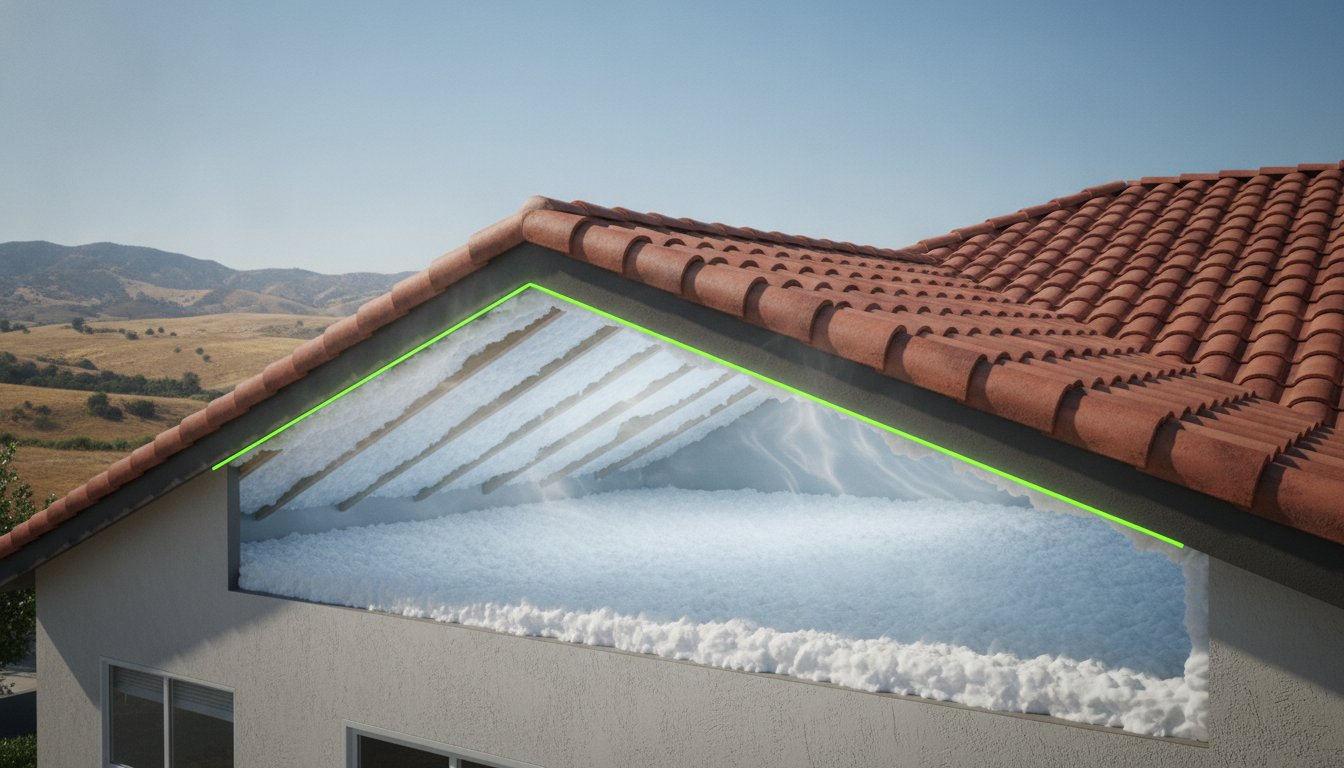
Think of your attic as a protective shield for your family. In Southern California, attic insulation for heat reduction isn't just about winter warmth; it's a thermal barrier specifically designed to resist the relentless radiant heat gain from our sun. Without this protection, your home falls victim to the "Oven Effect." This occurs when your roof absorbs solar energy, causing attic temperatures to soar as high as 150°F. This massive reservoir of heat then radiates downward through your ceilings, forcing your air conditioner to work twice as hard for half the result.
R-value is the measurement of a material's resistance to heat flow.
Our primary goal is to keep the "cool" in and the "heat" out. Achieving this balance provides true home autonomy, giving you control over your environment and your bank account. By optimizing your thermal envelope, you stop reacting to utility company price hikes and start preserving the energy you've already paid for. It's a practical, common-sense step toward long-term stability.
The Science of Summer Heat Transfer
Heat enters your home through three main paths, but radiation and conduction are the primary culprits in our region. Radiant heat from the sun penetrates your roof tiles, heating the air and materials inside the attic space. Then, conduction takes over. This is the process where heat moves directly through solid materials, like your ceiling drywall, into your living room. Many homes built in Southern California during the 1990s were constructed with R-values that were acceptable at the time but are completely insufficient for the extreme 2026 temperatures we now face. Understanding Attic Insulation helps homeowners realize that what worked thirty years ago won't protect their comfort today. Modern standards require a much more robust approach to stop this energy transfer before it reaches your living space.
Why Menifee and Temecula Homeowners Face Unique Challenges
Homeowners in the Inland Empire, specifically in communities like Menifee and Temecula, deal with unique microclimates that differ significantly from coastal areas. The dry, intense heat creates a massive attic thermal mass. In these regions, high daytime temperatures often prevent attics from cooling down at night. Without proper attic insulation for heat reduction, your home starts every morning already "pre-heated" from the day before. This persistent heat soak makes local energy independence nearly impossible without a modern insulation strategy. As we push toward solar optimization and battery storage, reducing the base cooling load of the house becomes the most logical first step for any savvy homeowner. We've helped thousands of neighbors in these areas regain their comfort through these exact optimizations.
How Much Insulation Do You Need? R-Values and Standards
Under the 2026 Building Energy Efficiency Standards, most Southern California homes sit in Climate Zone 3. Meeting the code minimum is the first step toward lower bills. However, there is a big difference between simply surviving the summer and actually enjoying your home. While the state often recommends R-38 as a baseline for attic insulation for heat reduction, we consider that the floor rather than the ceiling. Reaching "Energy Optimal" levels provides the relief and autonomy you've been missing.
You can check your own attic with a simple ruler test. Carefully climb up and measure the depth of your current material. If you see the tops of your wooden floor joists, you definitely lack sufficient protection. In many older Lake Elsinore or Murrieta homes, insulation has settled or shifted over decades. This leaves gaps where heat pours in. Even if "some" insulation is present, uneven coverage creates weak points in your home's thermal defense. Effective heat resistance requires a consistent, thick blanket across the entire space.
Decoding R-Values for the 2026 Climate
In blistering areas like Corona or Moreno Valley, R-38 is just the starting point. We often recommend R-49 or even R-60 for homeowners who want to stop their AC from running 24/7. These higher recommended R-values act as a thicker shield against the radiant bake of the sun. While there is a law of diminishing returns, the financial sweet spot is much higher than it used to be. This is largely because SCE rebates currently offer $1.07 per square foot for qualifying installations. This local support makes it much easier to justify the jump to a higher performance level that ensures long-term stability.
The Impact of Settling and Age
Insulation isn't a product that lasts forever without maintenance. Over twenty years, traditional fiberglass batts can lose up to 30% of their effectiveness as they settle and trap dust or moisture. Compressed materials lose the tiny air pockets required to resist heat. This turns your insulation into a thermal bridge that conducts heat directly into your living space. If you notice hot spots on your ceiling or rooms that stay warm long after the sun sets, your insulation is likely failing. Our team can provide a comprehensive attic assessment to identify these invisible leaks. We help you move past the guesswork so you can invest in solutions that actually slash your energy bills.

Top Insulation Materials for Maximum Heat Resistance
Selecting the right attic insulation for heat reduction requires looking beyond the R-value to the physical properties of the material itself. In Southern California, your choice determines how well your home stands up to the "Oven Effect" we discussed earlier. We prioritize professional-grade materials that don't just resist heat flow, but also stand up to local challenges like moisture, pests, and fire safety requirements. High-quality materials provide the long-term stability every homeowner deserves.
Blown-In Cellulose vs. Fiberglass
Blown-in cellulose is often the superior choice for retrofitting older homes in areas like Lake Elsinore. This material consists of recycled paper treated with fire retardants, making it an eco-friendly option for energy-conscious owners. Its primary advantage is its ability to fill every nook and cranny. By creating a seamless blanket, it stops the convection currents that often bypass traditional fiberglass batts. While fiberglass batts are common in new construction, they are difficult to install perfectly in irregular attic spaces. Any small gap in a batt can allow heat to leak through, undermining your investment. Cellulose provides a dense, consistent barrier that keeps your indoor temperatures predictable.
Radiant Barriers: The SoCal Secret Weapon
If you want to achieve true home autonomy, you need a way to stop heat before it even enters your insulation. Radiant barriers are reflective foil layers installed on the underside of your roof. These barriers can stop up to 97% of radiant heat from the sun. While traditional insulation slows down the transfer of heat, a radiant barrier reflects it back out toward the roof. This is why radiant barriers are most effective in hot, sunny climates like Riverside County where the sun beats down relentlessly for most of the year.
To maximize this effect, your home needs a balanced system. You must correctly Insulation and Provide Ventilation to ensure that reflected heat doesn't just build up in the attic space. This pairs perfectly with the "cool roof" concept, creating a multi-layered defense system. When these components work together, your AC unit finally gets the relief it needs to operate efficiently without running 24/7.
Safety remains our top priority at Underline Energy Concepts. California building codes require materials that meet strict fire-rating standards, especially in high-risk wildfire zones. The borate treatments used in modern cellulose don't just provide flame resistance; they also act as a natural deterrent for pests. This ensures your attic remains a clean, safe, and functional part of your home's energy ecosystem. If you're ready to see which material fits your home's specific needs, we invite you to schedule a professional attic assessment with our local team.
The Synergy: Insulation, Ventilation, and Whole House Fans
We often see homeowners treat attic insulation for heat reduction as a standalone product, but it's actually just one part of a "Cooling Stack." For your insulation to perform at its peak, it needs to work in harmony with proper ventilation. Without a way for trapped heat to escape, your attic becomes a pressurized oven that eventually overwhelms even the thickest R-value materials. Think of it like a sponge; once it's saturated with heat, it can't absorb any more, and that energy starts leaking directly into your bedrooms.
Why Ventilation Matters for Insulation
A healthy attic relies on a balanced airflow system, typically using soffit and ridge vents to exhaust trapped heat. At Underline Energy Concepts, we prioritize your safety by ensuring all vent upgrades meet current California fire codes, particularly for those living in Wildland-Urban Interface (WUI) zones. It's a dangerous mistake to seal an attic too tightly without a balanced airflow strategy. Doing so can trap moisture and degrade your insulation over time. We focus on creating a system where air moves freely, carrying heat away from your living space rather than letting it sit against your ceiling.
Reducing the Load on Your HVAC
When you optimize your attic insulation for heat reduction, you aren't just making your home more comfortable; you're extending the life of your HVAC system. A well-insulated and ventilated attic can significantly reduce the runtime of your air conditioner during those brutal Southern California afternoons. This reduction in demand prevents premature wear and tear and helps you avoid the financial stress of emergency repairs during a heatwave. This stability is the perfect foundation for Solar Panel Installation, as a more efficient home requires a smaller, more affordable solar array to achieve energy independence.
By combining high-performance insulation with QuietCool Whole House Fans, you can flush out the day's heat in minutes and lock in the morning's cool air. This synergistic approach provides the relief and autonomy that standard insulation alone simply cannot deliver. If you're ready to stop the cycle of high energy bills and HVAC strain, contact our local Lake Elsinore team for a comprehensive home energy assessment today.
Professional Attic Services from Underline Energy Concepts
Underline Energy Concepts has been a fixture in the Southern California energy sector since 2002. Our two decades of experience allow us to see beyond the surface level of home improvement. We don't just blow in material and leave; we provide a comprehensive approach to attic insulation for heat reduction that addresses the root causes of thermal gain. As an employee-owned and operated company, every member of our team has a personal stake in your satisfaction. This structure ensures a level of accountability and quality workmanship that large, impersonal corporations simply cannot match.
The Underline Inspection Process
Our assessment is a deep dive into your home's thermal health. We start by checking for air leaks and moisture issues that could compromise your new insulation. We also measure your existing insulation depth to determine exactly how much material is needed to reach 2026 Title 24 standards. Because we are whole-home energy experts, we also evaluate your electrical panels and wiring safety during every attic visit. This is the perfect time to identify other opportunities for energy independence, such as Hybrid Water Heaters or panel upgrades. This holistic view ensures that your attic project integrates perfectly with your home's entire energy ecosystem.
Commitment to Local Homeowners
We are a local brick-and-mortar company based in Lake Elsinore. Our roots run deep in communities like Canyon Lake, Murrieta, and the surrounding Inland Empire. We believe in neighbors helping neighbors, which is why our referral program is so popular among our long-standing clients. It's our way of rewarding the community that has supported us for over 20 years. We understand the specific utility challenges and rising electricity costs that impact our region because we live here too.
Take control of your comfort before the next Southern California heatwave arrives. By investing in professional attic insulation for heat reduction, you secure a more stable, predictable, and efficient home for your family. Don't wait for your AC to fail or your utility bills to hit another record high. Contact Underline Energy Concepts for a professional attic and energy inspection today and experience the relief of a truly optimized home.
Take Control of Your Home's Climate Today
Upgrading your attic insulation for heat reduction is the most practical step you can take to achieve true home autonomy and lasting financial relief. By transforming your attic from a 150-degree oven into a functional thermal barrier, you protect your HVAC system and stabilize your monthly utility costs. High-performance materials like blown-in cellulose provide the best results when paired with proper ventilation and radiant barriers. This integrated approach ensures your home stays comfortable long after the sun sets over the Inland Empire.
As an employee-owned and operated company serving Southern California since 2002, Underline Energy Concepts brings the expertise of a licensed General, Roofing, and Electrical Contractor to every project. We don't just add material; we optimize your home's entire energy ecosystem for long-term stability. Our local team is ready to help you navigate the 2026 energy standards and claim available rebates before the next major heatwave hits.
Schedule Your Professional Attic Heat Reduction Inspection
You deserve a home that remains a sanctuary of cool air and predictable bills. Let's work together to make that a reality for your family.
Frequently Asked Questions
How much does attic insulation really reduce heat in a home?
Proper attic insulation for heat reduction can lower the temperature of your living space by several degrees while preventing the second floor from becoming a heat trap. By blocking radiant heat from a 150 degree attic, your home stays more consistent. This reduces the strain on your air conditioner and prevents it from running 24/7 during a July peak in the Inland Empire.
What is the best type of insulation for Southern California's climate?
Blown in cellulose is frequently the top choice for Southern California retrofits because it creates a seamless thermal blanket. It fills irregular gaps better than fiberglass batts, which is crucial for stopping the convection currents common in our dry heat. We prioritize materials that are fire rated and pest resistant to ensure long term safety and stability for our local neighbors.
Can I install new insulation over my old attic insulation?
You can often install new material over existing insulation if the original layer is dry and free of hazardous materials. This process is a cost effective way to reach 2026 R-value standards. However, if your old insulation is compressed, moldy, or shows signs of pest infestation, we recommend a full removal. This ensures a clean and healthy environment for your family.
How do I know if my attic is under-insulated?
A simple visual check is the fastest way to tell if you need an upgrade. If you can see the wooden floor joists in your attic, you definitely lack sufficient protection. You might also notice that certain rooms stay ten degrees hotter than others or that your ceilings feel warm to the touch during the afternoon sun. These are clear signs of thermal failure.
Will attic insulation help lower my SCE or utility bills?
Upgrading your attic insulation for heat reduction is one of the most effective ways to slash your SCE or LADWP bills. By reducing the cooling load on your home, your HVAC system uses significantly less electricity to maintain your thermostat setpoint. Many of our clients see an immediate difference in their monthly statements during the brutal summer months.
Is a radiant barrier better than traditional insulation for heat reduction?
These two solutions serve different purposes and work best when installed together as a system. Traditional insulation slows the transfer of heat that has already entered the attic, while a radiant barrier reflects 97% of solar energy before it penetrates your home. In a sunny climate like Riverside County, combining both offers the maximum level of heat resistance and comfort.
How long does the attic insulation installation process take?
Most professional attic insulation projects are completed in a single day. Our team works efficiently to prep the space, perform air sealing, and install the new material with minimal disruption to your daily routine. We take pride in our clean workmanship and quality standards, ensuring your home is left in better condition than we found it.
Are there any tax credits or rebates for attic insulation in 2026?
Homeowners in 2026 can take advantage of a 30% federal tax credit up to $1,200 annually for energy efficiency improvements. Locally, Southern California Edison offers a rebate of $1.07 per square foot for qualifying projects. LADWP also provides incentives between $0.50 and $0.75 per square foot, making this an ideal time to invest in your home's autonomy and value.