
Attic Ventilation Fire Code Upgrades: Protecting Your SoCal Home from Embers
/
Article by
Jesse Malone
Jesse Malone
CEO & Partner, Underline Energy Concepts
Jesse Malone is the CEO and Partner of Underline Energy Concepts, a Southern California energy services company that has been serving homeowners since 2002. Since joining the company and becoming a partner in approximately 2015, Jesse has helped lead its growth into one of Southern California’s most trusted providers of residential energy efficiency and home improvement solutions.
Throughout his tenure, Jesse and the Underline Energy team have completed more than 2,500 energy upgrade projects for homeowners across Southern California. These projects include solar energy systems, roofing, battery storage, EV charging stations, electrical panel upgrades, water heater replacements, attic insulation, retrofit windows, and other energy-efficient home improvements designed to lower utility costs and increase property value.
Jesse holds a Bachelor’s Degree from California Southern University and brings more than 20 years of experience in emergency services through his service with the fire department. His background in public service has shaped his leadership style, emphasizing integrity, accountability, safety, and a commitment to serving the community.
A lifelong advocate for efficiency and practical solutions, Jesse is passionate about helping homeowners make informed decisions that improve both their homes and their financial future. His interests extend beyond energy efficiency into financial literacy, budgeting, investing, and long-term wealth-building strategies. He believes that reducing unnecessary expenses and maximizing efficiency are key components of financial success.
As CEO, Jesse continues to focus on delivering exceptional customer experiences, building high-performing teams, and helping Southern California homeowners achieve greater comfort, energy independence, and long-term savings through smart home investments.
In 2025 alone, wildfires destroyed over 16,479 properties across California, proving that the most dangerous threat to your home isn't always a wall of flame, but the tiny, wind-blown embers that slip through standard vents. You've likely felt the growing anxiety of rising insurance premiums or the looming threat of a non-renewal notice. It's frustrating to feel like your home's safety is at risk, which is why an attic ventilation fire code upgrade has become a vital necessity for Southern California families. We understand that navigating complex building regulations feels overwhelming, but securing your property is a practical step toward long-term stability.
By meeting the new California Wildland-Urban Interface Code (CWUIC) requirements, you're not just following a rule; you're installing a proven defense system that blocks embers from entering your attic. This article explains how these upgrades safeguard your property, ensure compliance with the latest 2026 standards, and help you maintain the insurance coverage you deserve. We'll show you how simple, expert-led changes to your ventilation can provide the peace of mind you need. From understanding mesh size requirements to exploring the financial benefits of home hardening, you'll learn exactly how to protect your investment from the next fire season.
Key Takeaways
- Discover why traditional vents often act as vacuums for embers and why nearly 90% of wildfire home losses are caused by ember intrusion rather than direct flames.
- Learn how an attic ventilation fire code upgrade helps you comply with the latest California building standards to safeguard your property and improve insurance eligibility.
- Compare standard wire mesh to advanced intumescent flame-stop technology that blocks dangerous embers and radiant heat during high-wind fire events.
- Identify the specific types of fire-rated vents, such as soffit and gable models, that provide the best defense for your home's unique structure.
- Understand the benefits of a professional retrofit process that combines fire safety with long-term energy efficiency to boost your home's overall resilience.
Why Attic Ventilation is the Front Line of Wildfire Defense
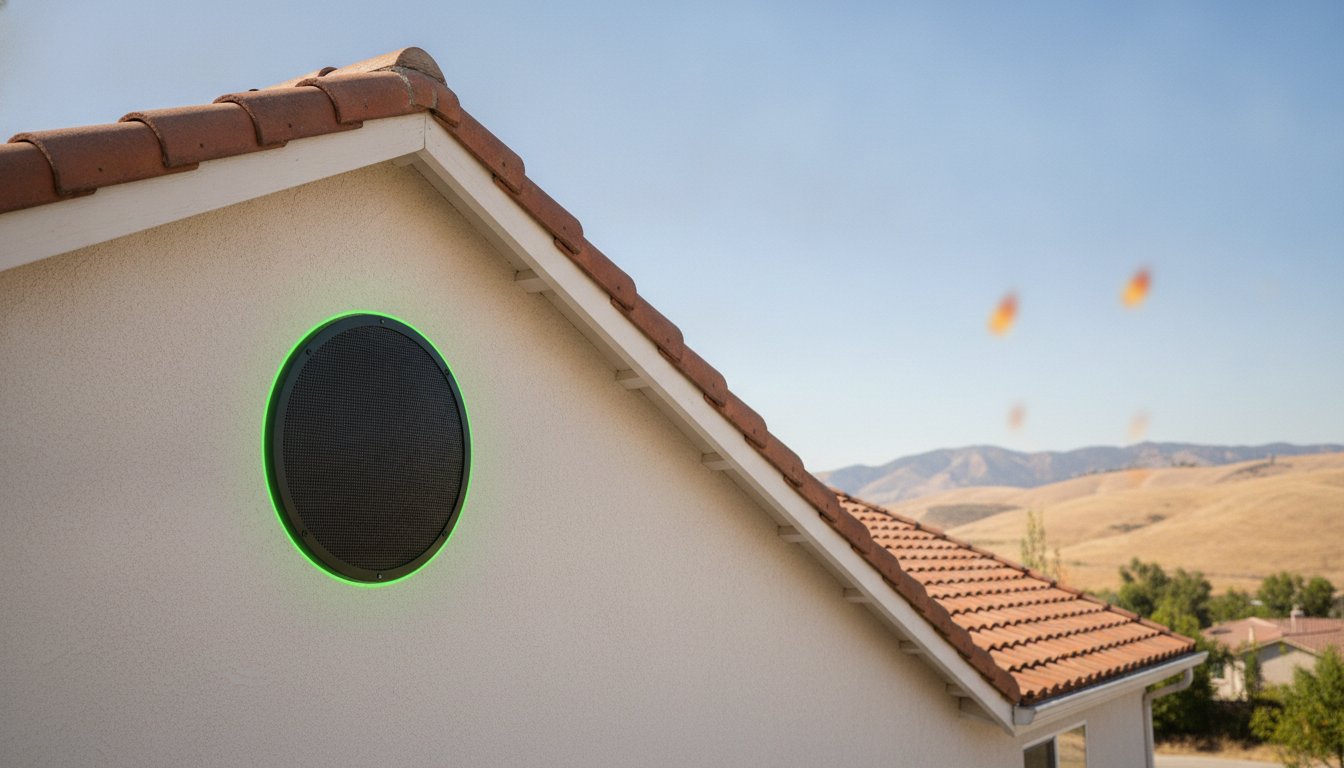
In Southern California, a wildfire doesn't need to reach your property line to destroy your home. Statistics show that 90% of homes lost to wildfires are ignited by flying embers rather than the fire front itself. These tiny, wind-blown firebrands can travel miles ahead of the actual flames. When they reach your house, standard attic vents often act like vacuums. They pull these glowing embers directly into your home's internal structure. This leads to inside-out destruction. A single ember landing in dry insulation can result in a total loss before you even realize there is a problem.
Our local climate makes this threat even more severe. The Santa Ana winds create a perfect storm for ember transport. These high-velocity gusts don't just push fire; they loft embers high into the air and drive them into every small opening of a building. This is a critical component of Wildfire emergency management. Protecting the structure from the inside is the most effective way to ensure your home survives a fast-moving blaze.
The Vulnerability of Standard Vents
Traditional 1/4-inch mesh screens were designed to keep out birds and rodents, not fire. These openings are far too large to stop embers. Whether you have gable, eave, or soffit vents, standard designs provide an easy entry point for fire. Once an ember enters the attic, the "chimney effect" takes over. Hot air rises and creates a vacuum that pulls in more fresh oxygen from lower vents. This cycle feeds the flames and accelerates the spread, often turning a small spark into an uncontrollable fire in minutes.
Protecting Your Most Valuable Asset
Investing in an attic ventilation fire code upgrade is about more than just safety; it's about preserving your property value. As we move through 2026, California building codes are becoming more stringent to reflect our changing environment. Meeting these standards is now a major factor in home insurance eligibility. Many carriers in Riverside County and the surrounding areas are now requiring verified home-hardening measures before they will renew a policy.
You can easily integrate these safety measures with other home improvements. Many of our clients choose to pair these vent upgrades with solar panel installation Southern California or a roof maintenance plan. At Underline Energy Concepts, we believe in a holistic approach to home ownership. We help you build a residence that is energy-independent, efficient, and resilient against the specific risks we face here in Lake Elsinore and across the region. Taking control of your home's vulnerabilities today provides the long-term stability every homeowner deserves.
Understanding California Building Code Chapter 7A
While many homeowners are familiar with the term "Chapter 7A," it's vital to stay current with the latest regulatory shifts. As of January 1, 2026, many of these wildfire safety standards have transitioned into the new California Wildland-Urban Interface Code (CWUIC). This transition isn't just a name change. It represents a more rigorous approach to how we build and maintain homes in fire-prone regions. For those living in a State Responsibility Area (SRA), completing an attic ventilation fire code upgrade is no longer just a recommendation; it's a legal requirement for new construction and significant re-roofing projects.
The most noticeable shift in these codes involves the mesh size used in vents. For decades, a 1/4-inch mesh was the standard. We now know those openings are large enough to let wind-driven embers pass through. The current code mandates non-combustible mesh with openings between 1/16 and 1/8 of an inch. This smaller window is the new benchmark for ember resistance. It's designed to block the majority of firebrands while still allowing the airflow your attic needs to prevent moisture buildup and heat damage.
Key Technical Requirements for Vents
Modern codes have effectively banned the use of plastic or combustible materials for vents in high-risk zones. To meet compliance, products must pass the ASTM E2886 testing standard. This test ensures that ember and flame-resistant vents can withstand both direct flame contact and intense radiant heat without failing. Durable, corrosion-resistant metals like stainless steel or galvanized steel are now the industry standard for these safety components.
Is Your Home in a WUI Zone?
The Wildland-Urban Interface, or WUI, describes areas where residential structures meet undeveloped wildlands. If you live in the hills of Riverside County or the canyons of San Diego County, your property is likely within this zone. Local jurisdictions are increasingly strict about enforcing these codes during home sales or major renovations. Proactive retrofitting is a savvy move. It avoids the stress of a failed inspection later and protects your property immediately. If you're unsure about your current vent status, you can reach out to our Lake Elsinore team for a professional assessment of your home's compliance needs.
Standard Vents vs. Fire-Rated Upgrades: A Comparison
Most homeowners view attic vents as simple utility features, but the difference between a standard screen and a fire-rated component is a matter of survival. Traditional vents rely on basic wire mesh that provides zero protection against heat or sparks. In contrast, a modern attic ventilation fire code upgrade utilizes advanced engineering to block the entry points that wildfires exploit. While a standard vent might allow wind-blown embers to pass through like water through a sieve, fire-rated upgrades are designed with high ember exclusion rates that keep your internal structure sealed and safe.
One of the most impressive advancements in this field is intumescent flame-stop technology. These vents contain materials that react to intense heat by expanding. When a fire approaches, the material swells to physically seal the vent, creating a barrier against both flames and radiant heat. This proactive defense is far superior to old-fashioned metal screens. In the harsh Southern California sun, durability is just as important as fire resistance. We prioritize heavy-duty, corrosion-resistant metals over cheap plastics because they won't warp or degrade under the intense UV rays we experience in Lake Elsinore and the surrounding canyons.
Ember-Resistant vs. Flame-Resistant
It's vital to understand the two distinct layers of protection your home needs. Ember-resistant technology focuses on the "sparks" that travel miles ahead of a fire, using fine, non-combustible mesh to block tiny firebrands. Flame-resistant components are built to withstand direct contact with fire and extreme temperatures without failing. For homeowners in high-risk zones, a combination of both is the gold standard. This dual-layer approach ensures that whether the threat is a distant ember or a nearby brush fire, your attic remains uncompromised.
The Airflow Myth: Do Fire Vents Choke Your House?
A common concern is that smaller mesh or flame-stop technology will restrict airflow and make the house hotter. This is a myth. Modern fire vents are precision-engineered to maintain the necessary Net Free Venting Area (NFVA). Proper airflow is actually essential for your home's overall health. It reduces the strain on your HVAC system and protects sensitive equipment. This is particularly important if you have invested in a whole home battery backup installation. Batteries and electrical components perform best in temperature-controlled environments. High-performance fire vents ensure your attic stays cool, dry, and free of moisture buildup while providing the highest level of wildfire defense.
The Fire Code Retrofit Process for Homeowners
Undergoing an attic ventilation fire code upgrade is a methodical process designed to eliminate every possible entry point for wind-blown embers. This isn't a simple swap of parts; it's a precision-engineered hardening of your home's shell. Our team follows a rigorous five-step protocol to ensure your property meets the highest safety standards while maintaining the airflow necessary for a healthy attic environment.
- Step 1: Professional Inspection. We begin by mapping every ventilation point on your roof and attic, including soffits, gables, and eaves, to identify vulnerabilities.
- Step 2: Model Selection. We select California State Fire Marshal-approved vents, such as O'Hagin or specialized soffit models, that match your home's specific architectural needs.
- Step 3: Removal and Debris Clearing. Our crew removes outdated 1/4-inch mesh vents and clears any combustible debris or old bird nesting from the vent openings.
- Step 4: Precision Installation. We install the new ember-resistant units with high-quality sealants and flashing to ensure there are zero gaps for embers to exploit.
- Step 5: Compliance Documentation. Once the attic ventilation fire code upgrade is complete, we provide the formal documentation you need to prove compliance to your insurance provider.
Why Professional Installation Matters
Many homeowners consider vent replacement a DIY task, but the risks are significant. Improperly installed vents can break the critical roof seal, leading to water leaks and structural rot during the winter rains. Our employee-owned team integrates these upgrades with our professional attic insulation services, ensuring that your fire safety measures don't compromise your home's energy efficiency. We handle the technical flashing and sealing work so you don't have to worry about future repairs.
Local Considerations in Lake Elsinore and Beyond
Navigating the permit requirements in Temecula, Murrieta, and surrounding areas can be complex. We handle the local bureaucracy and ensure your upgrades are timed perfectly with seasonal wildfire preparations. Our Lake Elsinore-based team understands the specific wind patterns and fire history of the Elsinore Trough, ensuring your vents are positioned to withstand the unique pressure zones created during a Santa Ana event. If you are ready to secure your home against the next fire season, schedule your professional attic and roof inspection today to get started on your retrofit.
Building a Resilient Home with Underline Energy Concepts
True home resilience isn't achieved through a single upgrade. It's the result of a coordinated strategy that addresses every vulnerability. While an attic ventilation fire code upgrade is a critical cornerstone of wildfire defense, we view it as part of a larger commitment to your home's longevity. Our team doesn't just install hardware; we build a shield that protects your property from the external pressures of the California climate. By choosing a partner with over 20 years of local experience, you gain the advantage of a specialist who understands how fire safety, energy efficiency, and structural integrity work together.
As an employee-owned and operated company, we take personal pride in every project we complete in the Lake Elsinore region. This ownership structure means our technicians are deeply invested in quality workmanship and long-term service. We are licensed roofing and general contractors, which allows us to handle complex retrofits that other companies might shy away from. We believe in empowering homeowners through education, ensuring you understand exactly how your new systems provide relief from rising insurance costs and environmental risks.
Beyond Vents: A Multi-Layered Defense
An attic ventilation fire code upgrade works best when it's supported by other home-hardening measures. We recommend a multi-layered approach that includes fire-rated roofing materials and high-quality attic insulation to further reduce the risk of ignition. For many of our clients, installing Quietcool whole house fans is a logical next step. These systems improve indoor air quality and cooling efficiency while being compatible with ember-resistant ventilation. Additionally, we ensure your electrical system is modernized to handle emergency power needs, providing a complete energy and safety solution for your family.
Your Local Partner in Energy and Safety
Underline Energy Concepts has served the Southern California community since 2002. We've seen firsthand how wildfire risks and utility challenges have evolved over the decades. Our brick-and-mortar presence in Lake Elsinore allows us to provide responsive, reliable service to our neighbors. We prioritize transparent communication and common-sense logic, making the transition to new safety technology feel like a practical decision for your future. When you are ready to take control of your property's safety, contact Underline Energy Concepts for a fire code consultation. We'll perform a comprehensive inspection to identify your needs and help you build a home that stands the test of time.
Secure Your Home's Future Against Wildfire Threats
Protecting your property in Southern California requires a proactive approach to home hardening. You now understand that wind-blown embers cause the vast majority of wildfire damage, and standard vents simply aren't enough to stop them. Completing an attic ventilation fire code upgrade is one of the most effective ways to seal your home's most vulnerable entry points. This transition ensures your property meets the rigorous 2026 standards; it also provides a clear path toward maintaining insurance eligibility and long-term property value.
Underline Energy Concepts is a licensed roofing and general contractor that has been serving Southern California since 2002. As experts in WUI fire code compliance, our employee-owned team provides the reliable, expert-led solutions you need for total peace of mind. We take the stress out of complex building codes by providing clear education and quality workmanship that lasts. Don't wait for the next fire season to test your home's defenses. Take control of your safety and financial stability with a partner you can trust.
Schedule Your Fire Code Safety Inspection Today
Frequently Asked Questions
What is a Chapter 7A compliant vent?
A Chapter 7A compliant vent is a specialized component designed to resist the intrusion of flames and embers, meeting the standards set in the California Building Code. These vents must pass the ASTM E2886 testing standard to prove they can withstand direct flame and intense heat. While the code has recently transitioned to the CWUIC, the requirements remain focused on using non-combustible materials and specific mesh sizes to keep firebrands out of your home.
Do I need to replace all my attic vents to meet fire code?
Yes, if your property is located in a Fire Hazard Severity Zone, every opening into your attic must be protected to ensure full compliance. Fire safety is only as strong as its weakest link; leaving even one standard vent untouched provides an entry point for wind-blown embers. During an attic ventilation fire code upgrade, we identify and replace all soffit, gable, and roof vents to create a complete, uninterrupted safety barrier for your structure.
Can fire-rated vents help reduce my home insurance premiums?
Many California insurance providers offer discounts or improved eligibility for homes with verified home-hardening features. While every carrier has its own policies, some insurers offer premium reductions between 5% and 15% for properties that meet modern fire safety standards. Beyond the immediate savings, these upgrades often make the difference between receiving a renewal notice or facing a non-renewal in high-risk regions like Riverside and San Diego counties.
How do I know if my current vents are ember-resistant?
You can check your vents by measuring the mesh size and looking for a California State Fire Marshal listing. If your vents have 1/4-inch mesh or are made of plastic, they are not ember-resistant and do not meet current safety codes. Modern, compliant vents use non-combustible mesh with openings no larger than 1/8-inch. If you're unsure about your home's status, our Lake Elsinore team can perform a professional inspection to verify your current level of protection.
Will upgrading my vents affect my attic's temperature?
Upgrading to fire-rated vents will not negatively impact your attic temperature as long as they are sized correctly to maintain proper airflow. These vents are precision-engineered to provide the necessary Net Free Venting Area (NFVA) while blocking embers. In fact, replacing old, clogged vents with high-performance fire-rated models often improves circulation. This helps your HVAC system run more efficiently and protects your attic insulation and electrical components from excessive heat damage.
Is it possible to retrofit fire vents on an older Southern California home?
Absolutely, retrofitting older homes is one of the most common ways we help Southern California residents improve their safety. Most existing vent openings can be easily adapted to house a modern, code-compliant unit without requiring major structural changes. Whether your home was built in the 1970s or the early 2000s, our team can install an attic ventilation fire code upgrade that integrates seamlessly with your existing roofline and siding materials.
What is the difference between a standard vent and an intumescent vent?
A standard vent uses a basic metal screen primarily to keep out pests, while an intumescent vent contains a material that expands when exposed to extreme heat. This expansion creates a physical seal that blocks both flames and radiant heat from entering the attic space. While standard vents rely solely on mesh size to stop embers, intumescent technology provides an active layer of defense that triggers automatically during a wildfire event to protect your home.
How much does a typical attic ventilation fire code upgrade cost?
The cost of a professional upgrade depends on several factors, including the number of vents, the accessibility of your roof, and the specific vent models required for your architecture. Labor costs also vary based on whether the project is a standalone retrofit or part of a larger roofing or solar installation. We focus on providing long-term value by selecting durable, corrosion-resistant materials that stand up to the SoCal sun and eliminate the need for frequent replacements.