
Cost of Electric Panel Upgrade for Solar: 2026 Southern California Guide
/

Article by
Jesse Malone
Jesse Malone
CEO & Partner, Underline Energy Concepts
Jesse Malone is the CEO and Partner of Underline Energy Concepts, a Southern California energy services company that has been serving homeowners since 2002. Since joining the company and becoming a partner in approximately 2015, Jesse has helped lead its growth into one of Southern California’s most trusted providers of residential energy efficiency and home improvement solutions.
Throughout his tenure, Jesse and the Underline Energy team have completed more than 2,500 energy upgrade projects for homeowners across Southern California. These projects include solar energy systems, roofing, battery storage, EV charging stations, electrical panel upgrades, water heater replacements, attic insulation, retrofit windows, and other energy-efficient home improvements designed to lower utility costs and increase property value.
Jesse holds a Bachelor’s Degree from California Southern University and brings more than 20 years of experience in emergency services through his service with the fire department. His background in public service has shaped his leadership style, emphasizing integrity, accountability, safety, and a commitment to serving the community.
A lifelong advocate for efficiency and practical solutions, Jesse is passionate about helping homeowners make informed decisions that improve both their homes and their financial future. His interests extend beyond energy efficiency into financial literacy, budgeting, investing, and long-term wealth-building strategies. He believes that reducing unnecessary expenses and maximizing efficiency are key components of financial success.
As CEO, Jesse continues to focus on delivering exceptional customer experiences, building high-performing teams, and helping Southern California homeowners achieve greater comfort, energy independence, and long-term savings through smart home investments.
What if the biggest obstacle to your energy independence isn't the solar panels on your roof, but the grey metal box hiding in your garage? Many Southern California homeowners start their green energy transition focused on battery storage and panel efficiency, only to discover that their existing electrical system is a bottleneck. It's common to feel a sense of frustration when unexpected technical requirements pop up. We believe you deserve a clear, honest look at the cost of electric panel upgrade for solar before you sign a contract.
As a local, employee-owned partner based in Lake Elsinore, Underline Energy Concepts has guided neighbors through these transitions since 2002. We understand that navigating 2026 utility requirements and the shift to the Solar Billing Plan can feel overwhelming. This guide provides the clarity you need to move forward with confidence. You'll learn about the safety benefits of replacing outdated breaker brands, how a 200-amp or 400-amp upgrade protects your investment, and the ways this project streamlines your path to total energy autonomy. We'll examine the current landscape of permits and local incentives to ensure your home is ready for the future of California power.
Key Takeaways
- Understand why the "120% Rule" and your home's current busbar capacity often make an electrical upgrade a necessary step for solar readiness.
- Evaluate the factors that determine the cost of electric panel upgrade for solar, including the difference between standard 200-amp and high-capacity 400-amp systems.
- Identify the "soft costs" involved in a professional upgrade, such as engineering diagrams and utility coordination fees required by Southern California providers.
- Learn how to offset your project expenses by utilizing the Federal 25C Tax Credit and specific local rebates for energy-efficient home improvements.
- Discover the safety advantages of working with an employee-owned, local specialist based in Lake Elsinore to ensure your system meets 2026 standards.
Why Solar Installation Often Requires an Electric Panel Upgrade
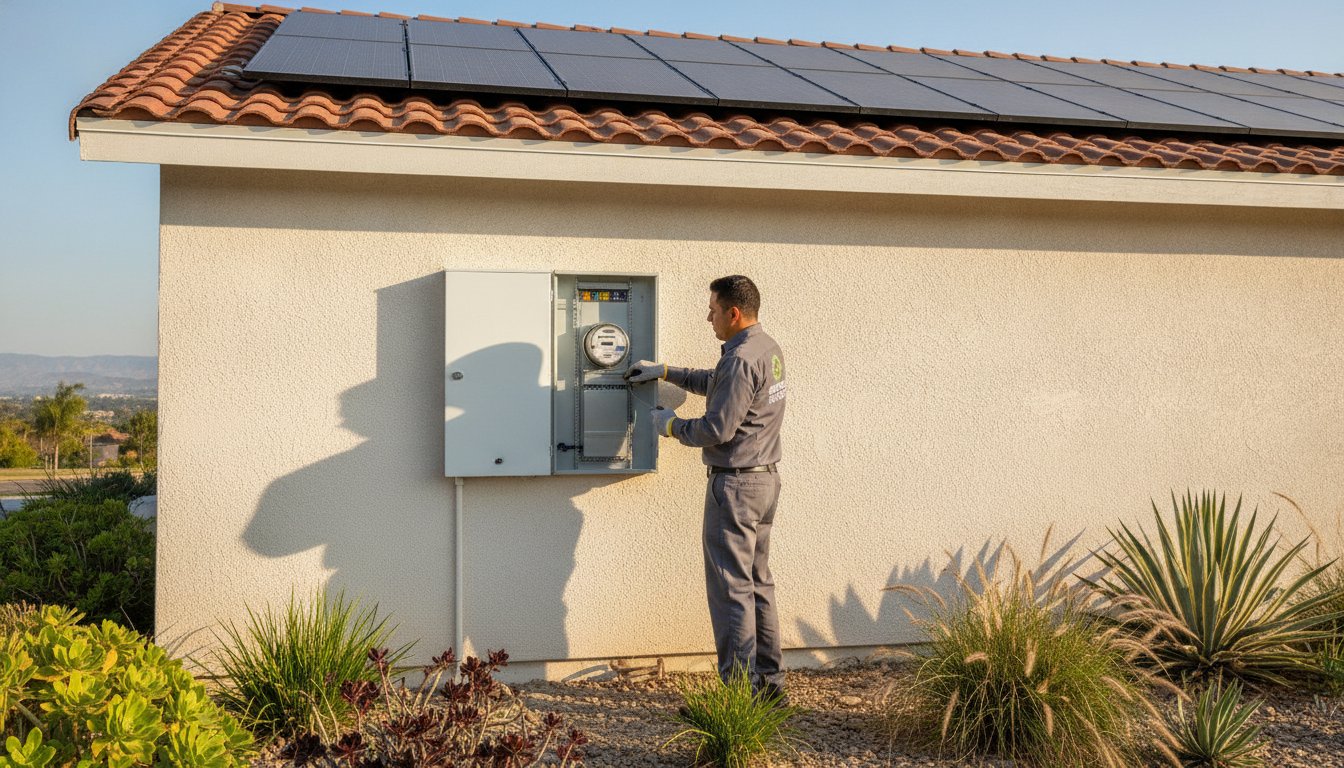
Your electrical panel is more than just a box of switches; it is the heart of your home's energy system. This distribution board manages every watt of power that enters your property from the grid. When you transition to solar, this panel must also manage the power flowing back from your roof. This two-way traffic creates a unique demand that many older systems aren't designed to handle. Understanding the cost of electric panel upgrade for solar starts with recognizing that this equipment is the foundation of your energy autonomy.
The National Electrical Code enforces what professionals call the "120% Rule." This safety standard dictates that the combined power from your utility and your solar panels cannot exceed 120% of your busbar's rated capacity. If your current panel is already at its limit, adding solar could lead to overheating or fire hazards. Upgrading the panel ensures your busbar can safely distribute the increased current. It is a technical requirement that protects your family while enabling your system to perform at its peak.
Safety is our primary concern as an employee-owned local business based in Lake Elsinore. Many Southern California homes still rely on outdated panels from brands like Zinsco or Federal Pacific. These specific models are notorious for failing to trip during a surge. When you add a continuous high-current source like solar, these old components face even more stress. Replacing these hazardous brands is a non-negotiable step for any responsible solar transition. It moves your home from a position of risk to one of long-term stability.
Signs Your Current Panel is the Weak Link
Look for clear warning signs before you begin your solar project. Frequent breaker trips or flickering lights when your air conditioner kicks on indicate that your system is struggling. You might also see visual cues like rust, corrosion, or small burn marks inside the enclosure. If your panel is over 25 years old, it likely lacks modern arc-fault protection. These issues suggest that your current setup won't handle the load profile of a modern solar array.
100-Amp vs. 200-Amp: The Solar Standard
The standard 100-amp service found in many older neighborhoods is rarely enough for 2026 energy needs. A robust solar system often requires a move to a 200-amp or even a 400-amp service to provide enough headroom for battery storage and EV charging. Moving to a higher capacity now prevents the need for a second, more expensive upgrade later. This foresight helps you control the total cost of electric panel upgrade for solar by preparing your home for the next decade of technology. At Underline Energy Concepts, we focus on this kind of future-proofing to ensure your home remains a safe, efficient sanctuary.
Factors That Influence the Cost of an Electrical Panel Upgrade
Every home in Southern California presents a unique set of variables that influence the total cost of electric panel upgrade for solar. While it is tempting to look for a one-size-fits-all price, your specific infrastructure dictates the investment. Amperage capacity is often the first major decision. A standard 200-amp upgrade provides ample power for most homes; however, if you plan to add multiple EV chargers or a high-demand heating and cooling system, a 400-amp upgrade offers the ultimate level of future-proofing for your property.
Materials also play a critical role in long-term reliability. We prioritize copper busbars over aluminum. Copper is the gold standard for Southern California's high-heat environments because it handles thermal stress better. Aluminum can expand and contract, which potentially loosens connections over time. This choice impacts the initial quote but prevents expensive maintenance issues down the road. Labor costs also fluctuate based on accessibility. If your panel is located in a cramped utility closet or requires significant wall repairs after the installation, the labor hours will naturally increase.
Local permitting fees in cities like Menifee or Temecula add another layer to the project budget. Each municipality has its own inspection schedule and fee structure. Some cities require specific safety labeling or additional grounding rods that can add to the material list. Our team handles these administrative hurdles for you. We ensure your project meets local safety codes without unnecessary delays or hidden surprises.
- Amperage needs: Deciding between 200-amp and 400-amp service based on future load.
- Busbar material: Choosing copper for superior conductivity and heat resistance.
- Service type: Accounting for the differences between overhead and underground utility lines.
- Local permits: Navigating city-specific requirements in the Inland Empire.
Utility and Infrastructure Requirements
Your utility provider, whether it is San Diego Gas & Electric or Southern California Edison, has strict standards for meter socket upgrades. If your home uses overhead service lines, the process is generally straightforward. However, homes with underground service often face higher costs if the existing conduit is too small for new, thicker wires. Trenching through landscaping or driveways to lay new lines is a labor-intensive process that can significantly shift the cost of electric panel upgrade for solar. You can explore Southern California Edison Rebates and Assistance to see if your specific utility offers programs to help offset these infrastructure costs.
Circuit and Sub-panel Complexity
The internal wiring of your home also affects the final price. If we need to relocate existing circuits to a new wall or integrate a dedicated solar sub-panel, the complexity of the job increases. Modern energy solutions often involve more than just panels. For instance, integrating whole-home battery backup systems requires precise configuration within your electrical hub to ensure your home remains powered during grid outages. If you are unsure about your current panel's capacity, you can schedule a professional site assessment to get a clear picture of your home's needs.

What is the Average Cost of Electric Panel Upgrade for Solar in 2026?
Investing in your home's electrical infrastructure requires a clear understanding of the financial landscape. In 2026, the cost of electric panel upgrade for solar in Southern California typically ranges between $2,000 and $7,500. This wide bracket reflects the diversity of housing stock in our region, from newer developments in Menifee to historic properties in Riverside. Your final price depends on the complexity of the wiring, the physical location of the panel, and the current condition of your service entrance equipment. While some online estimators suggest lower figures, those often ignore the specific labor rates in Los Angeles and surrounding counties, which currently sit between $58 and $115 per hour.
Beyond the hardware, you must account for "soft costs" that ensure your project is legal and safe. These include engineering diagrams required by the city and utility coordination fees. Permit fees alone can range from $55 to over $300 depending on your specific municipality. You should also prepare for minor aesthetic "hidden costs" like drywall repair or stucco patching. When we pull an old panel out of a wall, the new unit rarely fits the exact same footprint. Planning for these small repairs from the start prevents budget surprises at the end of the week.
One of the most effective ways to manage the cost of electric panel upgrade for solar is to bundle the work with your solar installation. When our crews are already on-site for a solar panel install, the mobilization costs are significantly reduced. You gain the efficiency of a single permitting process and a unified team managing the utility shut-off. This approach streamlines your path to energy independence and ensures every component of your system is designed to work together from day one.
Cost Breakdown: Materials vs. Labor
The price of high-quality circuit breakers and copper components has stabilized, but professional licensed labor remains a premium investment. Hiring a licensed specialist is about more than just turning screws; it is about liability and long-term safety. A professional contractor handles the complex coordination with Southern California Edison or SDG&E to manage the power disconnect. This expertise ensures the job is done right the first time, protecting your home's value and your family's safety.
Timeline and Project Expectations
Expect a standard panel swap to take a full working day. We typically coordinate the utility shut-off for the morning and aim to have your power restored by the evening. After the physical work is complete, a gap exists before the final city sign-off. During this window, your new system is fully functional but awaits the official inspector's seal of approval. This methodical approach is why homeowners across the Inland Empire trust our employee-owned team to handle their whole home energy solutions with precision and care.
Maximizing Your ROI: Rebates and Tax Credits
Transforming your home's electrical system is a strategic investment that pays dividends beyond simple power delivery. While the federal tax credit for solar installations expired at the end of 2025, you can still find significant financial relief through the Federal 25C Tax Credit. This incentive allows you to claim 30% of the cost of electric panel upgrade for solar, capped at $600 annually, when it is part of a qualified energy-efficient home improvement. This credit directly reduces your tax liability, making the transition to a modern system more accessible for Southern California families.
A modern 200-amp or 400-amp panel does more than just support your solar array; it significantly boosts your property's market appeal. Future home buyers in communities like Murrieta or Temecula increasingly look for "solar-ready" homes that can handle high-demand appliances without expensive retrofitting. Beyond resale value, a new panel improves your home's daily energy efficiency. Modern components reduce heat loss and ensure a more stable distribution of power, which can extend the lifespan of your electronics and HVAC systems. It's a common-sense logic: better infrastructure leads to lower long-term maintenance costs.
Local incentives in Southern California often provide additional layers of savings. Many regional programs offer rebates when you pair a panel upgrade with other electrification projects, such as installing a heat pump or a home 50 amp EV charger. These local programs are designed to help you navigate the rising costs of utility power by encouraging self-consumption. By optimizing your electrical hub now, you position your home to take full advantage of these evolving financial opportunities.
Bundling for Better Savings
You can maximize your project's efficiency by tackling multiple upgrades at once. Adding an EV charging station or a hybrid water heater during your panel upgrade is incredibly cost-effective because it eliminates separate mobilization fees and repeated permitting costs. Our crews are already at your home, which allows us to streamline the entire installation process. To help your neighbors achieve the same autonomy, we offer a Referral Program that rewards you for building a more resilient energy community in the Inland Empire.
Long-Term Energy Independence
A robust electrical panel is the backbone of a truly resilient home. It allows for the seamless integration of a whole home battery backup or generator backup power, which is essential during Southern California's Public Safety Power Shutoffs (PSPS). Instead of feeling vulnerable during grid instability, you gain a sense of relief knowing your home can function independently. Every upgrade we perform as an employee-owned company in Lake Elsinore is backed by the stability of long-term manufacturer warranties, often spanning 10 to 25 years. If you want to see how these incentives apply to your specific home, contact our local experts for a detailed consultation today.
Why Underline Energy Concepts is Your Local Electrical Expert
Since 2002, our team at Underline Energy Concepts has served as a cornerstone for home energy improvements across Southern California. We aren't just a remote service provider; we're a local brick-and-mortar company based in Lake Elsinore. This local presence means we understand the specific electrical codes and utility requirements of Murrieta, Temecula, and the broader Riverside County area. Choosing a specialist who handles roofing, solar, and electrical work under one roof simplifies your project. It eliminates the communication gaps that often occur when multiple subcontractors are involved, ensuring that the cost of electric panel upgrade for solar remains predictable and transparent.
As an employee-owned and operated business, our technicians have a personal stake in the quality of your installation. We don't just see a project; we see a neighbor's home that needs to be safe and reliable for decades. This ownership model drives us to prioritize safety over speed. We ensure every 200-amp or 400-amp upgrade meets the highest standards of workmanship. When you work with us, you're partnering with a team that is genuinely invested in your home's long-term stability and energy independence.
Our Professional Advocacy Approach
We believe in a transparent process that removes the stress from your home energy transition. Our quoting process is direct and honest. You won't face hidden fees or "surprise" panel requirements once the project has already started. We act as your advocate by handling all the complex paperwork and coordination with Southern California Edison (SCE) or SDG&E. This utility coordination is a critical step that many general electricians overlook, yet it is essential for a legal and safe solar interconnection.
To ensure your system performs at its peak, we utilize high-quality components from industry leaders like SolarEdge and REC Solar. These partnerships allow us to provide you with reliable technology that matches the durability of our electrical panel installations. By combining top-tier materials with our deep local expertise, we help you control the total cost of electric panel upgrade for solar while maximizing your long-term return on investment.
Ready to Upgrade Your Power?
The first step toward a more resilient home is a professional assessment of your current infrastructure. Schedule a comprehensive home energy inspection with our team to identify exactly what your property needs for a successful solar transition. We'll provide a personalized quote that covers your solar installation and any necessary electrical panel needs. Take control of your energy future and experience the relief of working with a trusted local guide. Contact Underline Energy Concepts for a Professional Consultation today and start your journey toward energy autonomy.
Empower Your Home for the Next Decade of Energy
Modernizing your electrical hub is a foundational step toward true energy autonomy. You've seen how the 120% rule and your home's amperage capacity dictate the success of your solar transition. By choosing high-quality materials and professional installation, you're not just meeting a technical requirement; you're investing in long-term safety and property value. It's clear that the cost of electric panel upgrade for solar is a practical investment that pays off through increased reliability and system efficiency.
Underline Energy Concepts has been a trusted Licensed Electrical and Solar Contractor since 2002. Our employee-owned team provides quality workmanship and carries expert knowledge of Southern California utility requirements. We're here to ensure your project is handled with precision from the initial inspection to the final city sign-off. You deserve the peace of mind that comes with a resilient, future-proof home. Take the next step toward energy independence and Secure Your Home's Energy Future with a Panel Upgrade Quote. We look forward to helping you build a more sustainable future right here in our local community.
Frequently Asked Questions
Do I really need to upgrade my panel if I'm only installing a small solar system?
Yes, you might still require an upgrade because the National Electrical Code’s "120% Rule" applies to all grid-tied systems regardless of their size. This safety standard ensures that the combined power from the utility and your solar panels doesn't overwhelm your busbar. Even a modest array can push an older 100-amp panel past its safe operating limit. We evaluate your specific busbar capacity to determine if an upgrade is the only way to ensure long-term safety.
How much does a 200-amp panel upgrade typically cost in Southern California?
Industry ranges for a 200-amp upgrade in our region typically fall between $2,000 and $7,500 depending on the complexity of the project. The final cost of electric panel upgrade for solar is influenced by city permit fees in places like Temecula or Murrieta and the physical location of your equipment. Homes requiring underground service trenching or significant drywall repair will naturally land on the higher end of that spectrum. We provide transparent quotes to ensure you understand every factor involved.
Can I use the federal solar tax credit (ITC) for my electrical panel upgrade?
The federal tax credit for residential solar installations expired on December 31, 2025, but you can still utilize the Federal 25C Tax Credit for panel upgrades in 2026. This incentive allows homeowners to claim 30% of the project cost, up to a $600 annual limit, when the upgrade is paired with other energy-efficient improvements. It is a valuable tool for reducing your tax liability while modernizing your home's infrastructure. Always consult with a qualified tax professional to confirm your specific eligibility.
How long will my power be out during the panel replacement process?
Expect your power to be disconnected for approximately 4 to 8 hours on the day of the installation. Our team coordinates directly with Southern California Edison or SDG&E to manage the morning shut-off and aims to restore your electricity by the late afternoon. We work efficiently to minimize the impact on your daily routine. This methodical approach ensures that your new system is safely energized and ready for inspection by the end of the workday.
Will an electrical panel upgrade increase my home's property value?
A modern 200-amp or 400-amp electrical panel significantly boosts property value by making your home "solar-ready" for future buyers. As Southern California moves toward full electrification, buyers prioritize homes that can already support EV charging, battery storage, and high-efficiency HVAC systems. You are essentially removing a future expense for the next owner. This foresight positions your property as a premium, move-in-ready asset in a competitive real estate market.
What is the difference between a main breaker and a busbar rating?
The main breaker is the safety switch that limits the total amount of electricity entering your home from the utility grid. The busbar is the internal metal rail that accepts that power and distributes it to your individual circuit breakers. For solar owners, the busbar rating is the most critical factor because it must handle the simultaneous flow of energy from both the grid and your solar panels. If your busbar is undersized, a full upgrade is often the only safe solution.
Do I need a panel upgrade to install a home battery backup system?
Most whole home battery backup installations require a 200-amp panel to manage the sophisticated energy transfer between the grid, your battery, and your home. Older panels often lack the physical space or the electrical capacity to integrate the necessary gateway and backup sub-panels. Upgrading your hub ensures that your battery can safely power your essential loads during a Public Safety Power Shutoff. It is a critical step for achieving true energy independence and peace of mind.
How do I know if my electrical panel is a fire hazard brand?
Check the labeling inside your panel door for names like Federal Pacific Electric (FPE) or Zinsco, which are known safety risks. These specific brands were installed in many Southern California homes decades ago but are now famous for failing to trip during an electrical surge. If you see these names or notice visual signs like melted plastic or charring, your system is a high-priority candidate for replacement. Our Lake Elsinore team can perform a safety inspection to help you identify these hidden hazards.