
Emergency Electrical Inspection Checklist: Is Your SoCal Home at Risk?
/
Article by
Jesse Malone
Jesse Malone
CEO & Partner, Underline Energy Concepts
Jesse Malone is the CEO and Partner of Underline Energy Concepts, a Southern California energy services company that has been serving homeowners since 2002. Since joining the company and becoming a partner in approximately 2015, Jesse has helped lead its growth into one of Southern California’s most trusted providers of residential energy efficiency and home improvement solutions.
Throughout his tenure, Jesse and the Underline Energy team have completed more than 2,500 energy upgrade projects for homeowners across Southern California. These projects include solar energy systems, roofing, battery storage, EV charging stations, electrical panel upgrades, water heater replacements, attic insulation, retrofit windows, and other energy-efficient home improvements designed to lower utility costs and increase property value.
Jesse holds a Bachelor’s Degree from California Southern University and brings more than 20 years of experience in emergency services through his service with the fire department. His background in public service has shaped his leadership style, emphasizing integrity, accountability, safety, and a commitment to serving the community.
A lifelong advocate for efficiency and practical solutions, Jesse is passionate about helping homeowners make informed decisions that improve both their homes and their financial future. His interests extend beyond energy efficiency into financial literacy, budgeting, investing, and long-term wealth-building strategies. He believes that reducing unnecessary expenses and maximizing efficiency are key components of financial success.
As CEO, Jesse continues to focus on delivering exceptional customer experiences, building high-performing teams, and helping Southern California homeowners achieve greater comfort, energy independence, and long-term savings through smart home investments.
Did you know that electrical distribution systems are the third leading cause of home structure fires in the United States? For many Southern California homeowners, a flickering light or a warm outlet isn't just a nuisance; it's a signal that you might need an emergency electrical inspection before a small issue becomes a catastrophe. It's stressful to wonder if your property is at risk, especially with the added pressure on our local utility grid and the rising costs of home maintenance. You shouldn't have to live with the constant anxiety of a potential fire or the fear of a massive, unexpected repair bill.
As your local partner in Lake Elsinore, we believe every homeowner deserves the peace of mind that comes with a secure, reliable energy system. You'll learn how to spot the critical warning signs that require immediate action and get a professional safety checklist to keep your home protected. This guide walks you through the essential steps to confirm your safety right now and explains how the latest 2026 California Electrical Code updates impact your home's resilience.
Key Takeaways
- Identify the "fishy" smells or charred outlet covers that indicate an immediate need for an emergency electrical inspection.
- Learn how to perform a visual panel assessment and test GFCI outlets to confirm your home's safety systems are active.
- Understand how Santa Ana winds and extreme heat waves specifically strain older Southern California electrical infrastructure.
- Master the safe power-down and evacuation protocols to protect your family while waiting for a professional technician.
- Explore how a 200-amp or 400-amp electric panel upgrade ensures long-term reliability and supports modern battery backup systems.
Critical Warning Signs: When to Call for an Emergency Electrical Inspection
Your home's electrical system usually tries to tell you something is wrong long before a fire starts. Recognizing these early warnings can save your property and your wallet. If you notice persistent burning odors or a strange "fishy" smell near your outlets, don't ignore it. This scent often signals that plastic components or wire insulation are melting due to excessive heat. It's a clear indicator that you need an emergency electrical inspection to prevent a potential disaster. These smells aren't just unpleasant; they're the chemical byproduct of a system pushed beyond its limits.
Visual cues are just as vital. Take a moment to look at your switch plates and socket covers. Are they discolored, charred, or even slightly yellowed? If they feel warm to the touch, you have a serious problem. In many older Southern California homes, the original wiring wasn't designed for today's heavy appliance loads. This heat buildup violates the basic safety standards found in the electrical code, which exists specifically to prevent these thermal hazards. When electricity meets resistance, it generates heat. If that heat has nowhere to go, it begins to bake the materials around it.
Sensory Red Flags You Should Never Ignore
That "fishy" smell is a specific red flag for catastrophic wire insulation failure. Most modern wire coatings are made of PVC. When they overheat, they release vapors that smell remarkably like rotting fish. This isn't a minor repair issue; it's a sign that your home's defenses are failing. You should also distinguish between a minor bulb flicker and a major voltage drop. If your lights dim significantly every time the refrigerator kicks on, your circuits are likely overloaded. In our local communities like Lake Elsinore, extreme summer heat can exacerbate these issues, making walls feel warm to the touch where hidden wires are struggling to keep up.
The "Panel Groan": Listening to Your Electrical System
A healthy breaker box should be silent. If you hear buzzing, humming, or sizzling, your system is crying for help. A low hum might indicate a breaker that's failing to trip despite an overload. Sizzling or popping sounds are even more dangerous. These are the sounds of "arcing," where electricity jumps across a gap between loose connections. Arcing creates intense heat that can ignite nearby building materials instantly. If you see visible sparks when plugging in a lamp or appliance, the internal contact points have likely deteriorated. This requires an immediate emergency electrical inspection to ensure your main panel is still capable of protecting your home.
The Homeowner’s Emergency Electrical Safety Checklist
Taking control of your home's safety starts with a proactive walk-through. While you should never attempt to disassemble electrical components yourself, performing a basic emergency electrical inspection from a safe distance helps you identify hazards before they escalate. Your goal is to spot irregularities that suggest your system is struggling to handle its load. For a detailed room-by-room guide to identifying hidden risks, you can refer to this Home Electrical Safety Checklist provided by the U.S. Consumer Product Safety Commission.
Step 1: Inspecting the Main Service Panel
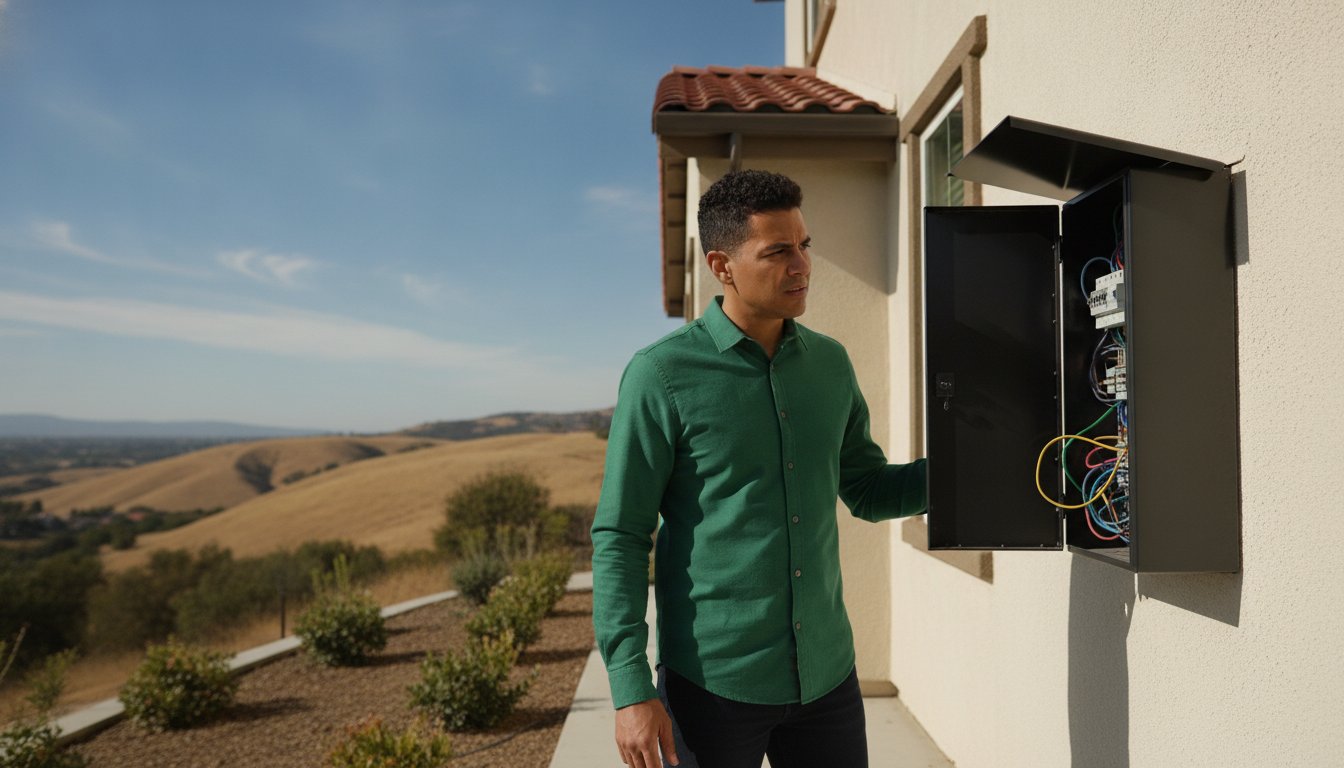
Start at your main breaker box. Look for any visible corrosion, rust, or white powdery residue, which often indicates moisture intrusion. Check if any breakers are "double tapped," a common code violation where two wires are forced into a single terminal. This creates loose connections and extreme heat. You should also verify if your panel is a brand known for safety failures, such as Zinsco or Federal Pacific. These older units are notorious for failing to trip during a surge. Ensure the main shut-off is clearly labeled and accessible. If you can't easily turn off your power in a crisis, your home is at a higher risk during a grid event.
Step 2: Testing Life-Safety Devices
Life-safety devices like Ground Fault Circuit Interrupters (GFCIs) are your first line of defense against shock. Press the "test" button on every GFCI outlet in your kitchen, bathrooms, and garage. The "reset" button should pop out immediately, cutting power to the outlet. If it doesn't, the device has failed and requires an emergency electrical inspection to replace the faulty hardware. Also, verify that your smoke and carbon monoxide detectors are hardwired with fresh battery backups. Don't forget to check your outdoor EV charging stations. Look for cracked casings or weather seals that have dried out under the intense Southern California sun.
Step 3: Evaluating Solar and Battery Integration
If you have invested in modern energy solutions, they need regular checks too. Inspect your solar panel installation for any loose conduit or shifting mounts, especially after high-wind events. Ensure the rapid shutdown system is clearly marked for emergency responders. For those with a whole home battery backup, check the status lights on your inverter and the stability of the charge mounts. A healthy battery system should show no error codes and maintain a clean, secure connection to your main panel. If you spot anything unusual during your walk-through, it's a good idea to schedule a professional consultation to keep your energy independence secure.

Southern California Hazards: Why Local Context Matters
Living in the Inland Empire or coastal SoCal presents unique environmental challenges that national electrical guides simply ignore. While lightning might be a concern in other states, our primary local threats are wind, heat, and fire. These factors put immense physical stress on your home's wiring and main service panel. Understanding these regional stressors helps you decide when it's time for an emergency electrical inspection to ensure your system can handle the next seasonal shift. As a local partner based in Lake Elsinore, we've seen how our specific climate can turn a minor oversight into a major hazard.
Santa Ana Winds and Your Service Mast
During high-wind events in communities like Temecula and Murrieta, your overhead service lines take a beating. Persistent gusts cause these lines to whip back and forth, which transmits vibration directly into your service mast and main panel. This mechanical stress can loosen the heavy-gauge lugs that secure your main power feed. If these connections become loose, they create high-resistance points that lead to arcing and potential fires. Check your weather head, which is the hooded cap where the power lines enter the mast, for any signs of shifting or gaps. A secure weather head is your best defense against moisture intrusion during our intense winter storms.
Heat-Related Electrical Failures
Extreme heat waves in cities like Moreno Valley do more than just make you uncomfortable; they physically degrade your electrical infrastructure. When temperatures soar, your HVAC system runs at maximum capacity for hours. If you're still using an older 100-amp panel, this constant high-draw load generates internal heat that compounds with the ambient temperature. Over time, this results in insulation breakdown within your walls and attic. Since attic temperatures can frequently exceed 140 degrees, your wiring is essentially being baked from the outside in. Using a Home Electrical Safety Checklist can help you monitor for early signs of heat damage, but a professional assessment is often necessary for hidden attic runs.
Wildfire safety is another critical layer of home maintenance. Embers can easily enter through standard attic vents or gaps where electrical conduits penetrate your home's exterior. Hardening these entry points is a vital step in protecting your property from the outside in. Additionally, Southern California Edison (SCE) often faces grid instability during peak heat or Red Flag warnings. You can explore system hardening options and potentially offset costs by checking the SCE Marketplace rebates. Investing in reliability now prevents the chaos of a mid-heatwave failure. If your lights flicker specifically during wind gusts or peak heat, don't wait for a total outage. An emergency electrical inspection provides the clarity you need to keep your home standing and your family safe.
What to Do While Waiting for Your Emergency Inspector
Once you've identified a hazard and requested an emergency electrical inspection, your primary focus must shift to immediate risk mitigation. Electrical emergencies are volatile. Taking the right steps in the first few minutes can prevent property loss and keep your family out of harm's way. While you wait for a specialist to arrive, stay calm and follow these safety protocols to maintain control over the situation.
Cutting the Power Safely
If you can safely reach your main service panel, your first move should be cutting the power. Locate the main service disconnect, which is usually a large breaker at the top or bottom of the panel. Flip it to the "off" position to kill power to the entire house. This stops the flow of electricity to the fault and significantly reduces the risk of ignition.
Never touch your electrical panel if you are standing on a wet surface or have damp hands. Water is a highly effective conductor and increases the risk of a lethal shock. If you own a non-contact voltage tester, use it to verify that power is truly dead before approaching any affected outlets or appliances. If you see active smoke, sparking, or flames, do not attempt to flip breakers. Evacuate the home immediately and call 911 from a safe distance. Your life is always more valuable than your property.
Documentation and Communication
Documenting the situation is essential for both your electrical contractor and your insurance provider. Use your phone to take clear photos of any discolored outlets, charred switch plates, or tripped breakers. Do this from a safe distance without touching the components. Keep a brief log of the sequence of events leading up to the crisis. Did the flickering start when the HVAC unit kicked on? Did you notice the fishy smell after a heavy Santa Ana wind gust? This context helps your technician diagnose the root cause faster during the emergency electrical inspection.
Avoiding the temptation to perform a "quick fix" is vital for your long-term safety. Amateur repairs often violate the California Electrical Code and can void your homeowner's insurance or equipment warranties. Instead, rely on a professional to handle the high-voltage work. You can reach out to Underline Energy Concepts for immediate support. As an employee-owned local business based in Lake Elsinore, we understand the urgency of these situations and prioritize your home’s stability and safety.
From Emergency to Independence: Upgrading for Long-Term Safety
Surviving a household electrical crisis is a powerful wake-up call. While the immediate goal of an emergency electrical inspection is to eliminate current danger, the long-term objective should be to ensure it never happens again. Many Southern California homes built decades ago are still operating on 100-amp service, which was never intended to power modern life. Between electric vehicles, high-efficiency HVAC systems, and home offices, our demand for power has outpaced our infrastructure. Moving from a state of emergency to a state of independence means investing in a system that works for you, not against you.
Panel Upgrades: The Foundation of Home Safety
An emergency electrical inspection often reveals that the root cause of a failure is an overcrowded, outdated panel. Upgrading to a 200-amp or 400-amp service is now the standard for homeowners who want to be solar and EV-ready. Modern panels utilize copper bus bars, which offer far superior conductivity and heat resistance compared to the aluminum components found in older units. This reduces the internal temperature of your panel and prevents the thermal breakdown of your breakers. Beyond the immediate safety benefits, these electric panel upgrades significantly increase your property value. In competitive real estate markets like Corona and Lake Elsinore, a modern, code-compliant electrical system is a major selling point for savvy buyers.
Energy Independence with Battery Backups
In Southern California, safety also means staying powered during Public Safety Power Shutoffs (PSPS). When the grid goes down due to high winds or wildfire risk, a whole-home battery backup system keeps your critical circuits alive. Integrating QuietCool battery charge mounts ensures your backup system is always charged and ready to perform when the utility fails. This level of energy autonomy reduces your reliance on a strained grid during peak demand periods, which is when most electrical failures occur. You can often offset the cost of these resilience improvements by leveraging SCE rebates for energy-efficient upgrades. These financial incentives make the transition to new technology a practical, common-sense decision for your family's future.
Underline Energy Concepts has been a local, employee-owned partner since 2002. We prioritize your education and safety over high-pressure sales. Once your home is secured and your system is optimized, we invite you to join our community through the Underline referral program. It is a simple way to help your neighbors achieve the same peace of mind while being rewarded for your advocacy. By upgrading today, you transform a potential hazard into a reliable asset that protects your family and the environment for years to come.
Secure Your Home and Empower Your Energy Future
Protecting your property starts with recognizing that electrical safety isn't a one-time event; it's a continuous commitment to your family's well-being. You've learned how to spot critical sensory warnings and why our specific Southern California climate demands a more rigorous approach to maintenance. By staying proactive with your homeowner's checklist and understanding when to power down safely, you're already ahead of the curve. Don't let a small flicker or a strange scent escalate into a costly disaster. A professional emergency electrical inspection provides the immediate confirmation of safety you need to sleep soundly tonight.
Since 2002, Underline Energy Concepts has served as a trusted, employee-owned partner right here in Lake Elsinore. As licensed electrical and general contractors, we bring decades of expertise in complex systems, including SolarEdge and REC Solar integration. We're here to help you transition from reactive repairs to long-term energy independence and stability. Take the first step toward a more resilient home by reaching out to our local team today. We're ready to ensure your system is optimized and your property is preserved.
Schedule Your Emergency Electrical Inspection with Underline Energy Concepts
Frequently Asked Questions
How much does an emergency electrical inspection typically cost in Southern California?
Municipal fees provide a helpful baseline for what you might expect to pay for government oversight. For instance, as of July 1, 2025, the fee for an emergency electrical inspection in Los Angeles County is $158.63 per hour. In Orange County, permit fees for 2026 generally range from $100 for minor projects to over $500 for complex tasks like a full panel upgrade. Private service fees vary based on the urgency and complexity of your home's specific needs.
Is a flickering light always an electrical emergency?
Flickering isn't always a crisis, but it is a primary warning sign that shouldn't be ignored. If your lights dim specifically when the HVAC kicks on or during Santa Ana wind gusts, it often indicates a loose connection or an overloaded circuit. Persistent flickering is a common reason to request an emergency electrical inspection to prevent arcing faults, which are responsible for more than 28,000 home fires across the country every year.
Can I perform my own electrical inspection if I have a multimeter?
You shouldn't attempt to perform a comprehensive safety check on your own. A multimeter can measure voltage at a socket, but it cannot detect internal panel corrosion, loose lugs, or hidden insulation breakdown. Our team uses specialized equipment and deep knowledge of the 2026 California Electrical Code to identify hazards that are invisible to a standard multimeter. Professional expertise is essential to ensure your home meets the latest safety standards.
What happens if an inspector finds a code violation during an emergency visit?
The inspector will document the safety risk and explain the necessary steps to bring your system back into compliance. This is especially important now that SB 382 is in effect as of January 1, 2026, requiring sellers to disclose the property's electrical status. Addressing these violations immediately protects your family and preserves your home's value, preventing the types of failures that lead to significant property damage and safety risks.
How long does a professional electrical safety inspection take?
A thorough professional inspection usually takes between 60 and 90 minutes for a standard residence. This window allows the technician to evaluate your main service panel, test life-safety devices like GFCIs, and inspect your grounding system. Homes with integrated technology like solar panel installations or battery backups may require a bit more time to ensure every connection is secure and functioning within the design limits of the system.
Will my homeowners insurance cover the cost of an emergency electrical inspection?
Standard policies typically do not cover the cost of a preventative or diagnostic emergency electrical inspection. However, if the inspection reveals damage caused by a covered peril, such as a windstorm or lightning, the resulting repairs might be eligible for a claim. It is wise to check your policy for "equipment breakdown" coverage, as maintaining a safe system can help you avoid the types of fire claims that lead to policy cancellations.
Should I call my utility company (SCE) or an electrician first during a power outage?
Call Southern California Edison (SCE) first if you notice that the entire neighborhood is dark. If the outage is localized only to your property or a single room, you should contact a licensed electrician immediately. Issues like a charred main breaker or a damaged service mast are the homeowner's responsibility. A specialist can determine if the problem is a simple tripped breaker or a more serious failure within your home's internal wiring.
How often should a Southern California home have a routine electrical safety check?
We recommend scheduling a routine safety check every three to five years to stay ahead of potential issues. If your home is more than 25 years old or you have recently added high-draw appliances like an EV charging station, more frequent inspections are a smart investment. Regular checks help identify the wear and tear caused by extreme Inland Empire heat waves before they transition into an expensive or dangerous electrical emergency.